

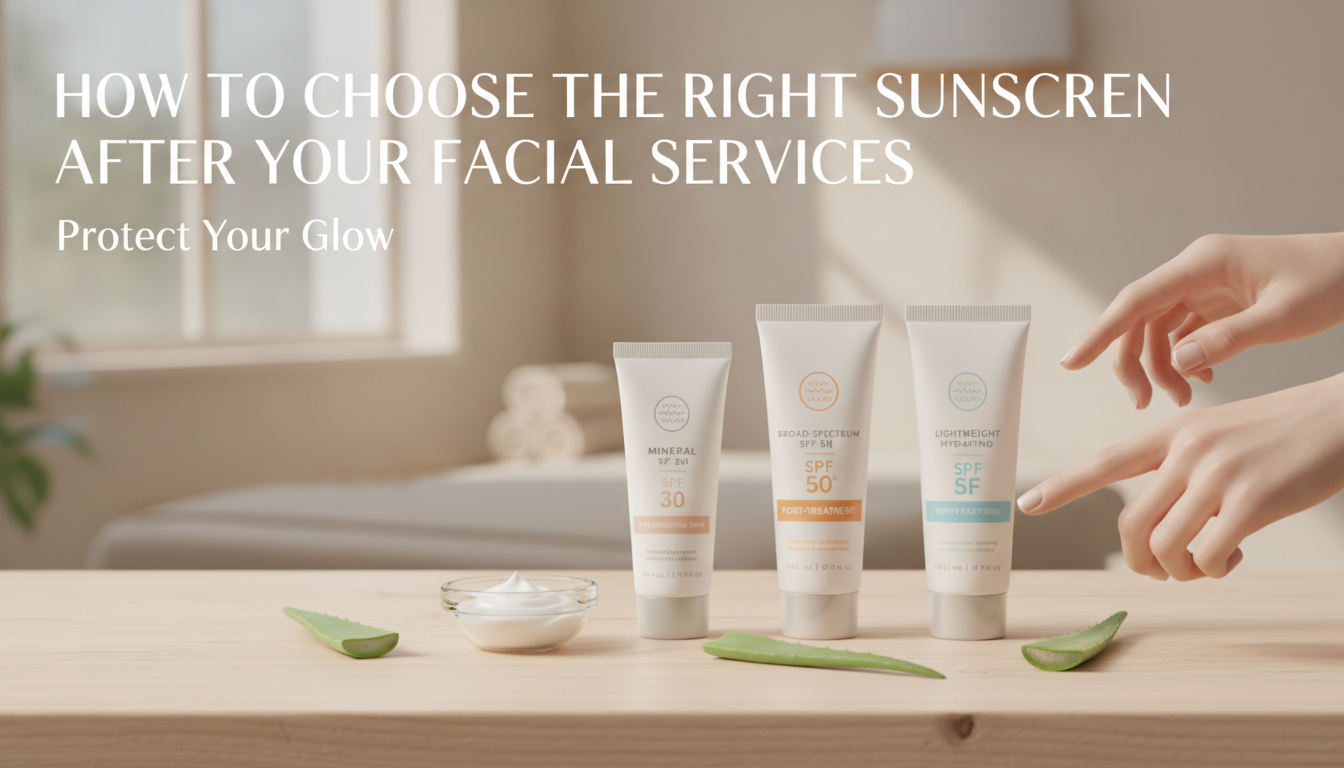
Getting a facial is one of the best things you can do for your skin — but what happens in the hours and days after your treatment matters just as much as the facial itself. One of the most overlooked steps in post-facial skincare is choosing the right sunscreen after your facial services. Your skin is freshly exfoliated, deeply cleansed, and often more sensitive than usual, which means it needs protection that matches its current state — not just whatever SPF happens to be sitting on your shelf at home.
This guide walks you through exactly what to look for, what to avoid, and how to make smart sunscreen choices that support your skin’s recovery and keep your results lasting longer.
Why Sunscreen Matters More After a Facial
Most facial treatments — whether a chemical peel, microdermabrasion, enzyme exfoliation, or even a deep-cleansing facial — remove the top layer of dead skin cells. That’s the point. But it also means the newer, more delicate skin underneath is now exposed and significantly more vulnerable to UV damage.
UV exposure immediately after a facial can cause hyperpigmentation, inflammation, and even reverse the brightening effects you just paid for. Dermatologists consistently recommend applying broad-spectrum SPF 30 or higher within the first 24 hours post-treatment, and maintaining it daily for at least a week afterward.
In a city like Abuja, where the sun is intense year-round and harmattan dust can already stress the skin barrier, skipping sunscreen after a facial isn’t just careless — it’s counterproductive. You’ve invested in your skin; now protect that investment.
Understanding Your Skin’s Post-Facial State
Increased Sensitivity
Right after a facial, your skin’s natural defenses are temporarily lowered. The outermost layer has been cleared, meaning irritants, heat, and UV rays have a more direct path to the deeper layers of the dermis. Even a gentle walk from your car to your office in the midday Abuja sun can undo some of the work your aesthetician just did.
Higher Absorption Rate
Here’s the double-edged sword: freshly treated skin also absorbs products more readily. This is great for serums and moisturizers, but it means harsh or comedogenic sunscreen ingredients can penetrate deeper and potentially trigger breakouts or reactions. Choosing a clean, non-irritating formula becomes especially important in this window.
Compromised Barrier Function
Some facial treatments — particularly those involving acids or mechanical exfoliation — temporarily weaken the skin barrier. Your sunscreen needs to protect without further stressing this barrier. That means no alcohol-heavy formulas, no heavy fragrances, and nothing that sits too thick or occlusive on freshly opened pores.
Mineral vs. Chemical Sunscreen: Which Is Right After a Facial?
This is the question most people get wrong, and it’s worth understanding the real difference between the two.
Chemical sunscreens (those containing ingredients like oxybenzone, avobenzone, or octinoxate) work by absorbing UV rays and converting them to heat. The problem? That heat-conversion process happens on and within the skin — which is the last thing you want on a face that’s already been through a peel or extractions. For most people, chemical sunscreens are best avoided for at least 48 to 72 hours post-facial.
Mineral sunscreens (zinc oxide and titanium dioxide) sit on top of the skin and physically deflect UV rays. They’re gentler, non-reactive, and less likely to cause irritation on sensitised skin. Most skincare professionals recommend mineral formulas as the go-to choice immediately after facial services.
That said, if you have very oily skin or find that mineral sunscreens leave a white cast (a real concern for deeper skin tones), look for tinted mineral options or hybrid formulas that use a higher ratio of zinc oxide with minimal chemical filters. Many newer formulas available in Nigeria are designed to be invisible on deeper melanin-rich skin.
Key Ingredients to Look For — and What to Avoid
Ingredients That Support Post-Facial Skin
- Zinc oxide (at least 10–20%): The gold standard for sensitive, post-treatment skin. Broad-spectrum, calming, and effective without penetrating the skin barrier.
- Niacinamide: Often found in SPF moisturizers, this ingredient supports barrier repair and helps manage post-facial redness.
- Hyaluronic acid: Draws moisture into the skin — ideal when your complexion is dehydrated post-treatment.
- Ceramides: Help rebuild the skin barrier while the sunscreen does its protective work.
- Aloe vera: Soothing and anti-inflammatory, making it an excellent supporting ingredient in post-facial formulas.
Ingredients to Avoid
- Alcohol (denatured/SD alcohol): Drying and irritating on compromised skin.
- Fragrance (synthetic): A common trigger for post-facial sensitivity reactions.
- Heavy silicones: Can clog pores on skin that’s just been cleared through extractions.
- Oxybenzone and octinoxate: More likely to cause reactions when absorbed into sensitised skin post-exfoliation.
SPF Level: How High Should You Go?
Post-facial, SPF 30 is generally considered the minimum — but SPF 50 is a smarter choice, particularly in Abuja’s climate. The difference matters: SPF 30 blocks about 97% of UVB rays, while SPF 50 blocks approximately 98%. That extra 1% sounds small, but on newly exfoliated skin, it makes a real difference in the long run.
If you’re heading outdoors during peak sun hours — roughly 10am to 4pm — or if your facial involved any form of brightening treatment or acid peel, go straight for SPF 50 or higher. Reapply every two hours if you’re spending extended time outside, even if the sky looks overcast. UV rays penetrate cloud cover.
Texture and Formulation: Finding What Works for Your Skin Type
The best sunscreen is the one you’ll actually wear — and wear correctly. Texture matters, especially after a facial when your skin may feel either stripped and tight or temporarily oilier as sebum production compensates.
For oily or acne-prone skin: Look for lightweight, gel-based mineral sunscreens with a matte finish. These sit comfortably under makeup without adding grease. Avoid anything labelled “rich” or “creamy” in this window.
For dry or dehydrated skin: A moisturizing SPF with hyaluronic acid or ceramides pulls double duty — protecting and hydrating simultaneously. Cream or lotion textures work well here.
For combination skin: A fluid or emulsion formula (often labelled “fluid SPF”) tends to balance nicely, providing hydration without heaviness.
For sensitive skin: Stick exclusively to fragrance-free, mineral-only options. The fewer the ingredients, the better. Short ingredient lists mean fewer opportunities for a reaction.
How to Apply Sunscreen After a Facial — and Common Mistakes
The Right Amount Matters
Most people apply far too little sunscreen to get the SPF on the label. The general rule for the face is about a teaspoon (roughly the size of a 20 naira coin) applied to the face and neck. Patting it on gently — rather than rubbing — reduces friction on sensitised skin.
Wait Times and Layering
If you’re applying additional skincare products after your facial (serum, moisturizer), allow each layer to absorb before applying sunscreen. Sunscreen should always be the last step in your morning routine, applied after your moisturizer but before any makeup.
Don’t Skip the Neck and Décolletage
Your facial aesthetician likely worked on your neck and chest too. These areas are just as exposed and just as in need of protection — many people forget them entirely and end up with uneven skin tone over time.
Avoid Touching Your Face
This applies generally, but it’s especially important post-facial. Touching, rubbing, or reapplying product unnecessarily can introduce bacteria to freshly cleansed pores. Apply your sunscreen once in the morning, and top up with a setting spray SPF during the day if needed rather than reapplying a cream formula over makeup.
Choosing the Right Sunscreen After Your Facial Services in Abuja’s Climate
Abuja presents a unique skincare challenge. During harmattan season (typically November through February), the dry, dusty winds strip moisture from the skin, weaken the barrier, and can intensify post-facial sensitivity. During this period, a sunscreen with a built-in moisturizing base is particularly valuable — you’re essentially covering two needs with one product.
In the rainy season and during the intense heat of mid-year, a lightweight, non-greasy formula that won’t pill under sweat is the smarter choice. Many busy professionals in the FCT are commuting, attending meetings, and navigating heavy traffic — which means their skincare routine needs to be efficient and durable, not high-maintenance.
The good news is that quality facial services and skincare guidance are increasingly accessible in Abuja. At Luxor Salon and Spa — established in 2013 and now operating across two locations — clients receive tailored aftercare advice as part of every treatment, including specific sunscreen recommendations based on the type of facial received and the client’s individual skin profile.
How Long Should You Keep Up the Post-Facial SPF Routine?
Ideally, sunscreen should be a permanent part of your morning routine — full stop. But in the context of post-facial care specifically, the heightened sensitivity period generally lasts between 48 and 72 hours for standard facials and up to 7–10 days for more intensive treatments like chemical peels or microdermabrasion.
During that window, stick strictly to mineral SPF 50. After the sensitivity period passes, you can return to your preferred formula — but the daily habit should remain. Consistent SPF use is one of the most evidence-backed ways to slow visible skin ageing and prevent post-inflammatory hyperpigmentation, which is particularly relevant for darker skin tones common among Abuja’s population.
When to Ask Your Aesthetician for Specific Advice
Your aesthetician knows exactly what was applied to your skin, how your skin responded, and what level of exfoliation or stimulation took place. That makes them your best resource for specific sunscreen recommendations — not a general internet search.
At Luxor’s Maitama branch (56 Usuma Street, Off Gana Street) and Wuse 2 location (792b Adetokunbo Ademola Crescent), the team uses certified organic and cruelty-free products and can walk you through the exact aftercare protocol that suits your treatment type. Whether you’ve had a brightening facial, a hydrating treatment, or an extraction session, the recommendation will differ — and getting it right makes a meaningful difference to your results.
Don’t be shy about asking before you leave the salon. A good aesthetician will always want you to protect the work they’ve done.
Frequently Asked Questions
How soon after a facial can I apply sunscreen?
You should apply sunscreen before you leave the salon or as soon as you step outside — ideally within 20 to 30 minutes of your facial ending. Delaying sun protection even for a short time on freshly treated skin increases the risk of UV-induced pigmentation. Always opt for a gentle mineral formula in this immediate window.
Can I wear makeup over sunscreen after a facial?
Yes, but keep it minimal for the first 24 hours. Apply your mineral SPF first, allow it to fully absorb (about 2–3 minutes), then use lightweight, non-comedogenic makeup if necessary. Avoid heavy foundations or powders that can clog freshly cleansed pores, and try to go bare-faced where possible on the day of your facial.
Is SPF 30 enough after a facial, or do I need SPF 50?
SPF 50 is the safer choice for the first 48–72 hours post-facial, particularly if your treatment involved exfoliation. Abuja’s strong UV index — which remains high even during harmattan — makes higher SPF a practical necessity rather than an overcaution. After the sensitivity window, SPF 30 is adequate for daily indoor-to-outdoor movement, though SPF 50 is still preferred for extended outdoor exposure.
What if I have oily or acne-prone skin — won’t sunscreen clog my pores?
Not if you choose the right formula. Look for mineral sunscreens labelled “non-comedogenic” with a lightweight, gel-based or fluid texture. Avoid cream-heavy or silicone-rich formulas in the days after a facial. Many brands now make SPF products specifically formulated for oily skin that wear mattely and don’t contribute to breakouts.
Which Luxor branch should I visit, and do I need to book in advance?
Both branches offer the same high standard of facial services and aftercare guidance — the best one to visit is simply whichever is most convenient for you. The Maitama branch at 56 Usuma Street is ideal if you’re in the northern districts, while the Wuse 2 location at 792b Adetokunbo Ademola Crescent is central and accessible from most parts of the city. Booking in advance is recommended, especially around peak periods like weekends and pre-event seasons — both branches operate 24/7, so you can enquire or book at any time.
Protecting Your Skin Is Part of the Treatment
A facial is a starting point, not a finish line. The choices you make in the 24 to 72 hours afterward — including which sunscreen you reach for — determine how well your results hold and how quickly your skin recovers. Choosing the right sunscreen after your facial services isn’t an afterthought; it’s an essential part of the process. Mineral formulas, SPF 50, skin-supporting ingredients, and the right texture for your skin type all play a role in keeping your complexion healthy, protected, and glowing long after you leave the treatment room.
In Abuja’s climate — with its intense sun, harmattan winds, and the daily demands of a busy urban lifestyle — giving your skin this kind of thoughtful care makes a visible difference over time. Your skin deserves the follow-through.
Ready to book your next facial or want personalised aftercare advice? The team at Luxor Salon and Spa is available around the clock at both Abuja locations. You can book online at any time, or reach out directly to whichever branch works best for you:
Maitama Branch — 56 Usuma Street, Off Gana Street, Maitama, Abuja
Email: moc.apsdnanolasroxul@ofni
Phone: (+234) 701 888 0102
Wuse 2 Branch — 792b Adetokunbo Ademola Crescent, Wuse 2, Abuja
Email: moc.apsdnanolasroxul@2esuw
Phone: (+234) 701 888 0100
Both branches are open 24/7 — whether you have a question, want a recommendation, or are ready to book, the team is always happy to help.