
If you’ve ever walked out of a facial feeling like your skin just took a deep breath, you already know what a well-formulated hydrating treatment can do. At Luxor Salon and Spa, our best selling hydrating facial services have earned their reputation not through clever marketing, but through results that clients notice — and keep coming back for. The secret lies in what goes into them: a carefully chosen blend of ingredients that work with your skin’s natural biology rather than against it.
Abuja’s climate doesn’t make things easy. Between the relentless harmattan dust that strips moisture from the air (and your face) and the heat that pushes your skin into overdrive, maintaining a healthy complexion here takes more than a good cleanser. That’s why understanding the key ingredients in our hydrating facials matters — because when you know what’s working on your skin, you can make smarter choices about your care.
Why Hydration Is the Foundation of Healthy Skin
Dehydrated skin isn’t just dry skin. It’s skin that has lost water content from the deeper layers — and it can happen to any skin type, including oily skin. When your skin is dehydrated, it overproduces sebum to compensate, leading to congestion, dullness, and even premature fine lines.
Hydration-focused facial treatments work by replenishing water content at multiple depths, strengthening the skin barrier, and supporting the skin’s ability to hold onto moisture long after you leave the treatment room. The right ingredients make all the difference between a facial that feels good for a day and one that genuinely transforms your skin over time.
Luxor has been delivering professional skincare in Abuja since 2013, and our hydrating facials have evolved based on what we’ve seen work — not just in theory, but on real clients with real skin concerns navigating real FCT conditions.
The Core Ingredients Behind Our Best Selling Hydrating Facial Services
Hyaluronic Acid — The Moisture Magnet
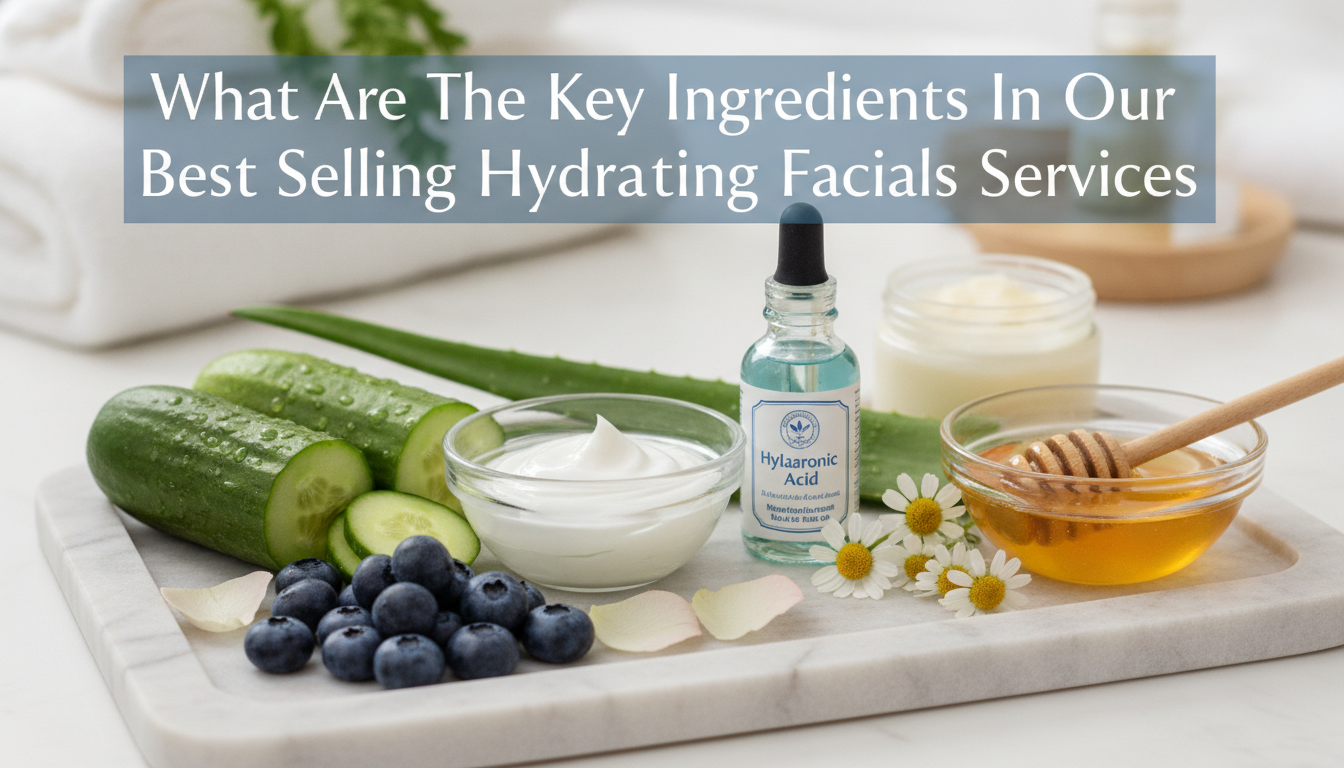
If there’s one ingredient that appears in virtually every effective hydrating facial, it’s hyaluronic acid. This naturally occurring molecule can hold up to 1,000 times its weight in water, drawing moisture from the environment and locking it into skin cells.
What makes it particularly powerful in a professional treatment setting is the concentration and molecular weight. High-molecular-weight hyaluronic acid works on the surface to plump and smooth, while low-molecular-weight variants penetrate deeper to hydrate from within. Our facials use formulations that combine both, giving you surface radiance alongside deeper structural support.
For clients in Abuja dealing with harmattan-season skin — that tight, flaky, uncomfortable feeling that typically peaks between November and March — hyaluronic acid is often the single most transformative ingredient in the room.
Aloe Vera — Soothing, Healing, and Deeply Nourishing
Aloe vera has been used in skincare for centuries, and its staying power isn’t nostalgia — it’s science. The gel contains over 75 active compounds including vitamins A, C, and E, enzymes, and polysaccharides that bind moisture to the skin while calming inflammation.
In the context of Abuja’s heat and sun exposure, aloe vera plays a dual role in our hydrating facials: it soothes heat-stressed or sensitised skin while delivering a hit of lightweight hydration that doesn’t feel heavy or occlusive. It’s also naturally antimicrobial, making it an excellent choice for clients prone to breakouts who still need serious moisture.
Where possible, we prioritise locally sourced, organic aloe vera — fresher ingredients mean higher bioavailability and fewer processed additives sitting on your skin.
Glycerin — The Unsung Hero of Moisture Retention
Glycerin doesn’t get as much attention as hyaluronic acid in popular skincare conversation, but in professional formulations, it’s indispensable. It’s a humectant — meaning it pulls moisture from the air into the skin — and it also helps maintain the skin barrier’s structural integrity.
One reason glycerin is a consistent feature in our hydrating facial formulations is its compatibility with all skin types. Whether you’re dealing with post-harmattan dryness, oily combination skin, or the kind of dehydration that comes from long hours in air-conditioned offices across the FCT, glycerin works quietly and effectively without irritation.
Ceramides — Rebuilding the Skin Barrier
Think of ceramides as the mortar between the bricks of your skin. They’re lipids (fats) that make up a significant portion of the skin’s outer barrier, and their job is to prevent water from escaping. When ceramide levels drop — due to age, over-exfoliation, sun damage, or environmental stress — the skin becomes more vulnerable to moisture loss, irritation, and sensitivity.
Incorporating ceramide-rich formulations into hydrating facials isn’t just about adding hydration; it’s about helping the skin retain what it already has. After a ceramic-infused treatment, most clients notice their skin feels more resilient — less reactive to wind, dust, and product application — for up to two weeks post-treatment.
Vitamin C — Brightening Hydration
Vitamin C earns its place in several of our best selling hydrating facial services not as a standalone brightening agent, but as a supporting ingredient that enhances hydration results. As a powerful antioxidant, it neutralises free radical damage caused by UV exposure and environmental pollution — both significant concerns in Abuja’s outdoor and traffic-heavy environment.
Stable forms of Vitamin C, such as ascorbyl glucoside or sodium ascorbyl phosphate, work synergistically with hydrating ingredients by supporting collagen synthesis, which helps the skin maintain its plumpness and elasticity. The result is a complexion that doesn’t just look hydrated — it looks genuinely healthy and even-toned.
Ingredients That Support and Enhance the Core Formula
Beyond the headline ingredients, the effectiveness of a hydrating facial comes down to what surrounds and supports the primary actives.
- Niacinamide (Vitamin B3) — Strengthens the skin barrier, minimises pores, and regulates sebum production. Particularly useful for Abuja clients with combination or oily skin who still struggle with dehydration.
- Panthenol (Pro-Vitamin B5) — A skin-conditioning humectant that improves elasticity and supports wound healing. Often used in post-treatment serums to extend hydration benefits.
- Rose Water — A gentle toner and anti-inflammatory agent that preps the skin before active ingredients are applied. It also has a mild astringent effect that helps balance pH without stripping moisture.
- Green Tea Extract — Rich in polyphenols that calm redness and reinforce the antioxidant protection provided by Vitamin C. Ideal for clients with sensitised or sun-exposed skin.
- Shea Butter (in mask formulations) — For deep, occlusive hydration during mask phases, shea butter seals moisture in while delivering fatty acids that soften and nourish even the most parched skin.
These supporting ingredients are chosen to complement — not compete with — the primary hydrating actives, and they’re formulated to meet eco-friendly and cruelty-free standards wherever possible.
How the Treatment Process Maximises Ingredient Performance
Skin Preparation Matters More Than Most Clients Realise
The first step in any of our hydrating facials is thorough, gentle cleansing — removing sunscreen, pollution residue, and excess sebum that would otherwise create a barrier between the skin and active ingredients. This phase often involves a double cleanse using a mild micellar solution followed by a cream or gel cleanser suited to your skin type.
Next comes exfoliation, which is carefully calibrated based on your skin’s current condition. Over-exfoliating dehydrated skin is a common mistake — our therapists are trained to assess and adjust, ensuring the skin is prepared to absorb without being compromised.
Layering: The Order Ingredients Are Applied Matters
In a professional facial, ingredients aren’t just layered randomly. Formulations are applied from thinnest to thickest — serums first, then heavier emulsions or masks — to ensure that lighter molecular compounds (like low-weight hyaluronic acid) penetrate deeply before being sealed in by richer, more occlusive ingredients.
This sequencing is part of what separates a professional hydrating facial from a home skincare routine. Even if you’re using similar ingredients at home, the application technique, dwell time, and professional-grade concentrations in a clinical setting produce measurably different results.
Massage, Circulation, and Ingredient Uptake
Facial massage is not just a relaxation bonus — it’s functionally important. The manual stimulation involved in our facials increases blood circulation to the skin’s surface, which supports better oxygen delivery and helps active ingredients penetrate more effectively. Lymphatic drainage techniques also reduce puffiness and assist in removing metabolic waste from skin tissues.
For busy professionals in Abuja — the kind of person juggling back-to-back meetings in Maitama or long commutes from Wuse 2 — this tension-releasing aspect of the facial is often as valuable as the skincare itself.
How Often Should You Book a Hydrating Facial?
For general skin maintenance, a hydrating facial every four to six weeks aligns well with the skin’s natural cell turnover cycle (approximately 28 days in younger adults, slowing to 40–60 days as we age). This frequency keeps hydration levels consistent and allows therapists to track changes in your skin over time.
During harmattan season — roughly November through February — we typically recommend increasing to once every three weeks for clients whose skin becomes particularly reactive during that period. The combination of dry, dusty air and indoor heating or air conditioning creates a perfect storm of moisture depletion.
If you have a wedding, corporate event, or public appearance coming up, booking a hydrating facial five to seven days beforehand gives your skin time to settle into its best possible condition without any risk of post-treatment redness appearing on the day.
Frequently Asked Questions
What makes a hydrating facial different from a regular facial?
A standard facial may include cleansing, exfoliation, and extractions without a specific focus on moisture replenishment. A hydrating facial is specifically formulated around ingredients and techniques designed to restore the skin’s water content and reinforce its ability to retain moisture. Every product choice — from the cleanser to the mask — is selected with hydration as the primary goal.
Is a hydrating facial suitable for oily or acne-prone skin?
Yes — and this is one of the most common misconceptions we encounter. Oily skin is frequently dehydrated skin. When the skin lacks water, it produces excess oil to compensate, which can worsen congestion and breakouts. A well-designed hydrating facial using non-comedogenic ingredients like hyaluronic acid and niacinamide can actually help regulate oil production over time by addressing the root dehydration issue.
How soon will I see results after my first hydrating facial?
Most clients notice an immediate improvement in skin texture, plumpness, and radiance within 24 to 48 hours of their first treatment. More significant and lasting results — such as reduced fine lines, more even tone, and stronger skin barrier function — typically develop over a course of three to four consistent treatments spaced four to six weeks apart.
Do I need to do anything special after my hydrating facial?
For the first 24 hours post-treatment, avoid heavy makeup, direct sun exposure, and active exfoliants like AHAs or retinol. Drink plenty of water, apply a gentle SPF the following morning, and use a simple, fragrance-free moisturiser to support the skin as it settles. Your therapist will provide personalised aftercare guidance based on the specific treatment you received.
Which Luxor branch should I visit, and do I need to book in advance?
Both our Maitama branch (56 Usuma Street, Off Gana Street) and our Wuse 2 branch (792b Adetokunbo Ademola Crescent) offer the full range of hydrating facial services, so we’d suggest choosing whichever is most convenient for you. Booking in advance is always recommended — especially around weekends, public holidays, and pre-event periods — to ensure your preferred time slot is available. We operate 24 hours a day, seven days a week, so early morning and late evening appointments are entirely possible.
The Takeaway: Ingredients Are Only as Good as the Hands Applying Them
The key ingredients in our best selling hydrating facial services — hyaluronic acid, aloe vera, ceramides, glycerin, Vitamin C, and their supporting actives — are backed by strong dermatological evidence. But their effectiveness in a treatment setting depends on concentration, application order, skin preparation, and the expertise of the therapist administering them. At Luxor, we’ve been refining this approach since 2013, and our commitment to eco-friendly, cruelty-free, and where possible organically sourced products means you’re not just getting results — you’re getting them responsibly.
Whether you’re battling harmattan dryness, recovering from a period of skin neglect, or simply ready to invest in your complexion, a professionally delivered hydrating facial is one of the most genuinely useful things you can do for your skin. The ingredients do the work — the expertise ensures they do it well.
Ready to experience the difference? Reach out to whichever Luxor branch works best for you — our team is available 24/7 to answer questions, discuss your skin concerns, or help you lock in a booking.
Maitama Branch — 56 Usuma Street, Off Gana Street, Maitama, Abuja
Email: moc.apsdnanolasroxul@ofni
Phone: (+234) 701 888 0102
Wuse 2 Branch — 792b Adetokunbo Ademola Crescent, Wuse 2, Abuja
Email: moc.apsdnanolasroxul@2esuw
Phone: (+234) 701 888 0100
You can also book online at your convenience — no phone call needed, just a few clicks and your appointment is confirmed.