

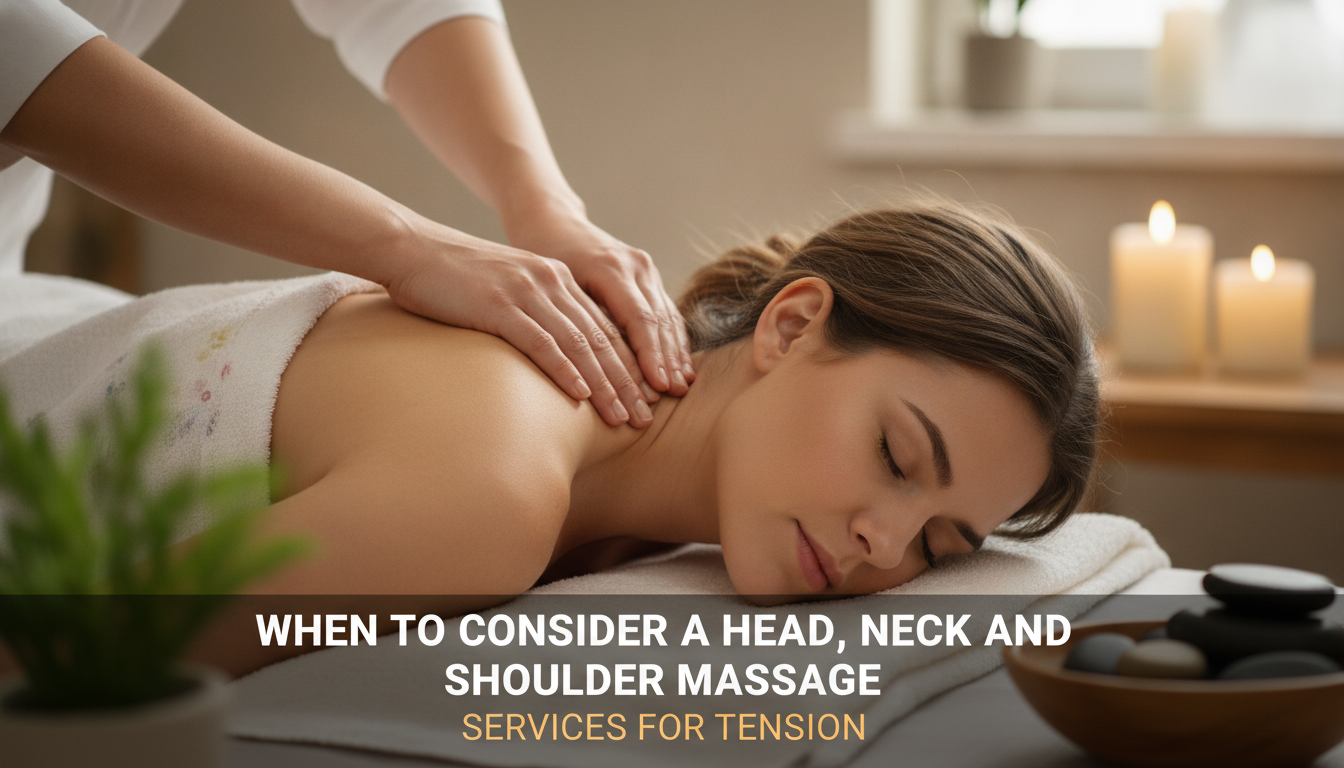
There’s a particular kind of exhaustion that settles into your upper body after a long week — the kind that no amount of sleep seems to fix. Your shoulders feel like they’re carrying weight they never agreed to hold, your neck is stiff when you try to turn your head, and there’s a low, persistent ache that radiates from the base of your skull down through your back. If this sounds familiar, a head neck and shoulder massage might be exactly what your body has been asking for. The question most people skip is not whether massage helps — it does — but when it’s actually the right time to go.
What a Head, Neck and Shoulder Massage Actually Does
This isn’t just a feel-good treatment. A focused massage targeting the head, neck, and shoulder area works on specific muscle groups that are almost constantly engaged — whether you’re sitting at a desk, driving through Abuja traffic, or simply carrying the mental load of a full schedule.
The trapezius, levator scapulae, and suboccipital muscles are among the most tension-prone in the human body. These muscles support your head (which weighs between 4.5 to 5.5 kg on average) and are directly affected by posture, stress, and repetitive movement. When they tighten and shorten over time, the effects spread — into headaches, reduced neck mobility, shoulder pain, and even disrupted sleep.
A skilled therapist applies a combination of techniques: effleurage to warm and prepare the tissue, petrissage to work into deeper layers of muscle, and trigger point release to address specific knots that have built up over time. The scalp component adds another layer — stimulating blood circulation and easing tension held in the frontalis and temporalis muscles around the forehead and temples.
Clear Signs You Should Consider a Head Neck and Shoulder Massage
Most people wait until they’re in significant pain before booking. But tension builds gradually, and catching it early makes recovery faster and more complete.
You’ve Been Sitting at a Desk for Long Stretches
Sedentary work is one of the leading contributors to upper body tension. When you’re focused on a screen, you tend to lean forward, drop your chin, and let your shoulders creep upward — a position that puts sustained strain on the neck extensors and upper trapezius. Over several hours a day, across several days a week, this compounds into chronic tightness.
If you work long hours in an office or from home — as many professionals in Abuja’s FCT do — booking a massage every two to four weeks is a reasonable preventive measure, not a luxury.
You’re Getting Frequent Tension Headaches
Tension headaches are often misread as dehydration or stress. While both can play a role, a significant number of tension headaches originate from tight muscles in the neck and suboccipital region. The pain typically presents as a band-like pressure around the head or a dull ache at the base of the skull.
Massage therapy addresses this at the source by releasing the muscular trigger points that refer pain into the head. Many people notice a reduction in headache frequency after just two or three consistent sessions.
Your Neck Doesn’t Turn as Freely as It Should
Healthy neck rotation allows you to turn roughly 70 to 90 degrees to each side. If you’re noticing stiffness when reversing your car, checking blind spots, or simply looking over your shoulder during a conversation, that’s a sign your cervical muscles are over-contracted.
This kind of restricted mobility is both uncomfortable and a risk factor for strain if it’s suddenly forced. A head neck and shoulder massage helps restore this range of motion progressively and safely.
Stress Has Been Unusually High
Psychological stress doesn’t stay in the mind — it manifests physically. When you’re anxious or under pressure, your body activates a low-level fight-or-flight response, which keeps the muscles of the shoulders and neck in a guarded, contracted state.
This is especially relevant in a city like Abuja, where navigating traffic, demanding work deadlines, social obligations, and the unpredictability of daily logistics can stack up. Massage activates the parasympathetic nervous system — the body’s rest-and-digest mode — which directly counteracts that chronic muscular guarding.
You’ve Been Sleeping Poorly
Muscle tension and poor sleep reinforce each other in a frustrating cycle. Tight neck and shoulder muscles make it difficult to find a comfortable sleeping position, which disrupts rest, which in turn reduces the body’s ability to recover from that tension overnight.
A 60-minute massage session can reduce cortisol levels measurably and increase serotonin and dopamine — both of which support better sleep quality. Many clients report sleeping notably better on the night of their treatment.
Timing Matters: When in Your Life Should You Book?
After Major Events or Busy Seasons
Abuja’s wedding and event culture is genuinely demanding. Planners, attendees, and vendors who spend weeks preparing for owambe events or corporate functions often carry significant physical and mental tension into and beyond those occasions. Booking a head neck and shoulder massage in the days following a big event is an excellent form of recovery.
Similarly, end-of-quarter or year-end work periods — when deadlines cluster and hours lengthen — leave many professionals overdue for physical recovery.
During Harmattan Season
The dry, dusty harmattan winds that sweep through Abuja between November and February don’t just affect skin and hair. The cold, arid conditions cause muscles to contract and joints to stiffen, particularly in the neck and shoulder area. This is one of the most common times people notice their upper body tension worsening without an obvious explanation.
Combining a warm massage environment with techniques that target this seasonal stiffness can make a real difference during these months.
As a Regular Maintenance Practice
Waiting until pain becomes unbearable is one approach. A better one is treating massage as maintenance — the way you’d schedule regular car servicing rather than waiting for a breakdown. For most people with active or desk-based lifestyles, a session every three to four weeks keeps tension from accumulating to the point where it disrupts daily function.
What to Expect From a Professional Session
A well-structured head neck and shoulder massage session typically runs between 45 and 75 minutes, depending on what you book. Your therapist should begin with a brief consultation to understand your specific areas of concern — whether that’s a persistent knot in the left trapezius, recurring headaches, or general fatigue.
The work itself usually starts at the shoulders and upper back, moving upward through the neck and finishing with the scalp. Pressure should be firm but responsive — a good therapist adjusts based on feedback, and you should always feel comfortable communicating what’s too much or too little.
Aftercare matters too. Drinking water in the hours following a massage helps flush out metabolic waste released from the muscles. Avoid strenuous activity for the rest of the day, and try to give your body the rest it needs to integrate the treatment. Many therapists recommend a 24-hour window before intense exercise.
Why the Quality of Your Therapist and Products Matters
Not all massage services deliver the same outcome. The difference lies in the training of the therapist, the technique applied, and the products used during treatment.
Certified therapists who work with a thorough understanding of anatomy are able to locate and address the specific muscle groups contributing to your tension — rather than simply applying generalised pressure. This is what separates a genuinely therapeutic session from one that simply feels relaxing in the moment but doesn’t produce lasting change.
Products also make a meaningful difference. Massage oils and balms that are certified organic and cruelty-free are gentler on the skin and better suited for use in extended contact treatments. Locally sourced organic ingredients, where available, carry the added benefit of environmental consideration alongside quality.
Luxor Salon and Spa, established in 2013, has built its reputation in Abuja on exactly these standards — trained therapists, quality-assured products, and an environment designed to support genuine recovery and relaxation.
Choosing the Right Location for Your Visit
Convenience is a legitimate factor in whether you actually follow through with booking. Luxor operates two accessible branches in Abuja, both open 24 hours a day, seven days a week — which matters for clients who work non-standard hours or simply can’t commit to a rigid daytime schedule.
The Maitama branch at 56 Usuma Street, Off Gana Street, is an ultra-modern facility in one of Abuja’s most prestigious neighbourhoods — well-suited for professionals working or residing in that corridor. The Wuse 2 branch at 792b Adetokunbo Ademola Crescent sits in the heart of the city’s commercial hub, making it an easy stop before, during, or after a workday in that area.
Both branches offer the same service standards, so the choice really comes down to which is more practical for you on the day.
Frequently Asked Questions
How often should I get a head neck and shoulder massage for tension?
For ongoing tension related to desk work or stress, a session every two to four weeks is generally effective for most people. If you’re dealing with acute discomfort, more frequent sessions over a short period — followed by maintenance appointments — may be recommended by your therapist.
Is a head neck and shoulder massage suitable if I have a medical condition?
In most cases, yes — but it’s worth informing your therapist of any relevant health conditions before your session. Conditions such as cervical disc issues, recent injuries, or skin sensitivities may require modified techniques. When in doubt, consult your doctor first and let your therapist know.
How long does the relief last after a session?
This varies depending on the person and their lifestyle. Many clients feel relief for several days to a week or more after a single session. Those who receive regular treatments tend to find that the effects last progressively longer as cumulative tension is reduced.
Do I need to book in advance, or can I walk in?
Booking in advance is always recommended, particularly during busy periods or if you have a preferred time slot. Both Luxor branches are open 24/7, which offers flexibility, but securing your appointment ahead of time ensures you get the time that works best for you. You can book online or reach the branch directly.
Which Luxor branch should I visit?
Simply choose whichever is most convenient based on where you live or work. The Maitama branch on Usuma Street is ideal if you’re in that part of the city, while the Wuse 2 branch on Adetokunbo Ademola Crescent is centrally located and easy to access from most parts of Abuja. Both offer the same quality of service and operate around the clock.
Final Thoughts on Getting the Timing Right
Tension in the head, neck, and shoulders rarely announces itself loudly at first. It builds quietly — through hours of screen time, consecutive stressful days, disrupted sleep, and the particular pace of life in a city like Abuja. By the time most people consider booking a massage, the tension has already been building for weeks. The good news is that it responds well to treatment, and starting sooner rather than later makes a meaningful difference in how quickly you feel better.
A head neck and shoulder massage isn’t a complicated solution. It’s a targeted, evidence-backed response to a very common physical problem. Whether you’re managing ongoing stress, recovering from a demanding period, or simply noticing that your body isn’t moving as freely as it should — this is a practical, effective step worth taking.
Ready to book or simply want to find out more? Reach Luxor’s Maitama branch at moc.apsdnanolasroxul@ofni or call (+234) 701 888 0102. For the Wuse 2 branch, email moc.apsdnanolasroxul@2esuw or call (+234) 701 888 0100. You can also book online at your convenience. Both branches are open 24/7 — the team is happy to answer questions, discuss pricing, or find a time that works for you.