

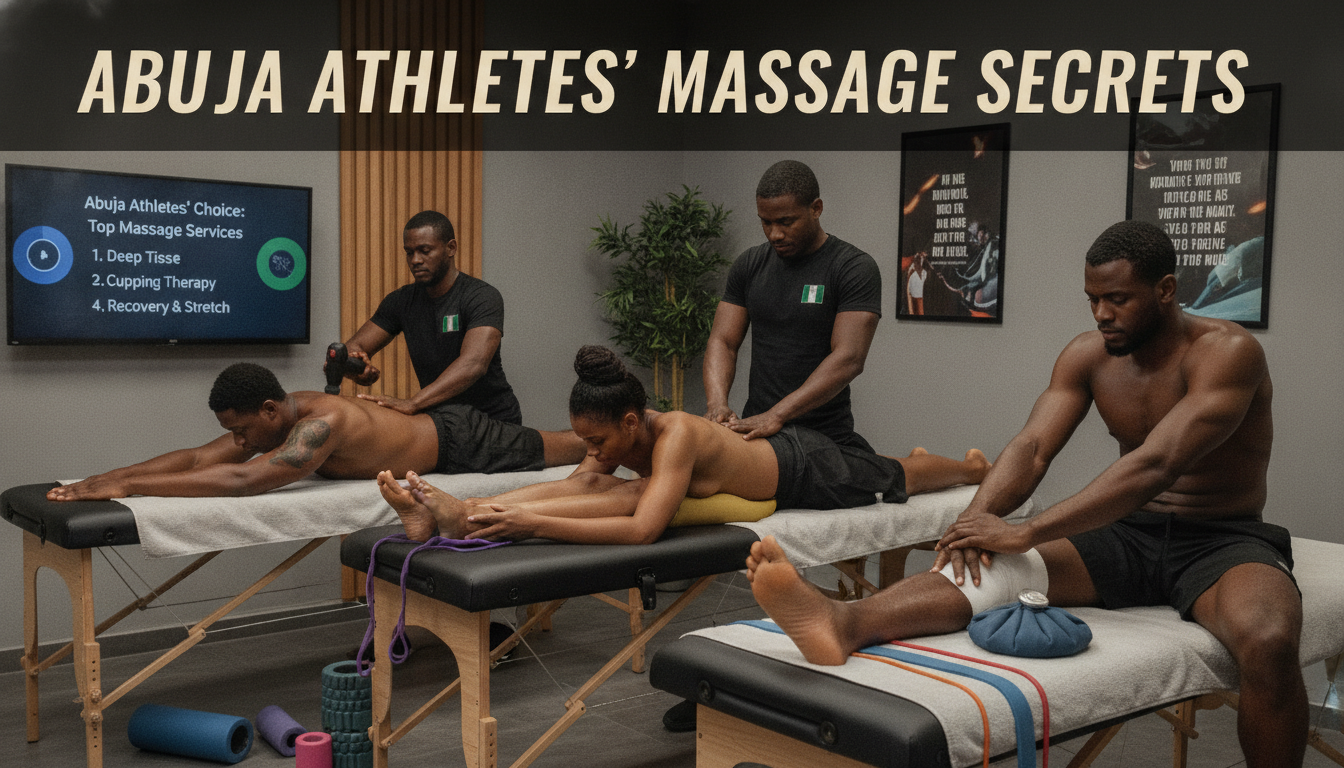
Athletes in Abuja push their bodies hard — early morning track sessions at the National Stadium, afternoon strength training, weekend league matches, and the constant physical demands of competitive sport. Recovery is not optional; it’s part of the programme. That’s why massage services for Abuja athletes have grown steadily in demand over the past decade, with more sportspeople recognising that what happens after training matters just as much as the training itself. But not all massage treatments are built the same, and understanding which services actually make a difference can help athletes train smarter and recover faster.
Why Athletes in Abuja Are Prioritising Massage Therapy
The conversation around athletic recovery has shifted significantly. It used to be that massage was seen as a luxury — something reserved for professional footballers or elite track athletes before a major competition. Today, amateur and semi-professional athletes across Abuja are booking regular massage appointments as part of structured training plans.
Part of this shift comes down to awareness. Coaches, physiotherapists, and sports nutritionists are increasingly vocal about the role of soft tissue therapy in preventing injury and maintaining performance consistency. When muscles are fatigued and never fully recovered, the risk of strains, tears, and overuse injuries climbs sharply.
Abuja’s climate adds another layer of complexity. The heat and dust — especially during harmattan season — place extra stress on the body. Dehydration happens faster, muscles tighten more readily, and recovery windows shrink. Athletes who train through these conditions without proper recovery support are playing a longer game than they realise.
The Most Requested Massage Services By Abuja Athletes
Deep Tissue Massage
This is consistently the most requested treatment among serious athletes in Abuja, and for good reason. Deep tissue massage targets the deeper layers of muscle and connective tissue, working through surface tension to address chronic tightness and adhesions that build up over weeks of training.
Sessions typically run between 60 and 90 minutes, depending on the areas being treated. Footballers and basketball players often request focused work on the hamstrings, glutes, and calves. Swimmers and tennis players tend to prioritise the shoulders, upper back, and neck.
The pressure used in deep tissue work can feel intense, but that’s intentional. A skilled therapist applies slow, deliberate strokes across the grain of the muscle fibre to break down knots and improve circulation to areas that aren’t receiving adequate blood flow. Most athletes notice meaningful improvement within 24 to 48 hours after a session.
Sports Massage
Sports massage is specifically designed around athletic performance — it’s not simply a deeper version of a relaxation massage. It incorporates techniques like compression, cross-fibre friction, trigger point therapy, and assisted stretching, all tailored to the athlete’s sport and training phase.
Timing matters with sports massage. A pre-event session — typically lighter and more stimulating — is best done 24 to 48 hours before competition. A post-event session focuses on flushing out metabolic waste, reducing inflammation, and calming the nervous system. Many Abuja athletes book mid-training-cycle sessions to address specific issues before they become injuries.
Runners training for events like the Abuja Marathon, for example, often schedule sports massage every two to three weeks during peak training blocks. This frequency allows the therapist to track recurring problem areas and adjust technique accordingly.
Swedish Massage for Active Recovery
Swedish massage doesn’t get the same attention as deep tissue work in athletic circles, but it plays a genuinely important role — particularly in the 12 to 24 hours immediately after intense competition or a heavy training session.
The long, gliding strokes used in Swedish massage promote lymphatic drainage and improve circulation without adding further stress to already taxed muscles. Think of it as active recovery in treatment form. It’s gentler, but that’s precisely the point on days when the body needs restoration rather than intervention.
Athletes who incorporate Swedish massage into their weekly routine — particularly on lighter training days — often report better sleep quality and reduced general fatigue. Given how many Abuja athletes are also managing full-time work schedules and long commutes, the stress-relief benefit is equally valuable.
Trigger Point Therapy
Trigger points are hyperirritable spots within a muscle — commonly called knots — that refer pain to other areas of the body when pressed. A tight spot in the hip flexor, for instance, can create pain that radiates down the thigh or up into the lower back.
Trigger point therapy involves sustained, targeted pressure on these spots to release the tension and restore normal muscle function. It can be uncomfortable during the session, but the relief that follows is typically significant. Many athletes describe it as addressing the source of pain rather than just the symptom.
This technique is particularly popular among Abuja athletes dealing with chronic pain patterns — runners with persistent IT band tightness, footballers with recurring hip flexor issues, or gym athletes experiencing unexplained shoulder discomfort.
Hot Stone Massage
Hot stone massage uses smooth, heated basalt stones placed along the body and used as tools during the massage. The heat penetrates muscle tissue more deeply than hand pressure alone, making it particularly effective for athletes with chronically tight or cold-resistant muscles.
This treatment is especially popular during the cooler harmattan months when muscle stiffness is more pronounced. The combination of warmth and therapeutic pressure encourages the body to relax at a deeper level, which is something pure manual pressure sometimes struggles to achieve with athletes who carry significant baseline tension.
Sessions typically last 75 to 90 minutes, and the results often feel more immediate than standard massage — muscles feel warmer, looser, and more responsive in the hours that follow.
How Often Should Abuja Athletes Book Massage Treatments?
There’s no universal answer, but there are some useful benchmarks. Athletes in heavy training blocks — preparing for competitions, tournaments, or peak season — generally benefit from massage once every one to two weeks. During off-season or lighter periods, once a month may be sufficient for maintenance.
The key is consistency rather than intensity. A single session can provide temporary relief, but regular massage over weeks and months changes tissue quality, reduces injury frequency, and improves movement patterns. Athletes who treat massage as an occasional indulgence get limited results; those who build it into their routine see cumulative benefits.
It’s also worth factoring in lifestyle stress. Abuja’s traffic, professional pressures, and the general pace of life in the FCT all contribute to muscular tension even outside of training. An athlete who commutes across the city, works long hours, and trains four times a week is carrying more load than their training programme alone suggests.
Choosing the Right Massage Service: Practical Tips for Athletes
- Communicate your training schedule. A good therapist will adjust technique and pressure based on where you are in your training cycle. Always mention upcoming events or recent intense sessions.
- Don’t schedule deep tissue work the day before competition. Deep tissue and sports massage can temporarily increase soreness. Give your body at least 24 hours to integrate the work.
- Hydrate before and after your session. Massage mobilises metabolic waste products from muscle tissue. Drinking water helps flush these from your system more effectively.
- Be specific about problem areas. Vague feedback makes it harder for a therapist to help you. If your left hamstring has been tight for three weeks, say so — and mention when it started and what aggravates it.
- Consider complementary services. Athletes often benefit from combining massage with body scrubs or wrap treatments that support skin health and circulation, particularly during harmattan when the dry air affects skin integrity and general recovery.
What Sets a Quality Sports Massage Apart in Abuja
The difference between a genuinely therapeutic massage and a pleasant but ineffective one usually comes down to two things: therapist skill and product quality.
Trained therapists with experience working with athletes will ask about your sport, your injury history, and your training goals before they begin. They’ll adapt pressure and technique mid-session based on how your body responds. This kind of attentiveness is the marker of real expertise — not just technique, but listening.
Product quality also matters more than many people realise. Oils and lotions applied directly to the skin during massage are absorbed into the body. Establishments that use certified organic, cruelty-free, and locally sourced ingredients offer a meaningful advantage — especially for athletes who are careful about what they put into their bodies in every other area of their training.
Luxor Salon and Spa, established in 2013, has built its reputation in Abuja around exactly these standards. With two branches — one in Maitama and one in Wuse 2 — and 24/7 operating hours, it’s designed to accommodate athletes whose schedules don’t always fit neatly into standard business hours. The eco-friendly and cruelty-free product standards align with the growing preference among health-conscious athletes for clean, responsible treatments.
Location and Convenience: Why It Matters for Recovery
Recovery is most effective when it’s consistent, and consistency requires convenience. If getting to a massage appointment takes an hour of Abuja traffic each way, athletes will find reasons to skip it. This is why having accessible locations matters more than people often acknowledge.
Luxor’s Maitama branch — located at 56 Usuma Street, Off Gana Street, Maitama — sits in one of the city’s most prestigious and accessible districts. It’s the ultra-modern facility that athletes in the northern and central parts of Abuja tend to prefer.
The Wuse 2 branch at 792b Adetokunbo Ademola Crescent is the flagship location, positioned in the heart of Abuja’s commercial hub. Athletes commuting from Wuse, Mabushi, Gwarinpa, or the central business areas will find this branch more practical.
Having two quality options means athletes can choose based on where they’ve been training that day — not plan their recovery around a fixed location.
Frequently Asked Questions
What is the best massage for muscle recovery after a football match?
Sports massage or Swedish massage within 24 hours of a match works well for recovery — the lighter strokes help reduce inflammation and flush out lactic acid without overloading fatigued muscles. Deep tissue work is better suited to mid-week, once initial soreness has settled. Most experienced therapists will blend techniques depending on how your body presents on the day.
How long should I wait before getting a massage after an injury?
This depends on the nature and severity of the injury. For acute injuries — strains, sprains, or anything with significant swelling — you should wait until the acute phase has passed, usually 48 to 72 hours minimum, and ideally consult a physiotherapist first. For chronic or recurring issues, massage can often begin sooner and may actually accelerate recovery when applied correctly.
Is it worth getting a massage if I only train twice a week?
Yes, particularly if you’re also managing a demanding work schedule or long commutes — both of which contribute to muscular tension independently of training. Even moderate physical activity benefits from regular soft tissue maintenance. A monthly session is a reasonable starting point for recreational athletes, with adjustments based on how your body responds.
Do I need to book in advance at Luxor, or can I walk in?
Both branches operate 24/7, which gives athletes flexibility that most Abuja spas don’t offer. Booking in advance is always recommended, especially for weekend appointments or if you have a specific therapist preference. You can book online or contact your preferred branch directly to check availability and secure your slot.
Which Luxor branch should I visit as an athlete based in Maitama or Wuse?
If you’re in or around Maitama, Asokoro, or the northern districts, the Maitama branch at 56 Usuma Street is the most convenient. If you’re based around Wuse 2, Gwarinpa, or the central commercial areas, the Wuse 2 branch on Adetokunbo Ademola Crescent is your best bet. Both branches offer the same service standards, therapist quality, and product range — the choice is simply about what’s closest to you.
Conclusion
The most requested massage services by Abuja athletes — deep tissue, sports massage, Swedish, trigger point, and hot stone — each serve a specific purpose in the recovery cycle. Understanding which treatment fits which moment in your training gives you a real edge, not just in how you feel, but in how consistently you can perform. Recovery is training, and massage therapy is one of the most underused tools in the average Abuja athlete’s toolkit.
Whether you’re a weekend league player, a competitive runner, or a gym-goer pushing through a serious training block, building massage into your routine is one of the more impactful decisions you can make for your long-term athletic health. The key is choosing a facility with trained therapists, quality products, and the flexibility to work around your schedule — because the best massage appointment is the one you actually keep.
Ready to book or have a question? Reach the Luxor Maitama branch at moc.apsdnanolasroxul@ofni or call (+234) 701 888 0102. Prefer the Wuse 2 location? Email moc.apsdnanolasroxul@2esuw or call (+234) 701 888 0100. You can also book online at any time — both branches are open 24/7 and the team is happy to help you find the right treatment for your training needs.