


There’s a lot of misinformation floating around about pedicure services — and if you’ve ever talked yourself out of booking one because of something you heard from a friend or read online, you’re not alone. In Abuja, where harmattan dust, long commutes, and a packed social calendar can do a number on your feet, pedicure myths are genuinely getting in the way of good self-care. Our experts at Luxor Salon and Spa have been setting the record straight since 2013, and today we’re tackling the seven most stubborn myths about pedicure services head-on.
Myth 1: Pedicures Are Just a Luxury for Special Occasions
This is probably the most common misconception we hear. Many people treat a pedicure as something you only book before a wedding, a beach trip, or the December holidays. In reality, regular pedicures are a genuine foot health practice — not a one-off indulgence.
Your feet carry your entire body weight every single day. In Abuja, where you might walk across dusty car parks, sit in traffic for hours, and then attend an evening event, the stress on your feet is relentless. Neglected feet can develop calluses, cracked heels, ingrown toenails, and fungal issues — all of which are easier to prevent than to treat.
Most professional therapists recommend a pedicure every four to six weeks. That’s a maintenance schedule, not a luxury timetable. Think of it the way you think about a haircut — something that keeps everything in good condition, not just a treat for special days.
Myth 2: Pedicure Services Are Unsafe Because of Hygiene Risks
This myth has some genuine roots — there are salons that cut corners on sterilisation, and those places do pose risks. But dismissing all pedicure services because of bad actors in the industry is like avoiding restaurants entirely because of one food poisoning story.
What Proper Hygiene Actually Looks Like
At a reputable salon, every tool that touches your skin — nippers, files, pushers — should either be single-use or fully sterilised between clients using an autoclave or hospital-grade disinfectant. Foot baths should be drained, cleaned, and disinfected between every appointment, not just rinsed out.
When you visit either of our Luxor branches, you’ll notice that hygiene isn’t an afterthought — it’s built into every step of the process. The Wuse 2 branch at 792b Adetokunbo Ademola Crescent and the Maitama branch at 56 Usuma Street both follow strict sanitisation protocols as standard practice, not just during inspections.
How to Protect Yourself When Choosing a Salon
- Watch whether tools are removed from sealed packaging or a steriliser — not just wiped down with a cloth
- Ask if the foot bath is disinfected between clients — a professional therapist won’t be offended by the question
- Avoid salons where you can see reused disposable tools
- Don’t shave your legs the day before a pedicure — tiny nicks create openings for bacteria
The hygiene myth is really a quality myth in disguise. The risk isn’t pedicures themselves — it’s choosing the wrong place to get one.
Myth 3: You Should Only Get a Pedicure When Your Feet Are Already in Good Shape
This one comes up constantly. People wait until their feet look “acceptable” before booking an appointment — which completely defeats the purpose. A pedicure is a treatment, not a presentation.
If you’re dealing with rough heels, thickened skin, or overgrown cuticles, those are exactly the conditions a trained therapist is equipped to address. Cracked heels, for example, are extremely common in Abuja during harmattan season — the dry, dusty air strips moisture from skin rapidly, and open-toed sandals make things worse. Coming in with problem feet isn’t embarrassing; it’s the whole point.
Therapists are trained in foot exfoliation, callus removal, and cuticle care. They’ve seen every possible condition. Waiting until your feet are “good enough” means you’re delaying care you actually need right now.
Myth 4: Gel and Acrylic Toenail Products Permanently Damage Your Nails
The concern behind this myth is understandable — there are real cases where nails become thin or brittle after prolonged gel use. But the culprit is almost never the product itself. It’s improper application or, more often, improper removal.
The Removal Problem
The single most damaging thing that happens to nails in a pedicure context is aggressive peeling or filing off gel polish instead of soaking it off correctly. When gel is removed properly — soaked in acetone for the appropriate time and gently lifted — the nail plate stays intact. When it’s rushed or forced, that’s when you see thinning and peeling.
Choosing the Right Products
Product quality matters enormously. At Luxor, we use certified organic and cruelty-free nail products that are formulated without the harsh chemicals found in lower-grade alternatives. The difference in how your nails feel weeks after a service is noticeable. Nails treated with quality, responsibly sourced products hold up significantly better than those treated with cheap, fast-dry alternatives that often contain formaldehyde, toluene, or DBP.
If your nails have felt damaged after a gel pedicure before, the question worth asking is whether the product or the removal process was the issue — not whether gel pedicures themselves are inherently harmful.
Myth 5: Pedicures Are Only for Women
This myth is fading, but it hasn’t disappeared entirely — particularly in Nigeria, where there’s still some social awkwardness around men booking beauty treatments. Let’s be direct: foot care has no gender. Cracked heels, fungal infections, and ingrown toenails don’t discriminate.
Busy male professionals in Abuja — lawyers, politicians, executives — are increasingly booking regular pedicures, and for good reasons. Foot health affects posture, comfort, and overall wellbeing. A thorough pedicure that includes a foot massage can also do a meaningful amount for stress relief, which is not a small thing in a city that runs at Abuja’s pace.
Many male clients at our Maitama and Wuse 2 branches book straightforward maintenance pedicures — no polish, no fuss — focused entirely on cleanliness, callus removal, and a good massage. It’s practical self-care, full stop.
Myth 6: At-Home Pedicures Are Just as Effective as Professional Ones
There’s real value in at-home foot care — soaking your feet, using a pumice stone, keeping your nails trimmed. That’s maintenance. But it’s not the same as a professional service, and understanding the difference helps you decide where to invest your time and money.
A trained therapist has access to professional-grade tools and products that simply aren’t available over the counter. They can identify early signs of fungal infection, ingrown nails, or skin conditions that an untrained eye would miss. They know how to cut toenails correctly — straight across, at the right length — in a way that prevents the ingrown nails that many people accidentally cause themselves at home.
There’s also the technique. A professional foot and leg massage targets specific pressure points and uses methods that improve circulation. That’s not something a foot scrub at home replicates, no matter how good the product is.
Think of it the same way you’d think about washing your own hair versus getting a professional treatment at a salon. Both are valid — but they’re not interchangeable.
Myth 7: All Pedicure Services Are Basically the Same
Walk into any salon and ask for “a pedicure” and you might get something very different depending on where you are. This myth — that a pedicure is a pedicure — is one of the reasons people sometimes feel underwhelmed after a service they expected more from.
The Range of What’s Actually Available
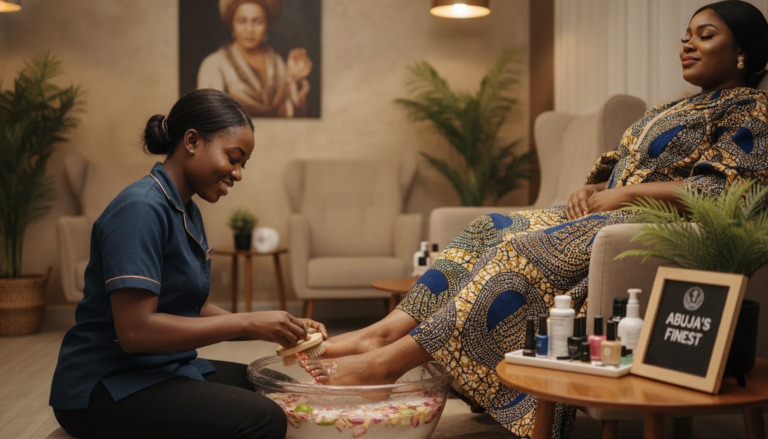
A basic pedicure typically covers nail trimming, cuticle care, light buffing, and polish. A spa pedicure goes further — extended foot soaks, exfoliation masks, paraffin wax treatments, and longer massage sequences. Medical-grade pedicures address specific conditions like severely cracked heels, thickened nails, or fungal damage with targeted treatments.
At Luxor, we use locally sourced organic ingredients in many of our treatments — including nourishing foot masks that are particularly effective during harmattan, when skin needs deeper hydration than a basic moisturiser can provide. The difference between a rushed 30-minute pedicure and a considered 60–90 minute spa treatment is significant — both in the experience and in how your feet feel for the days that follow.
How to Choose the Right Treatment for You
If you’re unsure which service suits your needs, it’s worth calling or messaging the salon before you book. A knowledgeable therapist will ask a few questions about your feet, your schedule, and what you’re hoping to achieve — and point you toward the right option. You shouldn’t have to guess.
Frequently Asked Questions
How often should I get a pedicure in Abuja’s climate?
Every four to six weeks is the general benchmark, but Abuja’s harmattan season — which runs roughly from November to February — can accelerate skin dryness and cracking. During those months, some clients benefit from booking every three weeks, particularly if they wear open shoes regularly. A therapist can advise you based on the condition of your feet at your first appointment.
Is it safe to get a pedicure if I have diabetes?
People with diabetes need to be careful with any foot treatment, because reduced circulation and nerve sensitivity can make minor cuts or irritation more serious. That said, many diabetic clients do receive pedicures safely — the key is informing your therapist beforehand so they can adjust their technique accordingly. Avoid very hot soaks, and choose a salon where therapists are trained in working with sensitive conditions. When in doubt, speak to your doctor first.
Do I need to book in advance, or can I walk in?
Both Luxor branches are open 24/7, which gives you genuine flexibility. That said, booking ahead is always advisable — particularly for weekend appointments or during busy seasons like December and before major events. Booking ensures you get the therapist and time slot you want rather than working around availability. You can book online or contact either branch directly.
Which Luxor branch should I visit?
Honestly, it comes down to convenience. If you’re in or near the Maitama area, the branch at 56 Usuma Street, Off Gana Street is an excellent choice — it’s an ultra-modern facility in one of Abuja’s most prestigious districts. If you’re closer to the commercial centre of the city, the Wuse 2 flagship location at 792b Adetokunbo Ademola Crescent is right in the heart of things. Both branches offer the full range of services to the same standard.
What should I do to prepare for a pedicure appointment?
Keep it simple: don’t shave your legs for at least 24 hours beforehand, remove any existing nail polish before you arrive if possible, and wear or bring open-toed sandals so your polish isn’t smudged on the way home. There’s no need to “pre-clean” your feet — that’s what the treatment is for.
The Bottom Line on Pedicure Myths
Most of the myths surrounding pedicure services come from one of two places: a bad experience at a low-quality salon, or assumptions that were never tested against reality. The truth is that regular, professionally delivered pedicures are one of the more practical investments in your own wellbeing — not a frivolous extra, not a gendered luxury, and not something to put off until your feet reach some imaginary standard of readiness.
In a city like Abuja, where the climate, lifestyle, and pace of daily life all take a toll on your feet, getting informed about what pedicure services actually involve — and what they don’t — puts you in a much better position to take care of yourself. The experts at Luxor have been helping clients do exactly that since 2013, and the advice is straightforward: don’t let a myth stand between you and good foot health.
Ready to Book or Have a Question?
Whether you want to know more about a specific treatment, ask about pricing, or simply find a time that works for your schedule, our teams at both Luxor branches are happy to help — any time of day or night.
Maitama Branch — 56 Usuma Street, Off Gana Street, Maitama, Abuja
Email: moc.apsdnanolasroxul@ofni
Phone: (+234) 701 888 0102
Wuse 2 Branch — 792b Adetokunbo Ademola Crescent, Wuse 2, Abuja
Email: moc.apsdnanolasroxul@2esuw
Phone: (+234) 701 888 0100
You can also book online at your convenience. We’re open 24/7 — visit whichever branch is closer to you, or reach out with any questions first. There’s no pressure, just good advice and great service when you’re ready.
Related Posts
 Why Our Pedicure Services Are Highly Rated By Abuja Locals
 How To Book A Last Minute Pedicure Services Appointment In Abuja
 Why Our Signature Massage Services Are The Talk Of Abuja
 What Are The 7 Signs You Need A Professional Pedicure Services Now
 Which Wellness Services Focuses Primarily On Detoxing The Body
 How To Ensure The Longevity Of Your Luxury Pedicure Services
 Why Our Express Pedicure Services Is Perfect For Quick Touch Ups
 7 Reasons To Choose Our Medispa Grade Facials Services In Abuja