

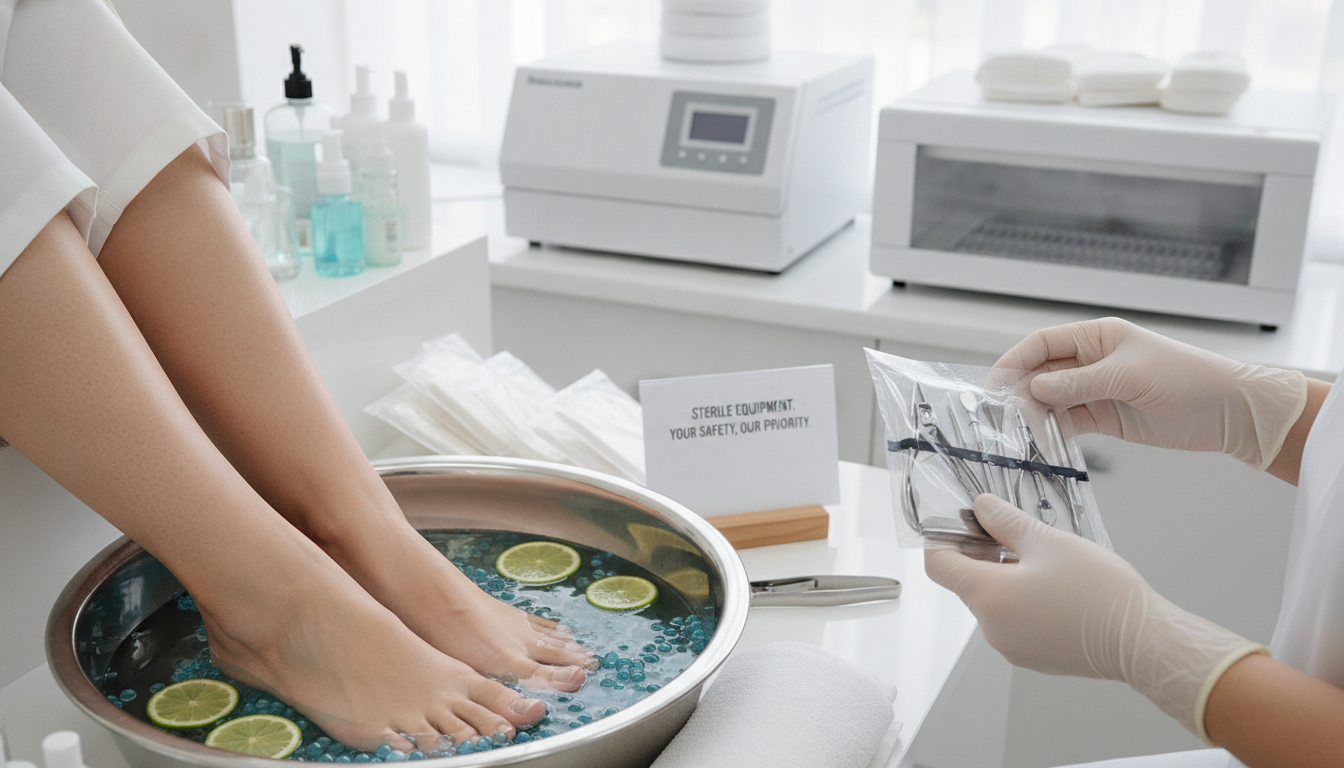
When it comes to pedicure services, the experience should feel indulgent — but what happens behind the scenes matters just as much as the polish on your toes. At Luxor Salon and Spa, our pedicure services are built on a foundation of hygiene and safety, not as an afterthought, but as the starting point for everything we do. Whether you are a first-time client or a regular visitor, understanding why we prioritise cleanliness and safety helps you make a more informed choice about where you put your trust — and your feet.
The Real Risks Hidden in a Routine Pedicure
Most people think of a pedicure as a simple, relaxing treat. And it should be. But without proper hygiene standards, a pedicure can expose your skin to bacterial infections, fungal conditions like nail fungus or athlete’s foot, and even bloodborne pathogens if tools are not properly sterilised between clients.
Foot skin is particularly vulnerable. The warm, moist environment of soaking bowls is the ideal breeding ground for bacteria if basins are not cleaned and disinfected thoroughly between every single use. Studies in dermatology have consistently linked improperly sanitised nail salon equipment to outbreaks of infections including Mycobacterium skin infections and staph-related complications.
This is not meant to alarm you — it is meant to explain why our approach is so deliberate. The risks are real, and the solution is straightforward: consistent, non-negotiable hygiene protocols applied every single time.
How Our Hygiene Protocols Actually Work
At Luxor, hygiene is not a checklist we run through once a week. It is a standard applied before, during, and after every client appointment — without exception.
Tool Sterilisation Between Every Client
Every metal tool used during a pedicure — cuticle pushers, nippers, nail files, and clippers — is either fully sterilised using hospital-grade autoclave methods or replaced with single-use disposable alternatives. There is no grey area here. A tool that touches one client’s skin does not touch another’s until it has been properly processed.
Autoclave sterilisation uses pressurised steam at temperatures above 121°C to eliminate all microbial life, including spores and viruses. It is the same standard used in medical and dental settings. We do not cut corners because we understand what is at stake.
Foot Bath and Basin Disinfection
Our soaking basins are cleaned and disinfected with EPA-approved solutions between every appointment. The jets and internal surfaces of any foot spa equipment — the areas most likely to harbour bacteria — are flushed and sanitised on a strict schedule. This step alone is where many salons fall short, and it is one we take seriously.
Therapist Hygiene Standards
Our therapists wash their hands before and after each service, wear gloves where appropriate, and are trained to identify early signs of contraindicated conditions — such as open wounds, active fungal infections, or inflamed skin — that would make it unsafe to proceed without adjustments. Flagging these things is not about turning clients away; it is about protecting them.
Why Safety Is About More Than Cleanliness
Hygiene and safety are related but not identical. Safety in a pedicure context also covers how services are performed — the pressure applied during exfoliation, the angle of nail filing, the handling of cuticles, and the use of tools near the skin.
Trained Hands Make a Real Difference
Improper nail trimming — cutting too short or at the wrong angle — is one of the leading causes of painful ingrown toenails. Aggressive cuticle removal can damage the protective barrier around the nail, opening the door to infection. These are not minor inconveniences; they can take weeks to resolve and, in some cases, require medical attention.
Luxor has been operating since 2013, and over more than a decade, our therapists have built genuine expertise in nail care. Our team is trained not just in technique but in understanding foot anatomy and skin health. That background matters every time someone sits down in our chair.
Product Safety and Ingredient Transparency
The products applied to your skin during a pedicure — scrubs, soaks, lotions, and polishes — are another layer of the safety equation. We use certified cruelty-free and eco-friendly products, and where possible, we incorporate locally sourced organic ingredients. This is not just a values statement; it is a practical one. Products with harsh synthetic chemicals can cause contact dermatitis, allergic reactions, or disrupt the skin’s natural pH — particularly for clients with sensitive skin.
If you have known allergies or sensitivities, we encourage you to let us know before your appointment. Our team can walk you through what will be used and make substitutions where needed.
The Abuja Context: Why Hygiene Matters Even More Here
Living in Abuja brings specific environmental factors that make foot care — and the safety of that care — particularly important.
Harmattan season, which typically runs from November through February, pulls moisture from the skin aggressively. Cracked heels and dry, flaking skin are common complaints during this period, and compromised skin is more susceptible to infection. This is exactly the time when a pedicure is most tempting and, ironically, when hygiene standards need to be at their highest.
The FCT lifestyle also plays a role. Busy professionals navigating long commutes, meetings, and packed schedules often wear closed shoes for extended hours in warm conditions — a setup that increases the risk of foot fungus and odour-related concerns. For many Abuja residents, regular professional foot care is less of a luxury and more of a practical health measure.
Wedding and event culture in Abuja is another driver. Open-toe shoes and sandals are common at celebrations, and many clients book pedicures in the days leading up to events. Getting a pedicure from a hygiene-focused salon means you are not trading a beautiful finish for a potential infection that surfaces a week later.
What a Hygiene-First Pedicure Actually Feels Like
You might wonder whether all this focus on protocols makes the experience feel clinical or impersonal. It does not — and it should not. In fact, the opposite tends to be true.
When you know that every tool has been sterilised, every basin disinfected, and every product carefully selected, you can actually relax. The anxiety of wondering “is this clean?” disappears. What remains is the experience itself: the warm soak, the exfoliation, the massage, the precise polish application.
At our Maitama branch — located at 56 Usuma Street, Off Gana Street, in one of Abuja’s most prestigious districts — the environment is designed to feel ultra-modern and calm. At our Wuse 2 flagship branch at 792b Adetokunbo Ademola Crescent, in the heart of the city’s commercial hub, the same standards apply in a setting that is easily accessible for professionals and shoppers alike. Both locations operate 24/7, which means you are not limited to booking around a fixed schedule.
Recommended Pedicure Frequency and Aftercare
A single pedicure is not a one-time fix — foot health benefits from consistency. For most people, booking a professional pedicure every four to six weeks is a reasonable rhythm. This timing aligns with the natural growth cycle of toenails and allows for regular removal of dead skin before it builds up significantly.
After your appointment, there are a few simple steps that extend the benefits and protect the work done:
- Moisturise your feet daily, especially around the heels and cuticles — a fragrance-free cream or a natural shea butter-based product works well
- Allow nail polish to dry fully before wearing enclosed shoes (at least two hours for standard polish; gel treatments cure under UV light and are ready faster)
- Avoid walking barefoot in public areas, particularly bathrooms and pools, in the 24–48 hours after a pedicure when the skin is still slightly sensitised
- If you notice unusual redness, swelling, or discomfort in the days following a pedicure, contact a healthcare professional — and let us know so we can review our records
These are not complicated steps, but they make a meaningful difference to how long the results last and how healthy your feet remain between appointments.
Frequently Asked Questions About Our Pedicure Services and Hygiene Standards
How do I know the tools used on me are properly sterilised?
You are welcome to ask your therapist directly — and a good salon should have no hesitation in explaining its process. At Luxor, we sterilise metal tools using autoclave methods or provide single-use disposable alternatives. If anything ever seems unclear or you have concerns on the day, please speak up. We would rather address a question in the moment than have a client leave with any doubt.
Is it safe to get a pedicure if I have dry or cracked heels?
In most cases, yes — and in fact, a professional pedicure can significantly help. Our therapists are trained to work with dry, cracked skin safely, using appropriate exfoliation techniques and hydrating treatments. However, if there are open sores, active infections, or very deep cracks that have broken the skin, we may recommend waiting or adjusting the service to avoid introducing bacteria into vulnerable areas.
How far in advance do I need to book?
We recommend booking at least 24 to 48 hours in advance, particularly if you have a specific time or therapist preference. That said, because both our Maitama and Wuse 2 branches are open 24/7, there is more flexibility than you might expect. You can also book online at any time — no need to call during business hours.
Which Luxor branch should I visit?
It honestly comes down to which is more convenient for you. Our Maitama branch at 56 Usuma Street is well-suited for clients in the northern and central parts of Abuja, while our Wuse 2 location at 792b Adetokunbo Ademola Crescent is easier to reach from the commercial and business districts. Both branches offer the same hygiene standards, the same product quality, and the same trained team.
Are your products safe for sensitive skin?
We use eco-friendly, cruelty-free products and incorporate organic ingredients where possible — formulations chosen with skin sensitivity in mind. If you have specific allergies or a history of reactions to certain ingredients, we recommend letting us know when you book or at the start of your appointment. Our team can review what will be used and make adjustments as needed.
Why Hygiene-First Pedicure Services Are Worth Choosing Every Time
There is no shortage of places to get a pedicure in Abuja. What sets hygiene-focused services apart is not just what you can see — the clean station, the gloves, the organised tools — but what you cannot see: the sterilisation process that happened before you arrived, the training that shaped how your therapist handles your skin, and the product sourcing decisions made long before you booked your appointment.
At Luxor Salon and Spa, these decisions are not made in response to client complaints. They are baked into how we operate. Established in 2013 and serving clients across two Abuja branches, we have had more than a decade to refine what “doing this properly” actually looks like in practice. The answer, every time, starts with hygiene and safety — because without those foundations, everything else is just surface level.
Ready to experience the difference? Whether you want to ask a question, request a price list, or go ahead and book, our team is available 24/7 at both locations.
Maitama Branch — 56 Usuma Street, Off Gana Street, Maitama, Abuja
Email: moc.apsdnanolasroxul@ofni
Phone: (+234) 701 888 0102
Wuse 2 Branch — 792b Adetokunbo Ademola Crescent, Wuse 2, Abuja
Email: moc.apsdnanolasroxul@2esuw
Phone: (+234) 701 888 0100
You can also book online at any time — it takes just a few minutes and you can choose whichever branch works best for you.