

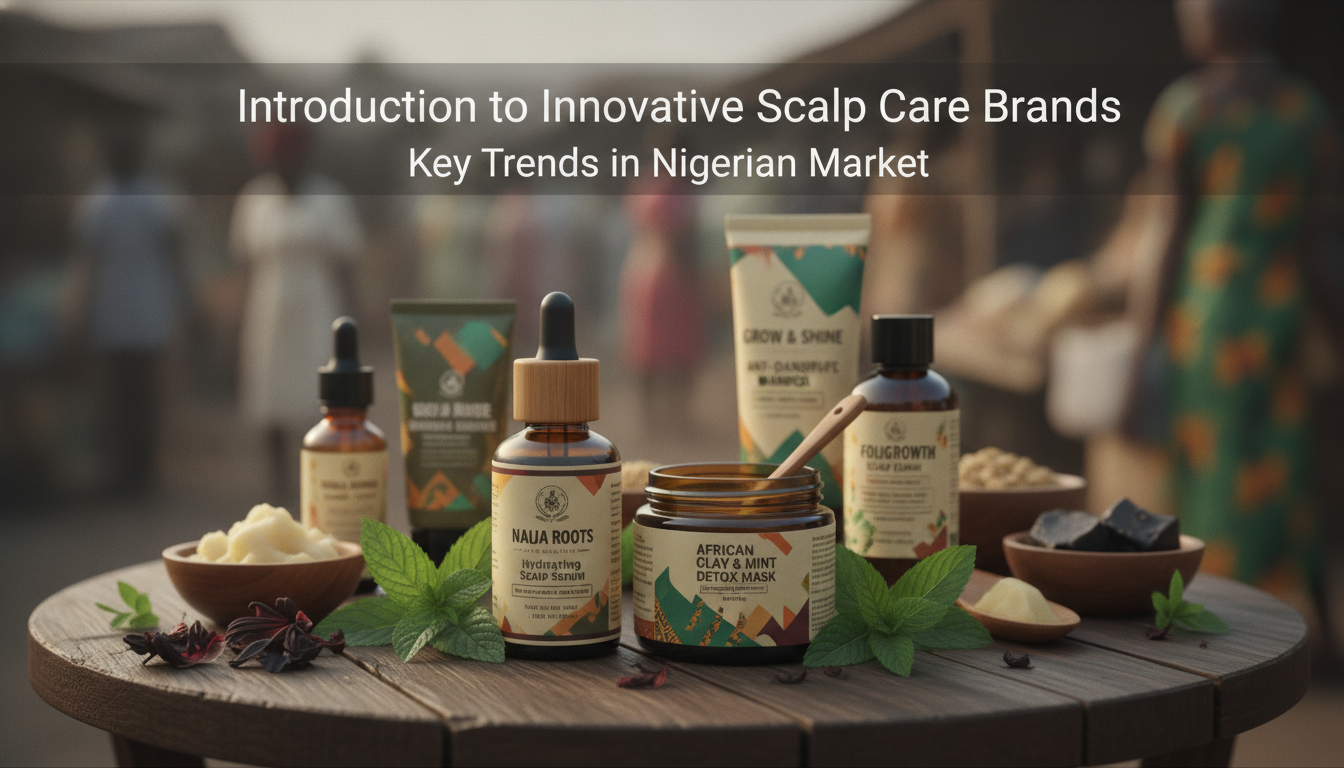
What Is Driving the Growth of Innovative Scalp Care Brands in Nigeria?
The Nigerian scalp care market is undergoing a quiet but significant transformation. Consumers — particularly in urban centres like Abuja and Lagos — are moving beyond traditional haircare routines and actively seeking out brands and treatments that target the scalp as a distinct zone of health, not simply a base for hair growth. The key trends shaping this shift include the rise of science-backed formulations rooted in African botanicals, growing consumer education around scalp microbiome health, the expansion of scalp-specific product lines from both international and homegrown brands, and the increasing role of professional salons in delivering targeted scalp treatments. In short, Nigerians are no longer treating the scalp as an afterthought — and the brands responding to that change are setting the pace.
Why the Nigerian Scalp Needs Specialised Attention
Nigeria’s climate presents particular challenges for scalp health. In Abuja, the harmattan season brings dry, dusty winds that strip moisture from the scalp, leading to flaking, tightness, and irritation that many people mistake for dandruff. The rainy season, on the other hand, increases humidity, which can encourage fungal overgrowth and product build-up — especially under protective styles worn for extended periods.
Add to this the widespread use of chemical relaxers, heat styling, and dense braided or weaved styles that limit scalp access, and you have a population with genuinely complex scalp needs. This is precisely the gap that innovative scalp care brands are stepping in to fill.
Key Trends Reshaping Scalp Care Brands in the Nigerian Market
1. African Botanical Ingredients Taking Centre Stage
One of the most prominent trends is the reformulation of scalp care products around indigenous African ingredients. Brands — both local and international lines entering the Nigerian market — are now prominently featuring ingredients such as baobab oil, shea butter, moringa, black seed oil, and chebe powder. These ingredients are not simply marketing devices; they carry genuine evidence for scalp benefits including anti-inflammatory, antifungal, and deep-moisturising properties.
Nigerian consumers are increasingly ingredient-literate and are reading labels more carefully than before. Brands that lead with transparency — clearly stating active concentrations and their functions — are gaining trust quickly.
2. Scalp-Specific Product Categories
Until recently, most Nigerian consumers used shampoo or oil on the scalp without distinguishing between hair and scalp needs. The new generation of scalp care brands has introduced dedicated product categories: scalp serums, scalp exfoliants, pre-shampoo scalp treatments, and targeted scalp tonics. These are distinct from general hair products in that they are formulated to interact with the skin of the scalp — managing sebum, pH balance, and microbial health — rather than simply coating the hair shaft.
Salons such as Luxor Salon and Spa in Abuja have been integral in introducing clients to these product categories in a professional context, applying them as part of structured scalp treatments rather than retail-only experiences.
3. The Scalp Microbiome Conversation
Global dermatology research has increasingly pointed to the scalp microbiome — the ecosystem of bacteria and fungi living on the scalp — as central to scalp health. Forward-thinking brands are now launching products designed to maintain or restore microbiome balance, using prebiotics and postbiotics in their formulations rather than simply stripping the scalp with harsh antimicrobials.
This conversation is reaching Nigerian consumers through social media, particularly via dermatologists and trichologists on Instagram and TikTok who are creating content specifically for African hair textures and scalp types. Brands that position themselves within this educational space are gaining considerable ground.
4. The Professionalisation of Scalp Analysis
Another defining trend is the introduction of scalp analysis as a service. Rather than a client simply complaining of itching or hair thinning and receiving a generic recommendation, professional salons are now using magnification tools and scalp cameras to assess the scalp’s actual condition — identifying issues like follicle congestion, excess sebum, dryness, or early signs of thinning — before recommending a treatment or product.
This approach mirrors how skincare consultations work and signals a maturing market. It also creates a more credible pipeline between professional salon services and retail scalp care products. At Luxor Salon and Spa, with branches in Maitama and Wuse 2, scalp consultation is part of a broader commitment to personalised hair and scalp care in Abuja.
5. Protective Style Scalp Care
Nigeria has one of the highest rates of protective styling — braids, twists, weaves, and locs — in the world. While these styles protect hair ends, they often leave the scalp neglected for weeks at a time. Innovative brands have recognised this and are now producing lightweight scalp serums, oil blends delivered through precise applicator tips, and spray formulas specifically designed to reach the scalp through cornrows or braids without causing product build-up or leaving residue on the style itself.
This is a highly practical and underserved category, and brands that solve it well are building strong loyalty, particularly among natural hair communities in cities like Abuja.
6. Demand for 24-Hour and Flexible Access to Scalp Services
Urban professionals in Abuja have demanding schedules. Events, work commitments, and social engagements don’t stop — and scalp care has increasingly become something clients want on their own timeline. Luxor Salon and Spa operates 24 hours a day, seven days a week across both its Maitama and Wuse 2 locations, making professional scalp treatments accessible without the need to reorganise a busy calendar. This kind of access reflects the direction that high-end scalp care is heading in the Nigerian market — responsive, premium, and client-centred.
If you would like to schedule a scalp treatment at a time that works for you, you can book online directly.
How Scalp Treatments Actually Work in a Professional Setting
A professional scalp treatment typically begins with a scalp assessment, followed by the application of a targeted scalp cleanser or exfoliant to remove dead skin cells and product build-up. This is followed by a treatment serum or mask applied directly to the scalp — often massaged in to stimulate blood circulation and maximise absorption. Some treatments incorporate steam or low-level light therapy depending on the concern being addressed.
Aftercare matters as much as the treatment itself. Clients are generally advised to avoid heavy oils directly on the scalp for the first few days following a professional scalp treatment, to rinse hair with lukewarm rather than hot water, and to avoid tight styles that stress the scalp immediately post-treatment.
As a general guide, a maintenance scalp treatment every four to six weeks is considered appropriate for most scalp types, though those dealing with more persistent concerns — such as recurring flaking or thinning — may benefit from a closer schedule in the initial stages, guided by a professional assessment.
Harmattan and Rainy Season: When to Prioritise Scalp Care
In Abuja specifically, the harmattan season — typically running from November through February — is a critical period for scalp moisture retention. The dry, particulate-laden air can rapidly dehydrate the scalp, and clients who already have a tendency toward dryness or sensitivity will often see their symptoms intensify during this time. A hydrating scalp treatment ahead of and during harmattan can make a significant difference.
Conversely, the rainy season — April through October in much of Abuja — is a good time to address fungal-related scalp concerns and to focus on lightweight, breathable scalp care that doesn’t add heaviness during periods of elevated humidity. Planning scalp care seasonally, rather than reactively, is a habit the most forward-thinking brands are now actively encouraging through their consumer education content.
When to See a Dermatologist
It is important to note that while innovative scalp care brands and professional salon treatments can address a wide range of common scalp concerns, persistent or severe conditions — including significant hair loss, painful or bleeding scalp sores, inflamed follicles, or conditions that do not respond to consistent care — should be referred to a qualified dermatologist or trichologist. No scalp care brand or salon service is a substitute for medical diagnosis and treatment where that is what is required.
Frequently Asked Questions
What makes a scalp care brand “innovative” in the Nigerian context?
In the Nigerian market, innovation in scalp care typically means brands that go beyond generic moisturising claims and address specific scalp conditions — such as harmattan-induced dryness, post-protective style build-up, or sebum imbalance — using evidence-informed ingredients and transparent formulations. Local relevance, particularly the use of African botanicals and product formats suited to protective styling, is increasingly central to what Nigerian consumers consider genuinely innovative.
How often should I have a professional scalp treatment?
For most people, a professional scalp treatment every four to six weeks works well as a maintenance schedule. If you are addressing a specific concern — such as excessive flaking or early thinning — your stylist or scalp professional may suggest a more frequent initial schedule before spacing out appointments as the condition improves.
Can I use scalp care products under braids or weaves?
Yes, and this is precisely what several innovative brands have designed products for. Look for lightweight serums or sprays with applicator tips that allow you to target the scalp directly without disturbing the style or leaving residue on the braids. Avoid heavy oils or thick creams that cannot penetrate through to the scalp effectively and may simply coat the hair.
Are scalp care products suitable for chemically relaxed hair?
Many scalp care products are suitable regardless of whether hair is relaxed, natural, or colour-treated. However, timing matters — it is generally advisable to avoid scalp exfoliants or treatments with active acids immediately before or after a chemical relaxer application, as the scalp may already be sensitised. A professional consultation is the best way to build a scalp care routine around your specific hair type and chemical history.
Is scalp care different from regular hair care?
Yes. Scalp care targets the skin of the scalp — its hydration, sebum balance, pH, and microbial health — rather than the hair fibre itself. Products formulated for scalp care are designed to interact with skin, not coat hair. The two are related, since a healthy scalp supports healthy hair growth, but they require different formulations and approaches.
Conclusion
The Nigerian scalp care market is maturing at pace, driven by ingredient awareness, climate-specific demands, and a growing appetite for professional, science-backed treatments. Innovative brands are responding with dedicated scalp product categories, microbiome-conscious formulations, and formats designed for the realities of protective styling and seasonal extremes like harmattan. For Abuja residents seeking expert scalp care in a premium, accessible setting, Luxor Salon and Spa offers professional services across two convenient locations — both open 24 hours a day, seven days a week.
Maitama Branch: moc.apsdnanolasroxul@ofni / (+234) 701 888 0102
Wuse 2 Branch: moc.apsdnanolasroxul@2esuw / (+234) 701 888 0100
Related Posts
 What Are The Key Benefits Of A Prenatal Massage Services
 When Should I Book A Therapeutic Sports Massage Services Session
 Why Our Foot Pedicure Services Experts Are The Best In Abuja
 7 Key Benefits Of Regular Massage Services For Stress Management
 Why Combining Pedicure Services And Manicure Services Is A Smart Choice
 What Are The 7 Signs You Need A Professional Pedicure Services Now
 How To Ensure The Longevity Of Your Luxury Pedicure Services
 How To Keep Your Skin Hydrated After Your Facials Services Appointment