

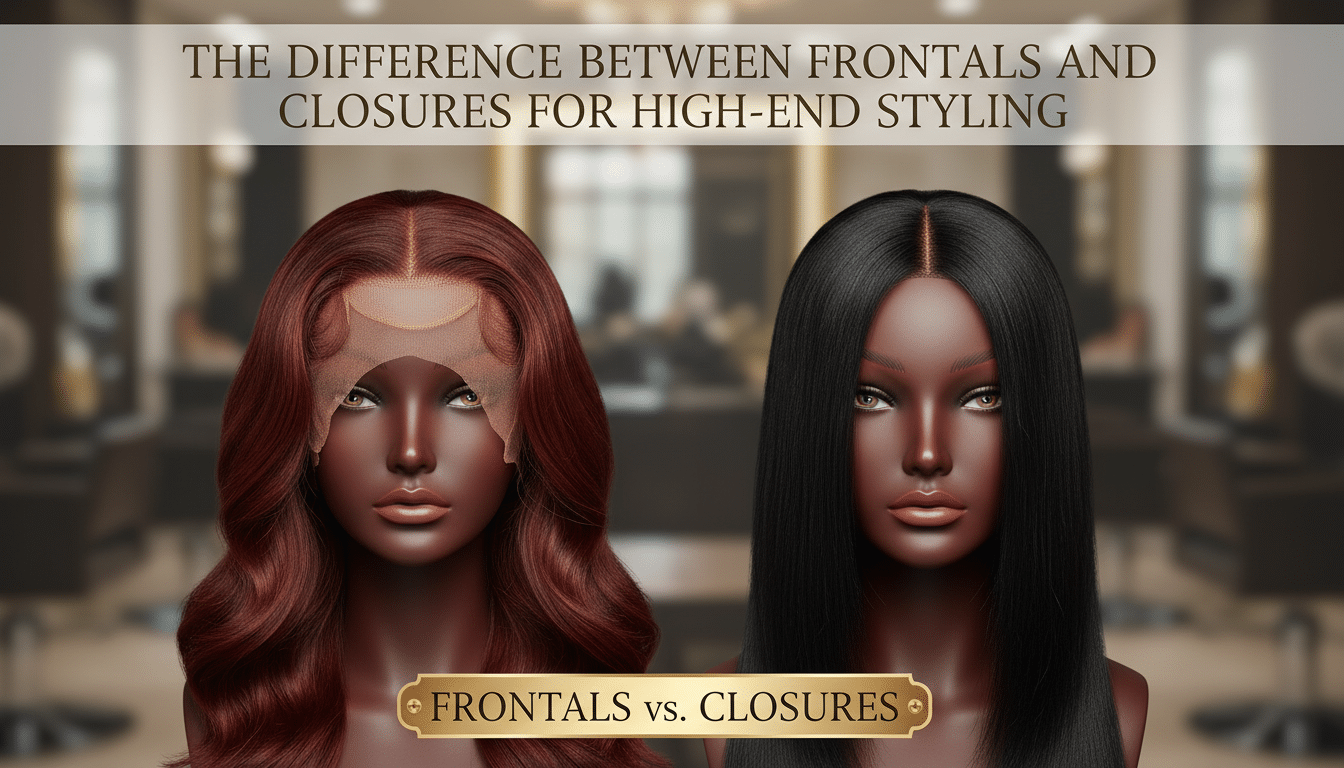
The world of hair extensions and weaves has evolved dramatically in recent years, offering increasingly sophisticated techniques for achieving a variety of desired looks. At the forefront of this evolution are frontals and closures – key components used to seamlessly integrate extensions with natural hair, particularly when aiming for high-end, polished styles. While both serve the purpose of finishing off a weave or wig by creating a natural-looking hairline, they differ significantly in their size, versatility, application, and overall aesthetic impact. Understanding these distinctions is crucial for stylists and individuals alike who strive for that effortlessly chic and undetectable finish that defines high-end styling. Choosing the right option can make or break a look, impacting everything from the perceived realism to the longevity and ease of maintenance of the style. This comprehensive guide delves into the nuances of frontals and closures, providing a detailed comparison across various aspects to empower you to make informed decisions for your next high-end hairstyle.
I. Size and Coverage: The Defining Feature
The most immediately noticeable difference between frontals and closures lies in their size and the amount of scalp coverage they provide. This difference directly impacts the versatility and styling options each offers.
-
Closures: Closures are typically smaller, ranging in size from 4×4 inches to 6×6 inches. They are designed to cover a small section of the front of the head, usually at the crown or the front hairline. The primary function of a closure is to create a natural-looking parting and scalp area at the top of the head, eliminating the need to blend the leave-out with the extensions. Because of their smaller size, closures offer less flexibility in terms of styling options. You are generally limited to a parting within the closure’s boundaries. Think of it as a defined "island" of scalp that dictates where your hair can part.
- Frontals: Frontals, on the other hand, are significantly larger, typically measuring 13×4 inches or 13×6 inches. The "13" represents the width of the frontal, spanning from ear to ear across the forehead, while the "4" or "6" represents the depth, measuring the distance from the forehead back towards the crown. This extensive coverage allows for a more natural-looking hairline that mimics the entire front portion of the scalp. The key benefit of a frontal is its unparalleled versatility. You can part your hair anywhere along the frontal – creating middle parts, side parts, deep side parts, or even pulling the hair back into ponytails or updos without revealing the tracks of the weave. The frontal essentially replaces your natural hairline, giving you the freedom to style your hair in a multitude of ways, mimicking how you would style your own natural hair.
II. Versatility in Styling: Unleashing Creative Potential
The difference in size translates directly into the level of styling versatility each option provides. This is a critical factor when considering high-end styling, where seamless integration and limitless possibilities are paramount.
-
Closures: Closures, due to their limited size, offer restricted styling options. The parting is fixed within the dimensions of the closure, meaning you cannot freely change the location of your part. This can be a disadvantage for those who enjoy experimenting with different hairstyles or who prefer a more dynamic look. While you can still achieve beautiful and polished styles with a closure, the creativity is somewhat constrained. The styling focus is often on creating a neat and well-blended finish within the confines of the closure. Think classic bobs, sleek straight styles with a defined part, or subtle waves that accentuate the existing parting.
- Frontals: Frontals offer unparalleled versatility, making them a favorite for high-end styling. The larger coverage area allows for a truly natural-looking hairline that can be manipulated in countless ways. You can create any parting you desire, from deep side parts that exude glamour to sleek middle parts that are effortlessly chic. Furthermore, frontals allow you to pull the hair back into high ponytails, updos, or buns without revealing any tracks. This is crucial for achieving sophisticated and polished looks that require the hair to be styled away from the face. The ability to create baby hairs along the hairline also enhances the realism and natural appearance, adding a touch of personalized artistry to the overall style. With a frontal, the styling possibilities are virtually limitless, allowing stylists to create truly bespoke and high-impact looks.
III. Application Techniques: Precision is Key
The application process for frontals and closures differs significantly, reflecting their respective sizes and coverage areas. Precision and attention to detail are essential for both to achieve a seamless and natural-looking finish, but the challenges and techniques involved vary.
-
Closures: Applying a closure is generally considered less complex than applying a frontal. The smaller size makes it easier to position and secure the closure onto the head. Typically, the closure is sewn onto a braided base, ensuring that it sits flat against the scalp. Proper placement is crucial to avoid a bulky or unnatural look. Blending the edges of the closure with the surrounding extensions is also important for creating a seamless transition. While closures may seem simpler to install, achieving a truly flawless finish requires skill and attention to detail, particularly in matching the closure’s texture and color to the extensions and ensuring a natural-looking hairline.
- Frontals: Applying a frontal is a more intricate process that requires a high level of skill and experience. The larger size and the need to create a realistic hairline demand precision and meticulous attention to detail. Frontals are typically glued or taped down to the forehead, ensuring a secure and flat fit. The hairline is then customized by plucking hairs to create a natural density and shape. Bleaching the knots on the lace of the frontal is also a common technique to make the knots less visible and create the illusion of hair growing directly from the scalp. Properly blending the frontal with the surrounding extensions is crucial for a seamless transition. Incorrect application of a frontal can result in an unnatural appearance, including a harsh hairline or visible glue. Therefore, it is highly recommended to seek a skilled and experienced stylist for frontal installations to ensure a flawless and long-lasting result.
IV. Maintenance and Longevity: Balancing Beauty and Upkeep
Maintaining frontals and closures requires different approaches due to their distinct construction and application methods. Understanding these differences is essential for maximizing the longevity and preserving the aesthetic appeal of your hairstyle.
-
Closures: Closures are generally easier to maintain compared to frontals. Because they are sewn onto the braided base, they are less prone to shifting or lifting. Regular shampooing and conditioning are essential for keeping the closure clean and moisturized. It is also important to avoid excessive tension or pulling on the closure, as this can damage the hair and loosen the stitching. With proper care, a closure can last for several weeks to months, depending on the quality of the hair and the frequency of wear.
- Frontals: Frontals require more diligent maintenance to ensure their longevity and appearance. Because they are glued or taped down, they are more susceptible to lifting, particularly around the hairline. Regular maintenance appointments are often necessary to re-apply the adhesive and keep the frontal securely in place. Cleaning the hairline regularly is also crucial to prevent buildup and maintain a clean and natural appearance. Avoiding excessive sweating or exposure to water can also help prolong the life of the frontal. Frontals typically require more frequent replacements compared to closures, depending on the individual’s lifestyle and maintenance routine. The longevity of a frontal is directly related to the quality of the hair, the skill of the installer, and the dedication to proper maintenance.
V. Cost Considerations: Investing in Quality and Expertise
The cost of frontals and closures can vary depending on factors such as the quality of the hair, the size of the piece, and the reputation of the vendor. Generally, frontals are more expensive than closures due to their larger size and more complex construction.
-
Closures: Closures are typically a more budget-friendly option compared to frontals. This makes them a popular choice for individuals who are looking for a cost-effective way to finish off their weave or wig. However, it is important to note that quality varies significantly, and investing in a high-quality closure made with human hair is essential for achieving a natural and long-lasting result.
- Frontals: Frontals are generally more expensive due to the increased amount of hair used and the more intricate construction. The cost can also be influenced by the type of lace used (e.g., Swiss lace, HD lace) and the level of customization required. While the initial investment may be higher, the versatility and natural appearance of a frontal can often justify the expense, particularly for those who prioritize high-end styling and a flawless finish. Furthermore, the cost of professional installation should also be factored in, as applying a frontal requires specialized skills and expertise. Choosing an experienced stylist is crucial for achieving the desired results and maximizing the value of your investment.
In conclusion, choosing between a frontal and a closure for high-end styling is a decision that requires careful consideration of various factors, including size, versatility, application, maintenance, and cost. By understanding the nuances of each option, you can make an informed choice that aligns with your desired hairstyle, lifestyle, and budget. Remember that investing in high-quality hair and seeking the expertise of a skilled stylist are essential for achieving a flawless and long-lasting result.