

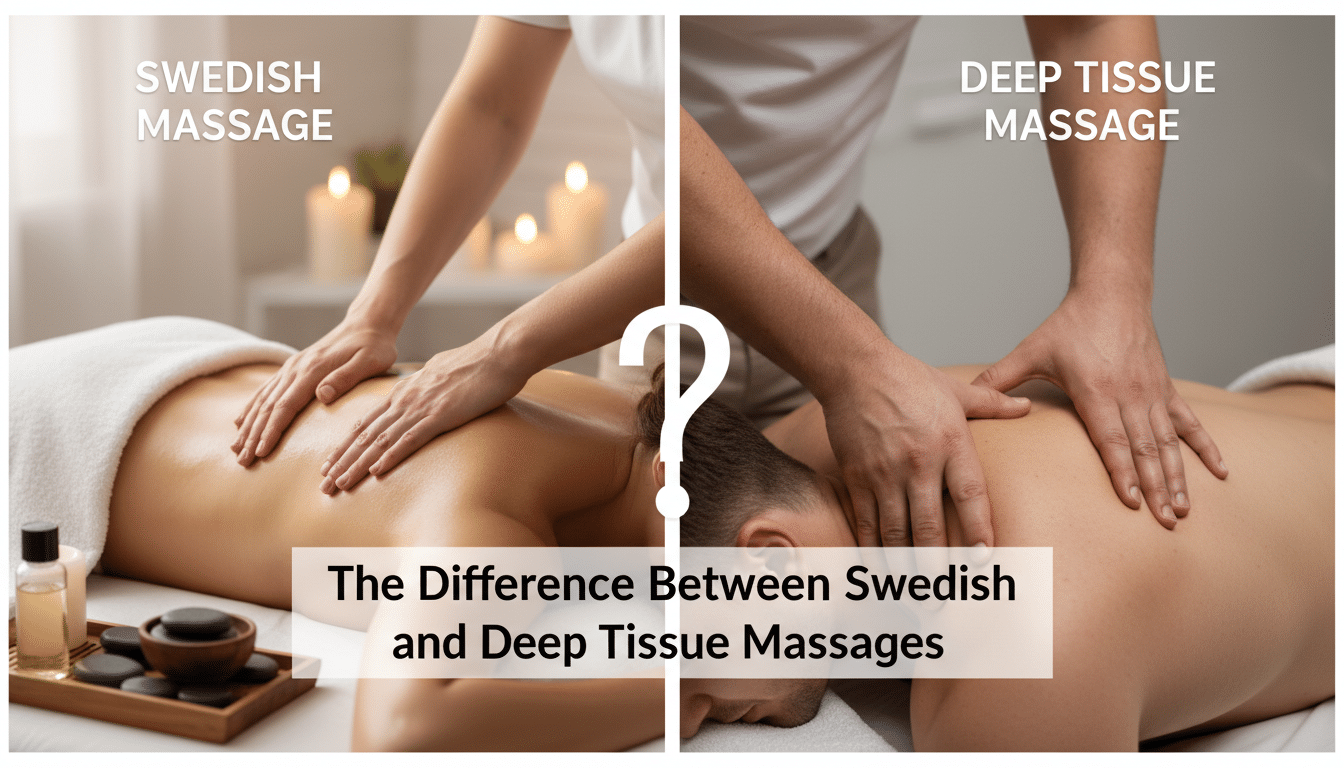
The Difference Between Swedish and Deep Tissue Massages: A Comprehensive Exploration
Massage therapy has become a widely recognized and utilized method for addressing a variety of physical and mental ailments. From reducing muscle tension and improving circulation to alleviating stress and promoting relaxation, the benefits of massage are numerous and well-documented. However, navigating the world of massage can be confusing, especially when confronted with a plethora of different techniques and styles. Two of the most popular and frequently offered types are Swedish massage and deep tissue massage. While both fall under the umbrella of therapeutic massage, they differ significantly in their techniques, intended outcomes, and ideal candidates. Understanding these differences is crucial for selecting the massage that best suits your individual needs and desired results. This article delves into the intricacies of Swedish and deep tissue massage, exploring their techniques, benefits, contraindications, and the specific conditions they can effectively address.
Swedish Massage: A Gentle Approach to Relaxation and Overall Wellness
Swedish massage, often considered the cornerstone of Western massage techniques, is a gentle and flowing style primarily focused on promoting relaxation, improving circulation, and relieving muscle tension. Its hallmark is the use of long, gliding strokes, kneading, friction, tapping, and vibration, all applied with varying degrees of pressure. The primary goal of Swedish massage is to relax the entire body, both physically and mentally.
Techniques Employed in Swedish Massage:
Swedish massage utilizes five primary techniques, each designed to address specific aspects of muscle tension and circulation:
-
Effleurage: This is the most common and foundational technique in Swedish massage. It involves long, gliding strokes applied with the palms of the hands or the fingertips, often moving in the direction of the heart. Effleurage warms the muscles, increases blood flow, and prepares the body for deeper work. The pressure can range from light to moderate, depending on the client’s comfort level and the areas being treated. Its primary function is to spread massage oil, warm tissues, and initiate relaxation. Psychologically, effleurage creates a sense of connection and safety, allowing the client to surrender to the process.
-
Petrissage: This technique involves kneading, squeezing, and rolling the muscles. Petrissage works deeper into the muscle tissue than effleurage, breaking up adhesions and knots, and improving circulation within the muscle fibers themselves. It helps to release metabolic waste products and promote nutrient delivery to the tissues. Variations of petrissage include kneading (compressing and releasing muscle), rolling (lifting and rolling muscle between the fingers and thumbs), and wringing (grasping and twisting muscle tissue). The effect of petrissage is to increase muscle elasticity, reduce stiffness, and improve overall muscle function.
-
Tapotement: This technique involves rhythmic tapping, drumming, or percussive movements using the hands, fingertips, or cupped hands. Tapotement stimulates nerve endings, increases blood flow, and invigorates the body. Different forms of tapotement have different effects. Hacking (using the sides of the hands) can loosen tight muscles, while cupping (using cupped hands) can help to loosen mucus in the lungs. Pounding (using a closed fist) can stimulate deeper tissues. Tapotement is often used towards the end of a massage to energize the client. While stimulating, it can also be beneficial in relieving congestion and promoting lymphatic drainage.
-
Friction: This technique involves applying deep, circular or transverse strokes to specific areas of tension or knots. Friction aims to break down adhesions and scar tissue, release trigger points, and improve range of motion. It is often used on areas with chronic tension, such as the neck and shoulders. The pressure applied during friction can be intense, and the client may experience some discomfort. However, this discomfort is typically short-lived and followed by a release of tension.
- Vibration: This technique involves shaking or vibrating the muscles to loosen them and stimulate nerve endings. Vibration can be applied with the hands, fingertips, or a mechanical device. It is often used to relieve muscle spasms, improve circulation, and promote relaxation. Vibration is a subtle but powerful technique that can have a profound impact on the nervous system.
Benefits of Swedish Massage:
The benefits of Swedish massage extend beyond simple relaxation, encompassing both physical and mental well-being:
-
Stress Reduction: The gentle and flowing movements of Swedish massage stimulate the parasympathetic nervous system, which promotes relaxation and reduces stress hormones like cortisol. This can lead to a feeling of calmness and well-being. The environment in which the massage takes place also contributes to stress reduction. Soft lighting, soothing music, and a comfortable temperature can all enhance the relaxation experience.
-
Improved Circulation: The various techniques used in Swedish massage, particularly effleurage and petrissage, improve blood flow and lymphatic drainage. This helps to deliver oxygen and nutrients to the muscles and tissues, while also removing waste products. Improved circulation can also help to reduce swelling and inflammation.
-
Muscle Tension Relief: Swedish massage can help to relieve muscle tension and stiffness, particularly in the neck, shoulders, and back. The techniques used in Swedish massage help to break up adhesions and knots, improve muscle flexibility, and reduce pain. This is particularly beneficial for individuals who experience muscle tension due to stress, poor posture, or repetitive movements.
-
Increased Flexibility and Range of Motion: By releasing muscle tension and breaking up adhesions, Swedish massage can improve flexibility and range of motion. This can be beneficial for athletes, individuals recovering from injuries, and those who simply want to improve their overall physical function.
-
Pain Relief: Swedish massage can help to relieve pain associated with muscle tension, headaches, and other conditions. The techniques used in Swedish massage help to release endorphins, which are natural pain relievers. In addition, Swedish massage can reduce inflammation, which can also contribute to pain relief.
- Improved Sleep Quality: By promoting relaxation and reducing stress, Swedish massage can improve sleep quality. Individuals who receive regular Swedish massages often report falling asleep more easily and sleeping more soundly.
Ideal Candidates for Swedish Massage:
Swedish massage is suitable for a wide range of individuals, including:
- Individuals seeking relaxation and stress relief.
- Individuals experiencing mild muscle tension or stiffness.
- Individuals looking to improve circulation and lymphatic drainage.
- Individuals new to massage therapy.
- Individuals who prefer a gentle and relaxing massage experience.
Contraindications for Swedish Massage:
While generally safe, Swedish massage is not appropriate for everyone. Contraindications include:
- Acute inflammation or infection.
- Fever.
- Uncontrolled high blood pressure.
- Deep vein thrombosis (DVT).
- Certain skin conditions.
- Pregnancy (unless performed by a trained prenatal massage therapist).
- Recent surgery (consult with your doctor before receiving massage).
Deep Tissue Massage: Targeting Chronic Muscle Pain and Dysfunction
Deep tissue massage, as the name suggests, focuses on reaching the deeper layers of muscle tissue and fascia to address chronic muscle pain, stiffness, and dysfunction. Unlike Swedish massage, which utilizes gentler strokes and focuses on overall relaxation, deep tissue massage employs slower, more forceful strokes and sustained pressure to target specific areas of tension and adhesions. The goal is to release chronic muscle patterns, improve range of motion, and reduce pain.
Techniques Employed in Deep Tissue Massage:
Deep tissue massage utilizes several specific techniques to achieve its goals:
-
Slow, Deliberate Strokes: Therapists use slow, focused strokes, often with the elbows, forearms, or fingertips, to penetrate deep into the muscle layers. This allows them to access and release deeply held tension. The slowness is crucial, allowing the therapist to feel the muscle fibers and work with them, rather than forcing through them. This approach minimizes discomfort and maximizes effectiveness.
-
Direct Pressure: Applying sustained pressure to specific trigger points or knots is a hallmark of deep tissue massage. This pressure can be intense, but it is applied gradually and with careful attention to the client’s comfort level. The goal is to break up the adhesions and release the trapped energy in the trigger point.
-
Friction Techniques: Similar to Swedish massage, friction techniques are used to break down adhesions and scar tissue. However, in deep tissue massage, the friction is applied more deeply and with more force. Cross-fiber friction, where the strokes are applied perpendicular to the muscle fibers, is particularly effective in breaking down adhesions and improving muscle function.
-
Trigger Point Therapy: Identifying and releasing trigger points, which are hyperirritable spots in muscle tissue that can refer pain to other areas of the body, is a key component of deep tissue massage. Therapists use sustained pressure and specific techniques to release these trigger points, relieving pain and improving muscle function.
- Myofascial Release: This technique focuses on releasing tension in the fascia, the connective tissue that surrounds and supports the muscles. Therapists use sustained pressure and stretching to release restrictions in the fascia, which can improve flexibility, reduce pain, and improve overall body alignment.
Benefits of Deep Tissue Massage:
The benefits of deep tissue massage are tailored to address chronic pain and musculoskeletal issues:
-
Chronic Pain Relief: Deep tissue massage is highly effective in relieving chronic pain conditions such as lower back pain, neck pain, fibromyalgia, and osteoarthritis. By releasing chronic muscle patterns and reducing inflammation, deep tissue massage can provide long-lasting pain relief. It addresses the root cause of the pain, rather than simply masking the symptoms.
-
Improved Range of Motion: By releasing muscle tension and breaking up adhesions, deep tissue massage can improve range of motion and flexibility. This is particularly beneficial for individuals with limited mobility due to injury, surgery, or chronic conditions.
-
Reduced Muscle Stiffness: Deep tissue massage can help to reduce muscle stiffness and improve muscle function. By breaking up adhesions and improving circulation, deep tissue massage can help to restore muscle elasticity and reduce pain.
-
Injury Rehabilitation: Deep tissue massage can be an effective component of injury rehabilitation. By reducing inflammation, improving circulation, and releasing muscle tension, deep tissue massage can help to speed up the healing process and restore function after an injury.
-
Postural Correction: By addressing muscle imbalances and releasing chronic muscle patterns, deep tissue massage can help to improve posture and reduce pain associated with poor posture.
- Stress Reduction (Secondary): While not the primary focus, deep tissue massage can also contribute to stress reduction by releasing muscle tension and promoting relaxation. The release of endorphins during the massage can also help to improve mood and reduce stress.
Ideal Candidates for Deep Tissue Massage:
Deep tissue massage is most appropriate for individuals experiencing:
- Chronic muscle pain and stiffness.
- Limited range of motion.
- Postural problems.
- Muscle injuries.
- Fibromyalgia.
- Osteoarthritis.
- Sciatica.
Contraindications for Deep Tissue Massage:
Similar to Swedish massage, deep tissue massage is not suitable for everyone. Contraindications include:
- Acute inflammation or infection.
- Fever.
- Uncontrolled high blood pressure.
- Deep vein thrombosis (DVT).
- Certain skin conditions.
- Pregnancy (unless performed by a trained prenatal massage therapist).
- Recent surgery (consult with your doctor before receiving massage).
- Osteoporosis (due to the increased pressure).
- Individuals taking blood thinners (due to the risk of bruising).
It is important to note that while some soreness is common after a deep tissue massage, excessive pain should be avoided. Communicate openly with your therapist about your comfort level and any pre-existing conditions.