

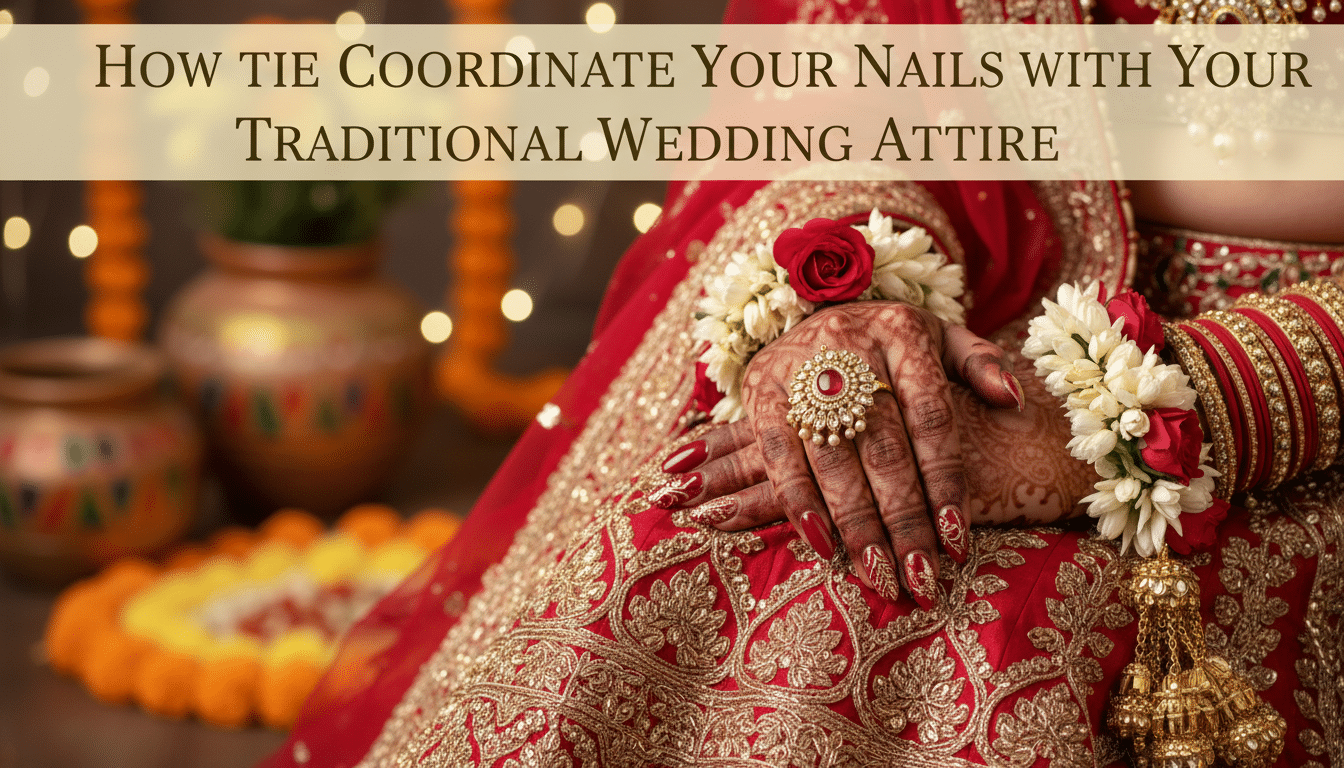
How to Coordinate Your Nails with Your Traditional Wedding Attire: A Deep Dive into Cultural Nuances and Stunning Styles
A traditional wedding is a tapestry woven with threads of heritage, symbolism, and personal expression. Every detail, from the intricate embroidery on the lehenga to the auspicious bangles adorning the bride’s wrists, carries significance. And nestled amongst these elements are the nails – often overlooked, yet possessing the potential to elevate the entire bridal look. Choosing the right nail design that harmonizes with your traditional wedding attire is more than just picking a pretty color; it’s about respecting cultural norms, complementing the garment’s aesthetic, and ultimately, enhancing your radiant beauty on your special day.
This article will explore the multifaceted art of coordinating your nails with your traditional wedding attire, delving into various cultural contexts and offering practical tips to help you achieve a flawless and unforgettable bridal aesthetic.
I. Understanding the Cultural Context: Nail Polish and Tradition
Before diving into specific designs, it’s crucial to understand the cultural significance of nail adornment in different wedding traditions. What is considered appropriate, auspicious, or even taboo varies significantly across cultures.
-
Indian Weddings: In Indian weddings, nail adornment, particularly with henna (Mehendi), is a deeply rooted tradition. Intricate henna designs cover the bride’s hands and feet, symbolizing good luck, love, and fertility. While henna remains paramount, nail polish provides an opportunity to further enhance the overall look. Deep reds, maroons, golds, and shades that complement the lehenga or saree are common choices. However, extremely long or overly flashy acrylics might clash with the traditional aesthetic. Subtlety and elegance often prevail, allowing the henna designs to remain the focal point. The auspiciousness associated with certain colors should also be considered. For instance, black is generally avoided as it is considered inauspicious.
-
Chinese Weddings: Red is the dominant color in Chinese weddings, representing happiness, prosperity, and good fortune. Nail polish, therefore, leans heavily towards shades of red, from vibrant scarlet to deeper crimson. Gold accents are also popular, echoing the intricate gold embroidery often found on the qipao or cheongsam. Modern brides may incorporate other colors like pink or even nude shades, but red remains the quintessential choice. Length and shape also matter; while long, dramatic nails might be considered modern, a more classic and elegant shape is generally favored. The overall aesthetic should be sophisticated and refined, reflecting the importance of the occasion.
-
Japanese Weddings: Japanese weddings, often performed in Shinto shrines, emphasize purity and elegance. The traditional bridal attire, the shiromuku, is a pristine white kimono, symbolizing purity and the bride’s willingness to be "painted" into her new family’s life. Nail adornment, in this context, is generally kept subtle and minimalist. Clear or very pale pink polishes that enhance the natural beauty of the nails are common. While intricate designs are less common with the shiromuku, brides changing into a colorful iro-uchikake (an ornate kimono) might opt for nail designs that complement the colors and patterns of the garment. However, even then, the emphasis remains on understated elegance.
-
Nigerian Weddings: Nigerian weddings are vibrant celebrations filled with bold colors and elaborate beadwork. Brides often wear intricately designed traditional attire, such as the Iro and Buba or a vibrant lace gown. Nail choices are equally bold and expressive. Bright colors like gold, red, green, and blue are popular, often incorporating embellishments like rhinestones, glitter, and even small beads to echo the embellishments on the attire. Longer nail lengths and bolder shapes are generally accepted and even encouraged, allowing the bride to fully embrace the celebratory spirit of the occasion.
- Mexican Weddings: Mexican weddings are known for their vibrant colors and festive atmosphere. The bride’s dress, often adorned with intricate embroidery and lace, can range from traditional white to bolder colors. Nail choices are diverse, depending on the style of the dress and the bride’s personal preference. Red is a popular choice, reflecting the cultural significance of the color. However, brides might also opt for colors that complement the embroidery or embellishments on their dress, such as gold, silver, or even pastel shades. Intricate nail art, incorporating floral designs or geometric patterns, is also a popular choice, adding a touch of personality to the overall look.
Before making any decisions, it’s essential to research and understand the specific customs and traditions associated with your wedding culture. Consulting with family members or experienced wedding planners can provide valuable insights and guidance.
II. Complementing the Attire: Color, Embellishment, and Texture
Once you understand the cultural context, you can focus on coordinating your nails with the specific details of your traditional wedding attire. Consider the color, embellishment, and texture of your garment when choosing your nail design.
-
Color Harmony:
-
Monochromatic: A monochromatic color scheme involves using different shades of the same color. For example, if your lehenga is a deep maroon, you could opt for a lighter shade of maroon on your nails, creating a subtle and sophisticated look.
-
Complementary: Complementary colors are opposite each other on the color wheel. For example, if your saree is predominantly blue, you could choose an orange or coral nail color to create a striking contrast. However, use complementary colors with caution, as they can sometimes clash if not chosen carefully.
-
Analogous: Analogous colors are located next to each other on the color wheel. For example, if your qipao is a rich red, you could choose a nail color in shades of orange or pink, creating a harmonious and visually appealing effect.
-
Metallic Accents: Gold and silver are classic choices for traditional weddings, especially when the attire features metallic embroidery or embellishments. Gold nail polish or gold accents can beautifully complement a lehenga with gold zari work, while silver can enhance a saree with silver threadwork.
- Nude and Neutral Shades: Nude and neutral shades are versatile options that work well with a wide range of traditional wedding attire. They provide a clean and elegant look that allows the focus to remain on the dress and other accessories. Choose a nude shade that complements your skin tone for the most flattering effect.
-
-
Embellishment Echo:
-
Rhinestones and Crystals: If your dress features rhinestones or crystals, consider incorporating similar embellishments into your nail design. Small rhinestones can be applied to the nails in a delicate pattern, or you can opt for a full-on crystal manicure for a more glamorous look.
-
Glitter and Shimmer: Glitter and shimmer can add a touch of sparkle to your nails, especially if your dress has a shimmery fabric or embellishments. Choose a glitter color that complements the overall color scheme of your attire.
- Beadwork and Embroidery: If your dress has intricate beadwork or embroidery, consider incorporating similar elements into your nail design. This can be achieved by using nail art techniques to create miniature versions of the patterns on your dress or by adding small beads to the nails.
-
-
Texture Integration:
-
Matte Finishes: Matte nail polishes provide a sophisticated and understated look that can complement a dress with a textured fabric. They are a good choice for brides who want a more modern and minimalist aesthetic.
-
Gel Finishes: Gel nail polishes provide a long-lasting and glossy finish that can add a touch of glamour to your nails. They are a good choice for brides who want their nails to look flawless throughout the wedding celebrations.
- Velvet Nails: Velvet nails are a unique and luxurious option that can complement a dress with a velvet fabric. They are created by applying a special velvet powder to the nails, creating a soft and textured finish.
-
III. Nail Shape and Length: Finding the Right Balance
The shape and length of your nails also play a crucial role in complementing your traditional wedding attire. Consider the overall style of your dress and your personal preference when choosing the right shape and length.
-
Traditional Shapes:
-
Oval: Oval-shaped nails are a classic and elegant choice that works well with a wide range of traditional wedding attire. They are flattering on most hand shapes and provide a timeless look.
-
Almond: Almond-shaped nails are similar to oval-shaped nails but are slightly more pointed at the tip. They are a sophisticated and feminine choice that can elongate the fingers.
- Square: Square-shaped nails are a more modern option that can add a touch of edge to your bridal look. They are best suited for brides with long fingers.
-
-
Modern Shapes:
-
Stiletto: Stiletto nails are long and pointed, creating a dramatic and glamorous look. They are best suited for brides who want to make a statement with their nails. However, they may not be appropriate for all traditional wedding cultures.
- Coffin/Ballerina: Coffin or ballerina-shaped nails are similar to stiletto nails but are squared off at the tip. They are a trendy and fashionable choice that can add a touch of modernity to your bridal look. However, like stiletto nails, they may not be suitable for all cultural contexts.
-
-
Length Considerations:
-
Short: Short nails are a practical and understated choice that is suitable for brides who prefer a more natural look. They are also a good option for brides who work with their hands and need to keep their nails short.
-
Medium: Medium-length nails provide a good balance between practicality and style. They are long enough to showcase nail art and embellishments but are not so long that they become cumbersome.
- Long: Long nails can create a dramatic and glamorous look, but they can also be impractical and difficult to maintain. They are best suited for brides who are comfortable with long nails and are willing to invest the time and effort to care for them.
-
When choosing the shape and length of your nails, consider your personal style, the cultural context of your wedding, and the overall aesthetic of your traditional wedding attire. It’s also essential to choose a shape and length that is comfortable and practical for you.
IV. Nail Art Inspiration: Bringing Your Vision to Life
Once you have a clear understanding of the cultural context, color harmony, and nail shape considerations, you can start exploring nail art ideas that will perfectly complement your traditional wedding attire.
-
Henna-Inspired Designs: Recreate the intricate patterns of your henna designs on your nails. This can be achieved using fine-tipped brushes or nail art pens. Gold or metallic polishes can be used to mimic the look of henna.
-
Floral Motifs: Incorporate floral motifs that are similar to the embroidery on your dress or the flowers used in your wedding decorations. Delicate floral patterns can be painted on the nails using various nail art techniques.
-
Geometric Patterns: Create geometric patterns that complement the lines and shapes of your dress. Geometric designs can add a modern and contemporary touch to your bridal look.
-
Ombre Effects: Create an ombre effect by blending two or more colors together. This can be a subtle and elegant way to add depth and dimension to your nails.
-
Negative Space Designs: Use negative space to create interesting and eye-catching designs. Negative space designs involve leaving certain areas of the nail unpainted, creating a visual contrast.
-
Minimalist Accents: Opt for minimalist accents such as small dots, lines, or geometric shapes. Minimalist designs are a good choice for brides who prefer a more understated and elegant look.
- Embellished Accents: Add embellishments such as rhinestones, crystals, glitter, or beads to your nails. Embellishments can add a touch of sparkle and glamour to your bridal look.
When searching for nail art inspiration, consider the overall theme of your wedding and the style of your traditional wedding attire. Browse online platforms like Pinterest and Instagram for inspiration and consult with a skilled nail technician to bring your vision to life.
V. Professional vs. DIY: Weighing the Options
Deciding whether to get your nails done professionally or to attempt a DIY manicure is an important consideration. Both options have their advantages and disadvantages.
-
Professional Manicure:
-
Pros:
- Expertise and skill: Professional nail technicians have the expertise and skill to create intricate and long-lasting nail designs.
- Access to high-quality products: Professional nail technicians use high-quality nail polishes and tools that are not always available to the general public.
- Relaxation and pampering: Getting your nails done professionally can be a relaxing and pampering experience, helping you to de-stress before your wedding day.
-
Cons:
- Cost: Professional manicures can be expensive, especially for intricate designs and embellishments.
- Time commitment: Getting your nails done professionally can take several hours, depending on the complexity of the design.
-
-
DIY Manicure:
-
Pros:
- Cost-effective: DIY manicures are a more cost-effective option than professional manicures.
- Flexibility: You have complete control over the design and can change it as often as you like.
-
Cons:
- Skill required: Creating intricate nail designs requires skill and practice.
- Time-consuming: DIY manicures can be time-consuming, especially for complex designs.
- Durability: DIY manicures may not be as durable as professional manicures.
-
If you are planning a DIY manicure, practice the design beforehand to ensure that you are comfortable with the techniques involved. Invest in high-quality nail polishes and tools, and allow yourself plenty of time to complete the manicure.
Ultimately, the decision of whether to get your nails done professionally or to attempt a DIY manicure depends on your budget, skill level, and time constraints. If you want a flawless and long-lasting manicure and are willing to invest the time and money, a professional manicure is the best option. If you are on a budget and enjoy doing your own nails, a DIY manicure can be a rewarding experience.
By carefully considering these factors and planning accordingly, you can ensure that your nails are a stunning and seamless addition to your unforgettable traditional wedding attire. Remember to prioritize cultural sensitivity, complement the garment’s details, and most importantly, choose a style that makes you feel beautiful and confident on your special day.