

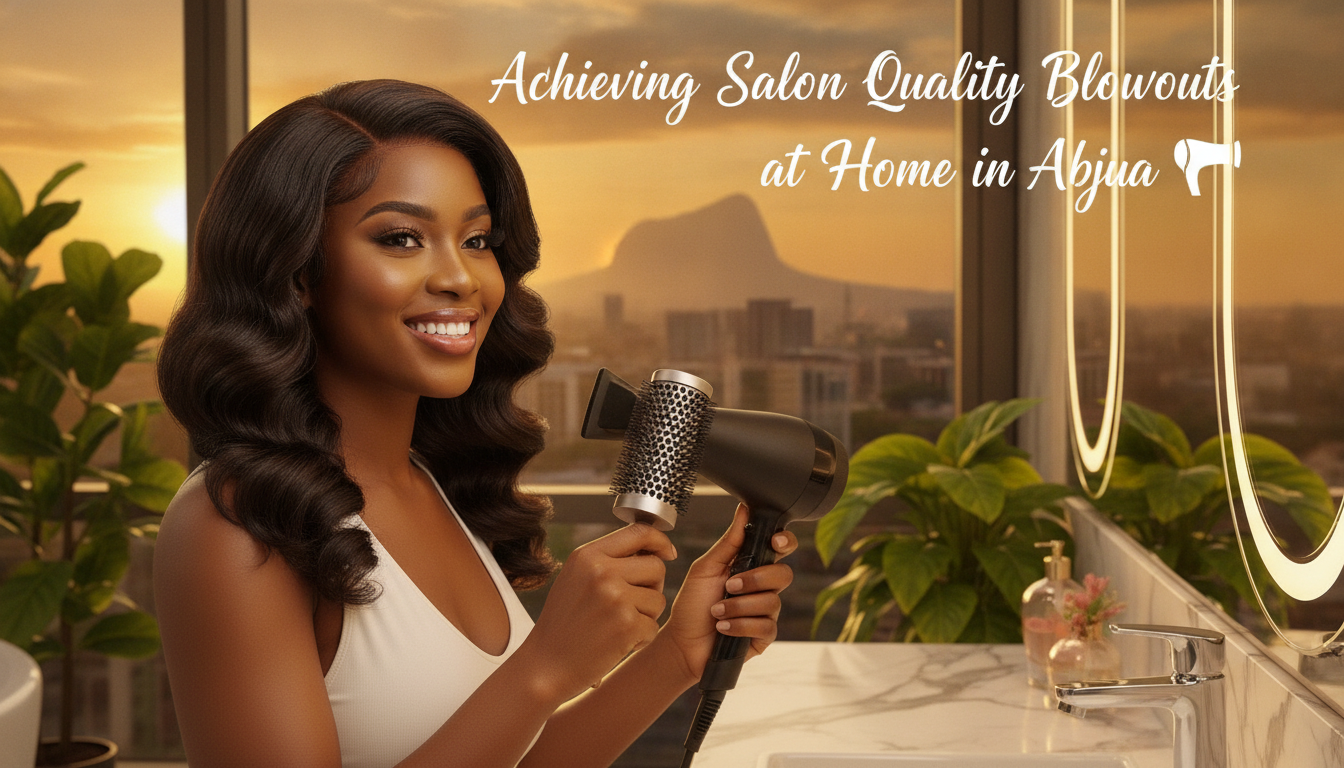
Can You Really Get a Salon-Quality Blowout at Home in Abuja?
Yes, you absolutely can achieve a smooth, bouncy, salon-finish blowout at home in Abuja — but only if you use the right tools, the right products, and the right technique. The challenge most women face is not lack of effort; it is lack of the correct process. A professional blowout is not simply drying your hair with a hairdryer. It involves sectioning, tension, heat control, and finishing steps that seal the style. Once you understand these steps and adapt them to Abuja’s climate — particularly the drying harmattan winds and the humidity that peaks during the rainy season — you can maintain beautiful, frizz-free blowouts between salon visits.
What a Blowout Actually Involves
A blowout is a wet-to-dry styling technique that uses a blow dryer and a round brush to simultaneously dry and shape the hair. The result is a smooth, voluminous finish with movement and shine. It is not a chemical treatment and does not permanently alter your hair’s structure. The style typically lasts until your next wash, though proper preparation and aftercare can extend it significantly.
Understanding what happens during the process helps you replicate it correctly at home. Heat opens the hair’s cuticle slightly, the tension from the brush stretches and smooths each section, and the cool air setting at the end closes the cuticle back down and locks in the shape.
Tools You Need Before You Start
Attempting a blowout with the wrong tools is the most common reason home results look flat or frizzy. Invest in the following before you begin.
- A professional-grade ionic blow dryer: Ionic dryers reduce frizz by neutralising static and drying hair faster. Look for one with at least 1800 watts and multiple heat and speed settings.
- A round brush: Choose the barrel size based on your hair length. Smaller barrels create more curl and volume; larger barrels give a straighter, smoother finish. A boar bristle or mixed bristle brush gives the best tension and shine.
- A nozzle attachment: The concentrator nozzle directs airflow precisely down the hair shaft, which reduces frizz and speeds up the process considerably.
- Sectioning clips: These allow you to work methodically through your hair so no section is missed or over-dried.
- A wide-tooth comb and a fine-tooth tail comb: For detangling before you begin and for parting clean sections.
Choosing the Right Products for Abuja’s Climate
Abuja’s weather has a direct effect on how long your blowout holds. During the harmattan season, the dry, dusty winds strip moisture from your hair quickly, causing brittleness if you haven’t sealed the cuticle properly. During the rainy season and other humid periods, moisture in the air causes the hair shaft to swell, undoing your blowout faster than expected.
Products That Work in Harmattan
During harmattan, focus on moisture and protection. Apply a lightweight leave-in conditioner to damp hair before blow-drying. Follow with a heat protectant spray or serum — this step is non-negotiable, as harmattan air combined with direct heat can cause significant breakage. A small amount of a smoothing cream or blowout cream helps keep the hair pliable and reduces static.
Products That Work in Humid Conditions
During the rainy season, switch your leave-in for a lighter, humidity-blocking product. Anti-humidity serums or sprays create a barrier that slows down the hair’s response to moisture in the air. Avoid heavy creams or oils at the root during this season, as they can weigh the style down and cause it to drop faster in the heat.
Step-by-Step: How to Do a Blowout at Home
Step 1 — Wash and Condition Properly
Start with a thorough shampoo and a moisturising conditioner suited to your hair type. Rinse the conditioner out completely. Leaving conditioner in can make the hair too soft for the brush to grip properly. Gently squeeze out excess water with a microfibre towel — never rub, as this creates frizz and weakens the cuticle.
Step 2 — Apply Your Products
While the hair is still damp — not soaking wet — apply your heat protectant evenly from roots to ends. Add your blowout cream or leave-in conditioner and distribute it thoroughly with a wide-tooth comb. Do not let your hair air-dry significantly before you begin blow-drying; starting on slightly damp hair gives you maximum control over the shape.
Step 3 — Section the Hair
Divide your hair into at least four sections: two at the back and one on each side. If your hair is thick, create more sections. Clip them securely out of the way. Working in sections ensures that every part of your hair receives equal heat and tension, which is what separates a professional finish from a rushed home attempt.
Step 4 — Dry Each Section with Tension
Start from the bottom back sections and work upward. Take a section roughly the same width as your round brush barrel. Place the brush underneath the section close to the root and pull downward and outward while directing the blow dryer’s nozzle — set to medium heat — along the hair shaft from root to tip. Keep the nozzle moving and always point it downward to smooth the cuticle rather than roughen it.
Repeat this motion two to three times per section until that section is completely dry. Never move on to the next section while a section is still damp.
Step 5 — Finish with Cool Air
Once a section is fully dry, switch your dryer to the cool setting and pass it over the hair one final time. This seals the cuticle and helps the shape hold for longer. This step is especially important during Abuja’s rainy season when ambient moisture is high.
Step 6 — Finishing Touches
When all sections are done, apply a very small amount of a lightweight serum or oil to the ends only — not the roots — to add shine and reduce any remaining frizz. Use a soft bristle brush or your fingers to blend the sections together. Avoid touching your hair excessively; the heat and oils from your hands can soften the shape.
Extending Your Blowout Between Washes
A good blowout can last several days with the right aftercare. At night, loosely twist or pin your hair up and sleep on a satin or silk pillowcase. Cotton pillowcases create friction that disrupts the cuticle and shortens the life of your style. If you sweat significantly during the night — which is common during Abuja’s hotter months — a silk bonnet gives additional protection.
During the day, carry a small anti-humidity serum to touch up around the hairline if you notice frizz beginning to form. A light mist of a finishing spray also helps refresh volume without washing everything out.
How Often Should You Do a Blowout at Home?
Blowouts are tied to your wash frequency, so the answer depends on your hair type and lifestyle. Most women in Abuja wash their hair once or twice a week, which makes a weekly blowout a reasonable routine. However, if you use significant heat every wash day without deep conditioning regularly, you will begin to notice dryness and breakage over time.
Balance blowout days with occasional air-dry days and schedule a deep conditioning treatment at least once every two to three weeks. If you attend frequent events — Abuja’s social calendar is demanding — and find yourself blowing out your hair more than twice a week, increase your conditioning routine accordingly.
If you notice persistent breakage, significant hair thinning, or scalp irritation, stop heat styling immediately and consult a dermatologist or trichologist before continuing.
When to Visit a Professional Instead
Home blowouts are ideal for maintenance, but there are situations where a professional finish is worth seeking out. Before a major event — an Aso Ebi occasion, a wedding, a formal dinner — the precision and equipment available in a professional setting produce a result that is genuinely difficult to replicate alone. A professional stylist can also assess your hair’s condition and adjust the technique accordingly.
At Luxor Salon and Spa, a luxury salon and spa in Abuja with branches in Maitama and Wuse 2, blowout services are available around the clock — the salon operates 24/7, which makes it genuinely convenient even on early morning event days. If you would prefer to schedule in advance, you can book online and choose the time that suits you.
Frequently Asked Questions
Can I do a blowout on natural hair at home in Abuja?
Yes. Natural hair blowouts require slightly more preparation — thorough detangling before you begin and a good heat protectant are essential. Work in smaller sections than you would with relaxed hair, and use a lower heat setting to avoid damaging tightly coiled strands. A stretching technique using the dryer on a lower setting before finishing with the round brush can help reduce breakage on very coily textures.
Why does my blowout only last one day in Abuja?
Humidity is the most common culprit, particularly during the rainy season. If your blowout is collapsing quickly, check that you are using an anti-humidity product, that you are finishing with cool air, and that your hair is completely dry before you end the session. Damp hair that looks dry will revert quickly once exposed to outdoor conditions.
Is it safe to blow-dry relaxed hair regularly?
Relaxed hair is structurally more fragile than natural hair, so heat protection is not optional — it is essential. Keep the dryer on a medium rather than high heat setting, never apply heat to soaking wet hair, and deep condition regularly. If your hair feels dry, brittle, or starts to break at the ends despite these precautions, reduce the frequency of heat styling and seek professional advice.
What is the difference between a blowout at home and one at a salon like Luxor?
A professional blowout benefits from stronger, commercial-grade equipment, trained hands that can apply consistent tension across all sections simultaneously, and professional products. At Luxor Salon and Spa in Maitama and Wuse 2, stylists are trained to assess your specific hair type and adjust the technique accordingly — something that takes practice to replicate at home. For important events, a professional blowout is usually worth it.
How do I protect my blowout during Abuja’s harmattan season?
Cover your hair when outdoors during harmattan. The dry, dusty wind lifts the hair cuticle and creates static and frizz. A silk or satin-lined headscarf offers the best protection without disturbing the style. At night, use a silk bonnet and ensure your ends are moisturised, as harmattan dehydrates the hair shaft quickly.
Conclusion
A salon-quality blowout at home in Abuja is entirely achievable once you have the right tools, understand the technique, and adapt your approach to the season. The key is consistency — in your products, your process, and your aftercare. When your schedule, an upcoming occasion, or simply the desire for a perfect finish calls for professional hands, Luxor Salon and Spa is open 24/7 across its Maitama and Wuse 2 branches to deliver exactly that.
Maitama Branch: moc.apsdnanolasroxul@ofni / (+234) 701 888 0102
Wuse 2 Branch: moc.apsdnanolasroxul@2esuw / (+234) 701 888 0100
Related Posts
 Korean Lash Lift: Elevating Lash Care in Abuja
 Top Skin-Tightening Creams Available in Abuja
 Unisex Salon Wuse 2 – Luxor Spa Abuja
 Luxury Beauty Salon – Luxor Spa Abuja
 Why Choosing Luxor Spa Means Choosing Quality Manicure Services
 The Importance of Hygiene Standards in Abuja Nail Salons
 How to Get the Most Out of Your Hair Appointment at Luxor
 Why Luxor Salon and Spa is Abuja’s Best Kept Beauty Secret