

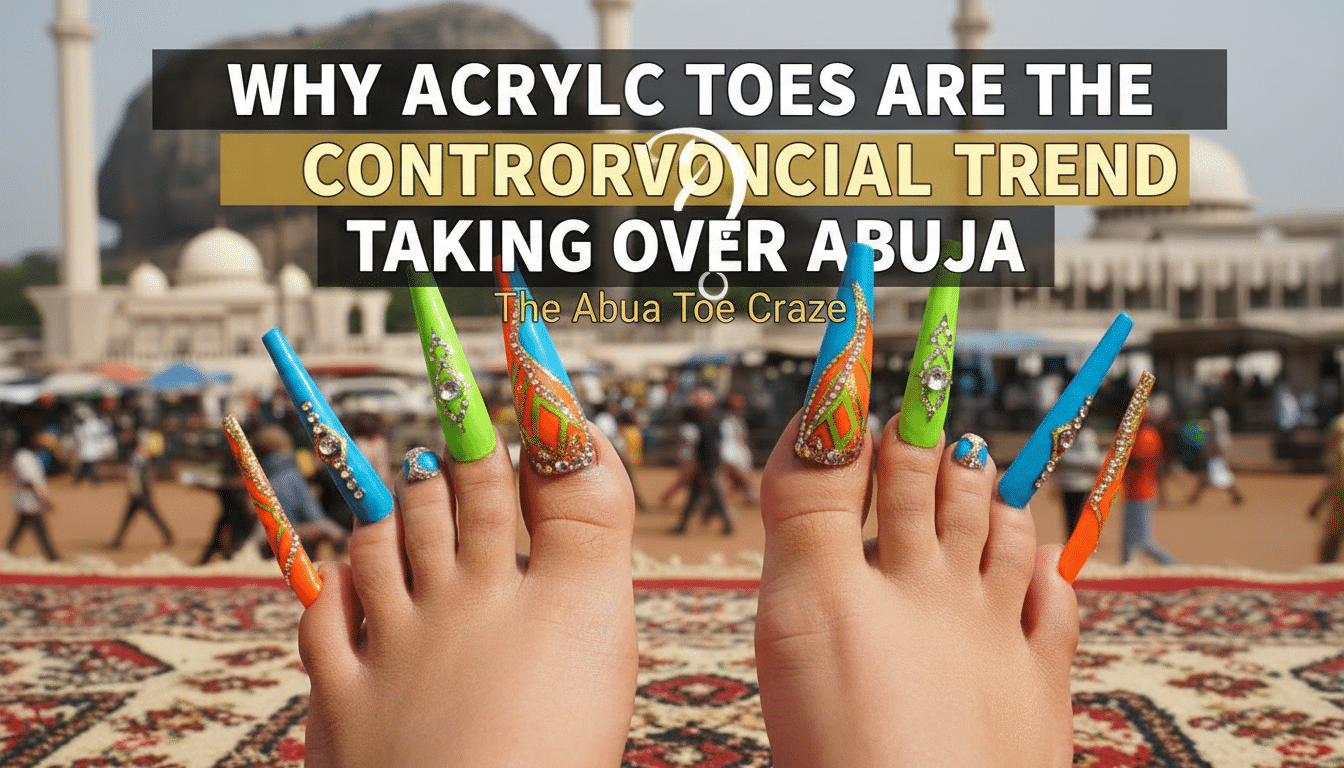
Why Acrylic Toes are the Controversial Trend Taking Over Abuja
Abuja, the meticulously planned capital of Nigeria, is known for its bureaucratic heart, its sprawling estates, and its sophisticated, often conservative, population. Yet, beneath the veneer of governmental propriety lies a vibrant undercurrent of fashion, a constant push and pull between tradition and modernity. And lately, a particular trend has been stirring up more debate than a parliamentary session: acrylic toes.
Yes, you read that right. While acrylic nails have been a global phenomenon for decades, extending the same concept to toenails is a relatively new development, and in Abuja, it’s exploded with a force that has both captivated and repelled. From the bustling markets of Wuse to the upscale salons of Maitama, acrylic toes are popping up on feet of all ages and socioeconomic backgrounds, igniting discussions about beauty standards, hygiene, class, and the very definition of what constitutes "acceptable" appearance in the city.
To understand the controversy, we need to first understand the allure. Acrylic toes, for those unfamiliar, involve applying artificial tips to the toenails, then covering them with acrylic powder and liquid, which hardens to create a durable, long-lasting extension. This allows for various shapes, lengths, and designs, from simple French tips to elaborate glitter gradients and even miniature 3D embellishments.
The Appeal of Perfect Pedicures (Forever?)
The primary draw of acrylic toes is, undeniably, aesthetics. In a city where presentation is paramount, perfectly manicured feet are seen as a sign of attention to detail, sophistication, and disposable income. Natural toenails can be prone to imperfections: discoloration, uneven growth, brittle textures, and the inevitable chipped polish. Acrylics offer a solution to these problems, promising flawless, durable, and consistently beautiful feet.
"I hated my natural toenails," confesses Fatima, a 28-year-old entrepreneur from Garki. "They were always breaking, and the polish would chip within days. Acrylic toes gave me the confidence to wear sandals and open-toe shoes without feeling self-conscious. I get compliments all the time."
For women like Fatima, acrylic toes represent a form of empowerment, a way to take control of their appearance and feel more confident in their skin. They offer a level of perfection that natural nails simply cannot achieve, allowing them to project an image of polished elegance. This is particularly important in a city like Abuja, where social gatherings and networking events often require a certain level of sartorial flair.
Furthermore, the longevity of acrylic toes is a significant advantage. Unlike regular polish, which requires frequent touch-ups, acrylics can last for several weeks, even months, depending on the individual’s growth rate and lifestyle. This is particularly appealing to busy women who don’t have the time or inclination to visit the salon every week.
"I’m a busy lawyer, and I barely have time to breathe, let alone get a pedicure every week," explains Aisha, a 35-year-old barrister. "Acrylic toes are a lifesaver. I can get them done once a month and forget about them. They always look perfect, and they save me so much time and money in the long run."
The trend is also fueled by the influence of social media and celebrity culture. Images of perfectly sculpted acrylic toes, often adorned with intricate designs and sparkling embellishments, are ubiquitous on Instagram and other platforms, creating a desire for similar results among followers. The accessibility of online tutorials and DIY kits has further democratized the trend, making it easier for women to experiment with acrylic toes at home.
The Dark Side of Perfect Toes: Hygiene, Health, and Expense
However, the rise of acrylic toes in Abuja has not been without its critics. Concerns about hygiene, potential health risks, and the financial burden of maintaining the trend have fueled a fierce debate, dividing opinions and sparking discussions about the broader implications of beauty standards and consumerism.
One of the primary concerns revolves around hygiene. Improper application or maintenance of acrylic toes can create a breeding ground for bacteria and fungi, leading to infections and other foot problems. The tight seal between the acrylic and the natural nail can trap moisture, creating a warm, dark, and humid environment that is ideal for microbial growth.
"I’ve seen so many cases of fungal infections caused by acrylic toes," warns Dr. Ngozi, a dermatologist based in Asokoro. "People often don’t realize the importance of proper hygiene and maintenance. They think they can just get the acrylics done and forget about them, but that’s a recipe for disaster. You need to clean them regularly and ensure that the salon is using sterile equipment."
Furthermore, the chemicals used in acrylic application can be harmful to the natural nail and surrounding skin. Prolonged exposure to these chemicals can weaken the nail, making it brittle and prone to breakage. In some cases, it can even lead to allergic reactions and skin irritation.
"My nails were so damaged after I took off my acrylic toes," laments Chioma, a 22-year-old student at the University of Abuja. "They were thin and brittle, and they kept breaking. It took months for them to recover."
The long-term effects of acrylic toes on foot health are still largely unknown, but some experts believe that they could contribute to problems such as ingrown toenails, nail deformities, and even circulatory issues. The constant pressure of the acrylic on the nail bed can disrupt the natural growth process and lead to long-term damage.
Beyond the health concerns, the financial cost of maintaining acrylic toes is also a significant factor. While the initial application may seem relatively affordable, the cost of refills, repairs, and removal can quickly add up. For many women, maintaining acrylic toes is a significant financial investment, one that requires careful budgeting and prioritizing.
"It’s an expensive habit," admits Ngozi, a 30-year-old banker. "I spend a significant amount of money on my acrylic toes every month. But I feel like it’s worth it. It makes me feel good about myself."
Class, Culture, and the Clash of Values
The debate surrounding acrylic toes in Abuja also touches upon deeper issues of class, culture, and the clash of traditional values with modern trends. For some, acrylic toes are seen as a symbol of affluence and sophistication, a way to signal one’s status and belonging to a certain social class. The ability to afford regular salon visits and maintain perfectly manicured feet is often associated with wealth and privilege.
However, for others, acrylic toes are viewed as ostentatious and unnecessary, a frivolous indulgence that is out of touch with the realities of everyday life in Nigeria. Critics argue that the money spent on acrylic toes could be better used to address more pressing needs, such as education, healthcare, or poverty alleviation.
"I don’t understand why people are so obsessed with acrylic toes," says Alhaji Musa, a prominent religious leader in Abuja. "It’s a waste of money. There are so many more important things to worry about in this country."
The trend also raises questions about cultural identity and the influence of Western beauty standards on Nigerian society. Some argue that the obsession with acrylic toes is a reflection of a broader desire to emulate Western ideals of beauty, often at the expense of traditional Nigerian values.
"We need to embrace our own beauty standards," says Ijeoma, a cultural activist in Abuja. "We shouldn’t be trying to look like Western celebrities. We have our own unique beauty to celebrate."
Furthermore, the trend has sparked discussions about the appropriateness of certain styles and designs. Some argue that excessively long or elaborate acrylic toes are inappropriate for certain settings, such as religious gatherings or professional environments. The line between personal expression and cultural sensitivity can be blurry, leading to misunderstandings and clashes of opinion.
"I think some of the designs are just too much," says Fatima, a teacher in Abuja. "They’re distracting and unprofessional. I wouldn’t allow my students to wear something like that to school."
Ultimately, the controversy surrounding acrylic toes in Abuja reflects a broader tension between tradition and modernity, between personal expression and social expectations. It’s a debate that is unlikely to be resolved anytime soon, as the trend continues to evolve and adapt to the changing tastes and preferences of the city’s diverse population. While some will continue to embrace the allure of perfect pedicures, others will remain skeptical of the potential risks and cultural implications. The acrylic toe, it seems, will continue to be a walking, talking, and highly debated symbol of Abuja’s complex and ever-evolving identity.
Luxor Spa Salon | Best Spa & Wellness Center in Abuja Home
Related Posts
 Top 5 Wellness Trends Taking Over Abuja This Year
 The 5 Step Harmattan Skincare Routine Every Abuja Resident Needs
 Why BIAB Nails are the New Favorite for Busy Abuja Women
 Why Hydrafacials are the Biggest Trend in Wuse 2 Right Now
 Why Luxor Salon and Spa is Abuja’s Best Kept Beauty Secret
 How to Achieve the Perfect 4C Bun for Corporate Abuja
 7 Ways Our Wellness Services Help You De Stress From Abuja Life
 What Wellness Services Are Ideal For Busy Professionals In Abuja