

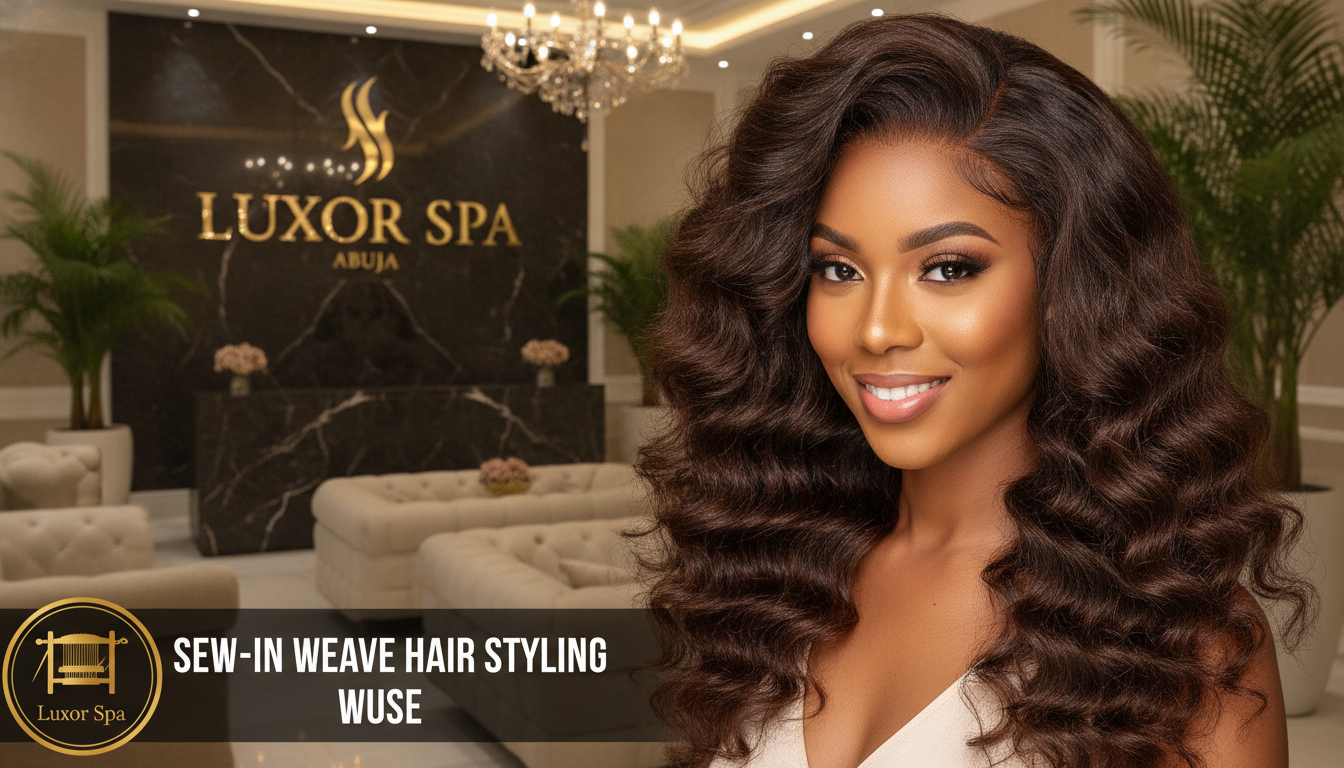
Sew-In Weave Hair Styling at Luxor Spa Wuse 2, Abuja
If you are looking for professional sew-in weave hair styling in Wuse, Abuja, Luxor Salon and Spa at Wuse 2 offers this service as part of its full range of luxury hair care treatments. The Wuse 2 branch is open 24/7, making it convenient whether you need a fresh install before an early-morning event or a late-night touch-up. Skilled stylists work with your natural hair and your chosen weave to deliver a neat, secure, and long-lasting result that suits your lifestyle in Abuja.
What Is a Sew-In Weave?
A sew-in weave is a hair extension method in which weft extensions — strips of hair — are sewn directly onto braided sections of your natural hair. The natural hair is first cornrowed close to the scalp to create a firm base, and the wefts are then stitched onto those braids using a weaving needle and thread.
Unlike glue-in or clip-in methods, the sew-in technique does not use adhesives or heat to bond the extensions to your hair. This makes it a popular choice for women who want a protective style that is secure enough for daily activity without putting chemical stress on their strands.
How the Sew-In Process Works at Luxor Spa Wuse 2
Step One: Consultation
Before any hair is touched, your stylist at the Wuse 2 branch will assess the condition of your natural hair, discuss the look you are going for, and recommend the most suitable weave type and braiding pattern. This is the moment to be honest about any breakage, scalp tenderness, or previous chemical treatments so the stylist can plan accordingly.
Step Two: Preparing the Natural Hair
Your hair is washed, conditioned, and thoroughly dried before the braiding begins. Working on clean hair reduces the risk of product build-up sitting under the weave for weeks, which can lead to scalp irritation. In Abuja’s humid rainy season, skipping the wash step can make scalp odour and dandruff worse beneath a closed weave.
Step Three: Cornrowing
The stylist cornrows your natural hair in a pattern that suits the style you want — whether that is a full sew-in, a partial sew-in, or a leave-out style where some of your natural hair blends with the extensions. The braids must lie flat and even; uneven cornrows create lumps under the weave and can cause tension headaches.
Step Four: Sewing the Wefts
Using a curved weaving needle and strong thread, the stylist sews each weft of extension hair onto the cornrow base, row by row, from the nape of the neck upward. The tension used at this stage is important — too tight and the style will cause traction alopecia over time; too loose and the wefts shift and look untidy.
Step Five: Styling and Finishing
Once all the wefts are secured, the stylist cuts, layers, blows out, or flat-irons the weave into your chosen style. If you are going for a leave-out look, your natural edges and any exposed hair are blended carefully with the extensions. A light serum or finishing spray is applied to give the hair shine and reduce frizz.
Why Abuja’s Climate Matters for Your Sew-In
Abuja’s weather has a direct impact on how well a sew-in weave holds up and how comfortable it feels on the scalp. During the harmattan season, the dry, dusty air strips moisture from both the weave and your natural hair underneath. Without regular moisturising, the weave becomes dry and brittle, and your natural hair can break along the cornrow lines.
During the rainy season, humidity is the main concern. Sweat and moisture become trapped beneath the weave, increasing the risk of scalp irritation and unpleasant odour. Using a lightweight, water-based scalp spray to keep the area clean and ventilated becomes especially important in those months.
For Abuja social events — from Aso-Ebi functions to corporate dinners — a well-installed sew-in weave is a popular choice because it stays sleek under headwear and handles dancing and outdoor heat better than many other styles. Having your install done by professionals at a 24/7 salon like Luxor Spa Wuse 2 means you can get a fresh style even on the eve of an important occasion.
Aftercare for Your Sew-In Weave
Moisturising the Scalp
Your natural hair and scalp continue to need moisture even while they are braided underneath the weave. Apply a light oil or scalp spray through the parts of the weave at least twice a week. Focus on the parts between wefts and along the nape, where the hair is most vulnerable to dryness.
Washing the Weave
You can and should wash your sew-in while it is installed. Use a gentle, sulphate-free shampoo diluted slightly with water, applying it along the parting lines and working it through the wefts. Rinse thoroughly and follow with a light conditioner on the wefts only — avoid heavy conditioner on the scalp or braid base, as it is difficult to rinse out completely. Ensure the weave is fully dry afterwards, especially during the rainy season, to prevent mildew.
Protecting the Style at Night
Wrap the weave in a satin or silk scarf before sleeping, or sleep on a satin pillowcase. This prevents friction that causes frizz and shortens the lifespan of the style. It also protects the edges of your natural hair, which are the most delicate part of the hairline.
Avoiding Excessive Tension
High ponytails and tight updos pull on the sew-in and on your natural hair at the cornrow base. If your scalp feels sore or you notice bumps along the hairline, loosen the style immediately. Persistent tension on the hairline is one of the leading causes of traction alopecia, and it is worth flagging to your stylist or, in serious cases, to a dermatologist.
How Often Should You Redo Your Sew-In?
Most stylists recommend keeping a sew-in in place for no longer than six to eight weeks. Beyond that point, the natural hair that has grown out of the cornrows begins to tangle around the braid base, making removal more difficult and increasing the risk of breakage during takedown.
If you notice itching that does not respond to scalp sprays, visible mildew, or significant matting at the roots before the six-week mark, the weave should be removed sooner. After every takedown, give your natural hair at least one to two weeks of rest — deep conditioning treatments during this period will help restore moisture and strength before the next install.
Choosing the Right Weave Type
Your stylist at Luxor Spa Wuse 2 can guide you on which weave type works best for your desired look and your hair’s current health. Common options include:
- Straight weaves: Smooth, sleek, and easy to maintain; popular for professional settings and corporate Abuja environments.
- Body wave weaves: Loose waves that add volume and movement; hold up well in both dry and humid Abuja weather.
- Curly weaves: Defined curls that blend well with naturally textured hair; require more moisture to prevent dryness, especially during harmattan.
- Kinky or Afro-textured weaves: Designed to blend seamlessly with natural African hair textures; a protective style that looks very natural.
The quality of the hair used also matters. High-quality Remy or virgin human hair tends to tangle less, last longer, and look more natural than synthetic or low-grade blended hair.
Booking Your Sew-In Weave at Luxor Spa Wuse 2
Because sew-in installs take time, booking in advance ensures you get the stylist and the slot that works for your schedule. You can book online at any time, or contact the Wuse 2 branch directly. The salon operates 24/7, so early-morning and late-evening appointments are genuinely available — a practical advantage for busy professionals and those preparing for Abuja events at short notice.
Frequently Asked Questions
Will a sew-in weave damage my natural hair?
When installed with the correct tension and removed carefully, a sew-in weave is considered a protective style. The risk of damage increases when the braids underneath are too tight, the weave is left in for too long, or takedown is rushed. Following proper aftercare and returning to your stylist for removal significantly reduces the risk. If you notice thinning along the hairline or edges that is not recovering between installs, consult a dermatologist.
Can I swim or exercise with a sew-in weave?
Yes, but with precautions. If you swim, wear a swim cap to minimise chlorine and salt water exposure, and wash the weave thoroughly afterwards. After intense exercise, allow sweat to dry rather than leaving the scalp damp for extended periods, as this can cause odour and irritation beneath the weave.
How do I know if my sew-in is too tight?
Some tightness immediately after installation is normal and usually eases within 24 to 48 hours. If the tightness is severe, causes headaches, or leaves small bumps or sores along the hairline, the braids may have been done with too much tension. Speak to your stylist; in some cases the weave may need to be partially loosened or redone to prevent long-term damage.
Can I colour or heat-style the weave?
Human hair weaves can be coloured and heat-styled, though excessive heat and chemical processing will shorten the lifespan of the hair. If you plan to colour the extensions, discuss this with your stylist during the consultation. Synthetic weaves should not be heat-styled as they will melt or frizz permanently.
How do I prepare my hair before coming in for a sew-in install?
Come with clean, well-moisturised hair. If your hair is severely dry or damaged, let the stylist know in advance so they can suggest a conditioning treatment beforehand. Avoid applying heavy butters or oils immediately before the appointment, as this can make the cornrowing base slippery and less secure.
Conclusion
A sew-in weave at Luxor Salon and Spa’s Wuse 2 branch offers Abuja women a protective, versatile, and long-lasting hair styling option — whether you are building a daily look, managing your natural hair health, or preparing for a special occasion. With experienced stylists, 24/7 availability, and proper guidance on aftercare, the experience goes well beyond simply attaching extensions. The key is consistent care between visits and working with professionals who understand both the technical side of the install and the specific demands of Abuja’s climate.
Book online to schedule your sew-in weave appointment, or reach out to the branch closest to you:
- Maitama: moc.apsdnanolasroxul@ofni / (+234) 701 888 0102
- Wuse 2: moc.apsdnanolasroxul@2esuw / (+234) 701 888 0100
Related Posts
 Tapered Cut Relaxed Hair – Luxor Spa Abuja
 Texture Release Natural Hair – Luxor Spa Abuja
 Pedicure For Men Wuse 2 – Luxor Spa Abuja
 Loc Extensions Repair – Luxor Spa Abuja
 Press-On Gel Polish Toes – Luxor Spa Abuja
 Paraffin Wax Hand Treatment – Luxor Spa Abuja
 Prenatal Pregnancy Massage – Luxor Spa Abuja
 Hot Stone Therapy Massage – Luxor Spa Abuja