

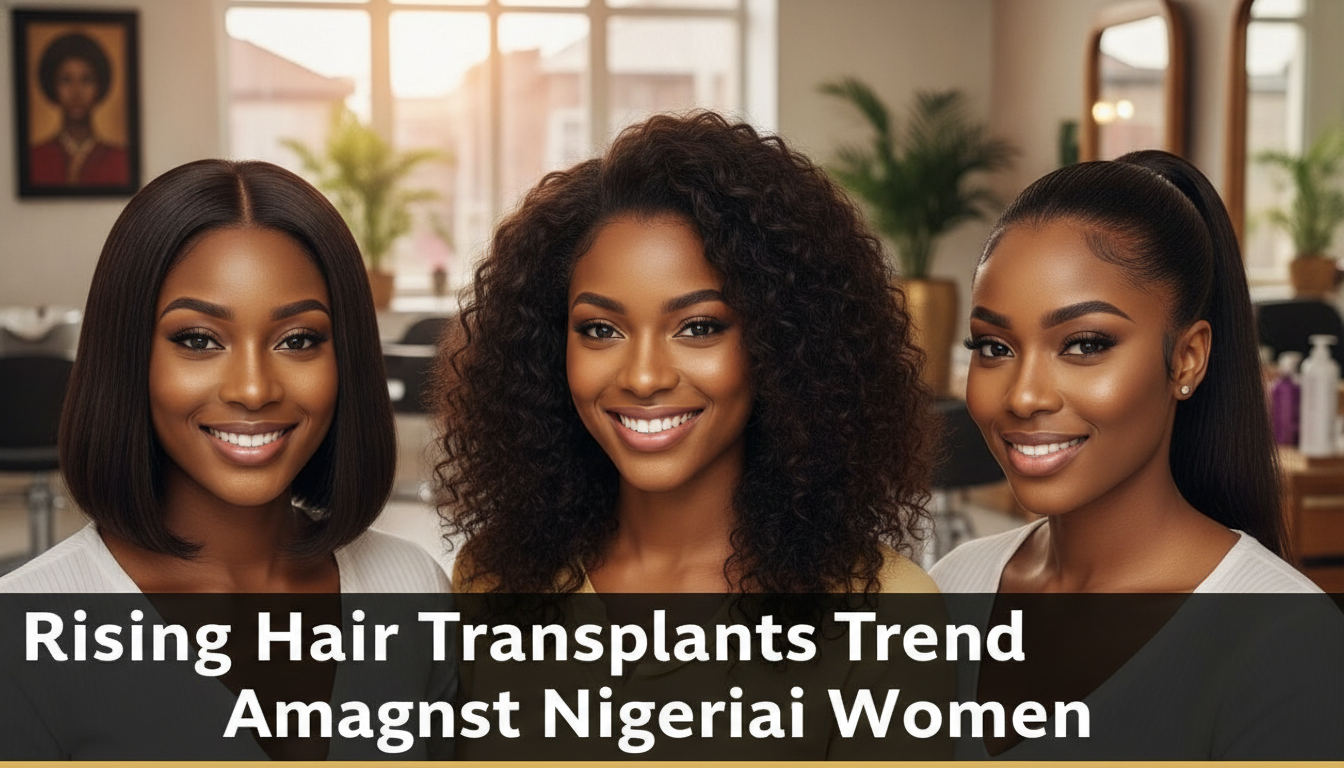
Why Nigerian Women Are Turning to Hair Transplants
Nigerian women are increasingly choosing hair transplants as a long-term solution to hair loss, thinning edges, and bald patches that have not responded to topical treatments or lifestyle changes. The procedure offers a permanent, natural-looking result by relocating healthy hair follicles to areas where growth has stopped or significantly reduced. As awareness grows and more clinics across Nigeria offer the procedure, hair transplants are no longer seen as an option reserved for men or for people travelling abroad — they are becoming part of the conversation around women’s grooming, confidence, and self-care right here at home.
Understanding Hair Loss in Nigerian Women
Hair loss among Nigerian women is more common than many people openly discuss. It affects women across all age groups and can be deeply distressing, particularly when it shows around the hairline or temples where it is most visible.
Common Causes
- Traction alopecia — caused by years of tight braids, weaves, and threading that pull at the follicle repeatedly
- Central centrifugal cicatricial alopecia (CCCA) — a form of scarring alopecia particularly common in women of African descent
- Postpartum hair loss — shedding that follows childbirth due to hormonal shifts
- Stress-related shedding — triggered by illness, grief, or prolonged emotional stress
- Nutritional deficiencies — especially low iron, vitamin D, and protein intake
- Hormonal conditions — including thyroid disorders and polycystic ovary syndrome (PCOS)
If you are experiencing significant or sudden hair loss, it is important to consult a qualified dermatologist or trichologist before pursuing any transplant procedure, as some underlying conditions must be treated first for the transplant to be successful.
What a Hair Transplant Actually Involves
A hair transplant is a surgical procedure in which hair follicles are harvested from a donor area — typically the back or sides of the scalp where hair is naturally thicker and more resistant to loss — and implanted into the thinning or bald recipient area.
The Two Main Techniques
There are two widely used techniques that surgeons in Nigeria now offer:
- Follicular Unit Transplantation (FUT) — a strip of scalp is surgically removed from the donor area, dissected into individual follicular units, and then implanted. This method allows for a large number of grafts in a single session but leaves a linear scar at the donor site.
- Follicular Unit Extraction (FUE) — individual follicles are extracted one by one using a micro-punch tool, leaving tiny circular scars that are barely visible. FUE is currently the more popular choice among women, partly because it allows for a natural hairline reconstruction and shorter visible recovery.
What Happens During the Procedure
The procedure is typically performed under local anaesthesia. The surgeon first marks out the recipient area and designs the new hairline, taking into account the patient’s natural hair growth pattern. Follicles are then extracted from the donor site and carefully implanted into tiny incisions made at the correct angle and direction to mimic natural growth. The process requires precision and patience — it is not a quick procedure.
Who Is a Suitable Candidate?
Not every woman experiencing hair loss is an immediate candidate for a transplant. A good candidate typically has a stable donor area with sufficient healthy follicles, has addressed any underlying medical conditions contributing to the hair loss, is in good general health, and has realistic expectations about results.
Women with active scarring alopecia such as CCCA may need specialist medical treatment to stabilise the condition before a transplant is considered. A thorough consultation with both a dermatologist and a transplant surgeon is essential before proceeding.
Recovery and Aftercare
The recovery period following a hair transplant requires careful attention, particularly in the first two weeks. During this time, the implanted follicles are establishing themselves in their new location and are vulnerable to disruption.
Immediate Aftercare
- Avoid touching, scratching, or rubbing the scalp for at least the first week
- Sleep with the head elevated to reduce swelling
- Follow the surgeon’s prescribed washing routine — usually beginning a few days post-procedure with a gentle, medicated shampoo
- Avoid direct sunlight on the scalp; wear a loose-fitting hat if going outdoors
- Stay away from strenuous exercise and activities that cause heavy sweating for the first two weeks
Medium-Term Aftercare
- Avoid chemical treatments, relaxers, or colouring for at least three months
- Do not wear tight hairstyles, braids, or weaves until your surgeon gives clearance — this is especially important as a preventive measure against traction alopecia recurring
- Use only surgeon-recommended products on the scalp during healing
- Attend all follow-up appointments to monitor graft survival and scalp health
Abuja’s Climate and Your Recovery
Abuja’s harmattan season brings dry, dusty winds that can irritate a healing scalp. If you have a transplant during the harmattan months, protect the scalp from direct exposure to dust and dry air. During the rainy season, humidity can increase the risk of sweat buildup and mild infections if the scalp is not kept clean according to your post-operative instructions. Your surgeon will advise on adjusting your aftercare routine depending on the time of year.
The Timeline for Results
Patience is an essential part of the hair transplant journey. Most patients experience a shedding phase within the first month after the procedure, known as shock loss. This is entirely normal — the follicles are shedding the transplanted hair shafts before entering a growth phase.
Visible new growth typically begins between three and six months after the procedure. The most significant improvement is usually seen between nine and twelve months, with full results often taking up to eighteen months to be fully appreciated. Results vary between individuals depending on scalp health, the technique used, and how well aftercare instructions are followed.
How Often Do You Need a Hair Transplant?
A hair transplant is generally considered a one-time procedure for the treated area, as the transplanted follicles are resistant to the factors that caused the original hair loss. However, some women require a second session to increase density or to address additional areas that develop hair loss over time. This is particularly relevant for women with progressive conditions. Your surgeon will advise on whether and when a second session might be appropriate based on your individual progress.
The Growing Demand in Abuja and Beyond
Abuja has seen a notable rise in demand for hair transplant consultations over recent years, driven by greater awareness on social media, more Nigerian women sharing their experiences publicly, and an increase in qualified practitioners operating locally. For many women in Abuja, the decision also aligns with a broader investment in their appearance ahead of significant events — weddings, corporate engagements, and high-profile social gatherings where looking and feeling their best is a priority.
As part of a wider commitment to hair health and professional grooming in Abuja, Luxor Salon and Spa offers a range of expert hair care services for women who are maintaining their hair before, between, or after a transplant journey. With two branches — in Maitama and Wuse 2 — and operating 24/7, Luxor is available whenever clients need professional care and advice. You can book online at your convenience.
What to Look for in a Hair Transplant Provider
Choosing the right provider is one of the most important decisions in this process. When evaluating a clinic or surgeon, consider the following:
- Verify the surgeon’s qualifications and specific experience with hair transplants in patients of African descent, as hairline design and follicle handling require cultural and physiological understanding
- Ask to see before-and-after photographs of previous female patients
- Ensure the clinic offers a thorough pre-operative consultation, including scalp analysis
- Confirm that post-operative support and follow-up appointments are part of the package
- Be cautious of providers offering unusually low prices without detailed explanation of what is included
Frequently Asked Questions
Is a hair transplant painful?
The procedure is performed under local anaesthesia, so the scalp is numbed during the surgery itself. Most patients report mild discomfort, tightness, or tenderness in the days following the procedure rather than acute pain. Your surgeon will prescribe appropriate pain relief for the recovery period.
Can women with natural or afro-textured hair have a transplant?
Yes. However, the curly or coiled nature of afro-textured hair follicles means the extraction process requires a highly experienced surgeon to avoid transecting the follicles during harvesting. It is important to choose a practitioner who has demonstrated specific expertise with this hair type.
Will the transplanted hair look natural?
When performed by a skilled surgeon with attention to the natural hairline, growth direction, and hair density, the results can appear very natural. The transplanted follicles grow your own hair, so the texture and curl pattern will match your existing hair.
Can hair loss return after a transplant?
The transplanted follicles themselves are resistant to the type of hair loss that affected the recipient area. However, existing non-transplanted hair in other areas of the scalp may continue to thin over time, particularly if the underlying cause of hair loss is progressive. This is why ongoing scalp health management and, where necessary, medical treatment remain important after a transplant.
How soon after a transplant can I return to normal styling routines?
Your surgeon will give specific guidance, but as a general principle, most patients can return to gentle washing and minimal styling within the first two weeks. Chemical treatments, heat styling, and tight protective styles are typically restricted for at least three months. Always follow your surgeon’s personalised instructions rather than general timelines.
Conclusion
The rising interest in hair transplants among Nigerian women reflects a shift in how women are approaching long-term hair health — moving beyond temporary cover-ups towards lasting solutions. As the procedure becomes more accessible and awareness grows about its suitability for women of African descent, more Nigerians are making informed decisions to restore their hairlines and confidence permanently. The key to a successful outcome lies in proper diagnosis, choosing a qualified and experienced surgeon, following aftercare diligently, and maintaining overall scalp health through every season.
For professional hair care services in Abuja to support your hair health journey, Luxor Salon and Spa’s expert team is available around the clock at both their Maitama and Wuse 2 locations.
Maitama Branch: moc.apsdnanolasroxul@ofni / (+234) 701 888 0102
Wuse 2 Branch: moc.apsdnanolasroxul@2esuw / (+234) 701 888 0100
Related Posts
 Celebrity Influence on Nigerian Hair Trends
 Best Hair Oils for Growth in the Nigerian Climate
 The Best Deep Conditioning Rituals for Nigerian Hair Textures
 The Best Skincare Ingredients for Nigerian Women Over 40
 Women-Only Luxury Spa – Luxor Spa Abuja
 Fall 2026 Nail Trends: Nigerian Style Adaptations
 Top K-Beauty Deals: A Nigerian Perspective
 Electrolysis Hair Removal Plan – Luxor Spa Abuja