
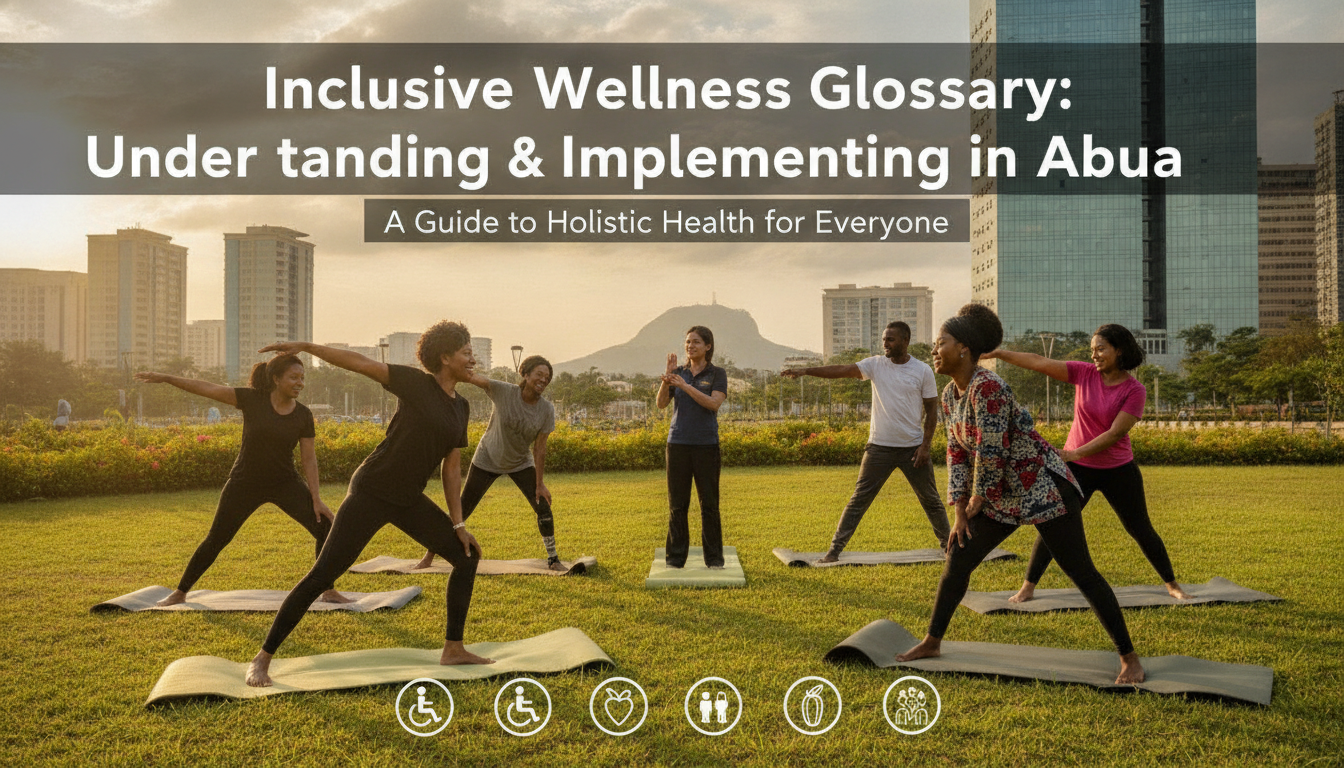
What Is an Inclusive Wellness Glossary and Why Does It Matter in Abuja?
An inclusive wellness glossary is a curated reference of terms, practices, and principles that ensure every person — regardless of skin tone, hair texture, body type, age, or ability — can access and benefit from professional wellness and spa services. In Abuja, where clients range from government officials seeking stress relief to market traders managing skin stress from harmattan dust, understanding the language of inclusive wellness is the first step to receiving care that truly works for you. This glossary helps clients walk into any wellness space equipped with the right vocabulary, the right questions, and the confidence to ask for what they need.
Core Terms in Inclusive Wellness
Inclusive Wellness
Inclusive wellness refers to the deliberate design of health, beauty, and spa services so that no client feels excluded, overlooked, or underserved. It means formulating treatments that work on deep melanin-rich skin without causing hyperpigmentation, selecting massage techniques that accommodate different body sizes, and training therapists to work with clients who have sensory sensitivities or mobility challenges.
Melanin-Safe Formulations
This term describes skincare products and professional treatments that have been tested and proven not to trigger post-inflammatory hyperpigmentation (PIH) or discolouration on darker skin tones. In Abuja’s climate, where sun exposure is intense and harmattan dry winds strip the skin barrier, melanin-safe formulations are not optional — they are essential. Ingredients such as kojic acid, azelaic acid, niacinamide, and vitamin C in controlled concentrations are commonly found in melanin-safe product lines.
Post-Inflammatory Hyperpigmentation (PIH)
PIH is the darkening of skin that occurs after inflammation — from acne, a reaction to a product, or an aggressive peel. It is significantly more common and more pronounced in deeper skin tones. Any wellness provider working in Abuja must understand PIH to avoid causing it through incorrect peel strengths or unsuitable laser settings. If you notice persistent dark patches that do not resolve after several weeks of appropriate skincare, please consult a dermatologist for a clinical assessment.
Fitzpatrick Scale
The Fitzpatrick Scale is a numerical classification system (I through VI) that categorises human skin based on its response to UV radiation. Most Abuja residents fall into Fitzpatrick types IV, V, and VI. This scale matters because it guides therapists in selecting safe peel concentrations, appropriate laser parameters, and suitable waxing temperatures. A wellness provider who does not reference or understand this scale is not fully equipped to deliver inclusive care.
Adaptive Wellness
Adaptive wellness describes the modification of standard treatments to accommodate clients with physical disabilities, chronic pain conditions, pregnancy, or mobility restrictions. This can mean performing a facial with the client seated upright rather than reclined, using gentler pressure in massage for clients with fibromyalgia, or adjusting a nail service for a client who cannot hold a standard seated position for long periods.
Trauma-Informed Care
Trauma-informed care in a wellness context means that therapists are trained to recognise that touch can be a sensitive experience for some clients. It involves obtaining explicit, ongoing consent before each stage of a treatment, explaining procedures clearly before they begin, and offering clients full control to pause or stop any service at any point. This approach is particularly relevant in spa environments where physical touch is central to every service.
Textured Hair Terminology
Inclusive wellness in hair care requires a shared vocabulary. Porosity refers to the hair’s ability to absorb and retain moisture — high porosity hair absorbs quickly but loses moisture fast, while low porosity hair resists moisture absorption. Co-washing is the practice of cleansing hair with conditioner instead of shampoo, beneficial for maintaining moisture in highly coiled textures. Protective styling refers to styles such as braids, twists, and weaves that tuck away the ends of the hair to minimise breakage. Understanding these terms helps both client and stylist communicate about realistic outcomes and appropriate care routines.
Barrier Function
The skin barrier is the outermost layer of skin that keeps moisture in and environmental aggressors out. In Abuja, the harmattan season (typically November to February) is a known barrier disruptor — dry, dusty winds cause transepidermal water loss, leaving skin tight, flaky, and reactive. Maintaining barrier function involves the use of occlusives such as shea butter, ceramide-rich moisturisers, and hyaluronic acid. Any facial treatment that compromises the barrier — such as an aggressive chemical peel — should not be performed on a client whose barrier is already compromised from harmattan exposure.
Chemical Exfoliation vs. Physical Exfoliation
Chemical exfoliation uses acids (AHAs such as glycolic and lactic acid, or BHAs such as salicylic acid) to dissolve dead skin cells. Physical exfoliation uses granular scrubs or tools to manually remove them. For deeper skin tones, chemical exfoliation at appropriate strengths is generally preferred because it reduces the risk of micro-tears and resulting PIH. Physical scrubs with rough particles can cause micro-abrasions that trigger inflammation on sensitive or reactive skin.
Holistic Wellness
Holistic wellness treats the whole person — mind, body, and emotional wellbeing — rather than isolating a single concern. In practice, this means that a wellness session may incorporate aromatherapy, breathwork guidance, scalp massage for stress relief, and nutritional suggestions alongside a primary treatment. Holistic inclusion means ensuring this comprehensive care is available to all clients regardless of their background or physical condition.
Implementing Inclusive Wellness Practices in Abuja
Consultation as the Foundation
Every inclusive wellness experience begins with a thorough consultation. This is not a brief chat — it is a structured conversation covering the client’s skin or hair history, any known sensitivities or allergies, current medications that may affect treatment outcomes (such as retinoids or blood thinners), pregnancy status, and personal preferences including pressure intensity or preferred fragrance levels. In Abuja’s fast-paced social calendar, where clients often arrive for appointments ahead of key events such as ASO Rock receptions or Eid celebrations, a proper consultation protects both client and provider.
Seasonal Adjustments
Abuja has distinct seasons that require adjusted wellness approaches. During the harmattan, barrier-supportive, hydrating treatments take priority. During the rainy season (April to October), humidity can increase oil production and exacerbate acne-prone conditions, making clarifying or balancing treatments more appropriate. An inclusive wellness provider adjusts protocols seasonally rather than applying a single formula year-round.
Product Transparency
Inclusive wellness requires full ingredient transparency. Clients should be informed of every product applied to their skin or hair during a treatment, including the active ingredients, their concentrations, and any known contraindications. This is especially important for clients managing conditions such as eczema, rosacea, or alopecia, and for those following religious or dietary principles that may restrict certain animal-derived ingredients in products applied to the body.
Therapist Training and Cultural Competence
Cultural competence means that therapists understand and respect the cultural contexts their clients come from. In Abuja, this includes understanding the significance of certain hair practices in various ethnic communities, being sensitive to modesty preferences during body treatments, and recognising that wellness is not a universally Western concept — many Nigerian traditions have their own healing and beauty rituals that can be honoured and integrated into a modern spa environment.
Aftercare and Repeat Scheduling in an Inclusive Framework
Personalised Aftercare
Aftercare instructions must be tailored to the individual, not distributed as a generic leaflet. For a client who has received a mild chemical peel, aftercare will include avoiding sun exposure (which is challenging in Abuja’s high UV environment), applying a broad-spectrum SPF 50 daily, avoiding other active ingredients for a specified period, and keeping the skin well moisturised. For a client who has had a scalp treatment for dryness or dandruff, aftercare may include specific shampoo and conditioning routines, avoiding heat styling temporarily, and drinking adequate water to support scalp health from within.
Repeat Treatment Intervals
How frequently a treatment should be repeated depends on the specific service, the client’s skin or hair type, and their individual response. A hydrating facial may be appropriate monthly or even more frequently during harmattan. A stronger exfoliating treatment may require a longer interval to allow full skin recovery. A scalp detox may be recommended every four to six weeks depending on oil production and product build-up. Your therapist should provide a personalised repeat schedule at the end of every session, not a one-size-fits-all recommendation.
Frequently Asked Questions
What does “inclusive wellness” mean in a practical salon or spa setting?
In practice, it means that every service, product, and interaction is designed so that clients of all skin tones, hair textures, body types, ages, and physical abilities receive care that is effective and respectful. It includes using the right products for deeper skin tones, accommodating physical limitations, and training staff in culturally aware communication.
How do I know if a spa in Abuja is genuinely practising inclusive wellness?
Ask questions before booking. A genuinely inclusive provider will offer a detailed consultation, be able to discuss Fitzpatrick skin typing, explain which products are used and why, and comfortably discuss adaptations for any specific needs you have. If a provider cannot answer these questions confidently, it is worth exploring alternatives.
Can I request a specific therapist based on experience with my hair texture or skin tone?
Yes, and you absolutely should if it matters to you. Requesting a therapist with specific expertise in highly textured hair or deeper skin tones is a reasonable and legitimate request. Any inclusive wellness establishment will accommodate this without making you feel uncomfortable for asking.
Are there wellness terms I should know before booking a treatment?
Understanding terms such as PIH, barrier function, porosity, Fitzpatrick type, and chemical vs. physical exfoliation will help you have an informed conversation with your therapist and make sure the treatment selected is genuinely appropriate for your needs. You do not need to be an expert — but knowing what to ask protects you.
When should I see a dermatologist instead of a spa therapist?
If you have persistent skin concerns such as recurring cystic acne, unexplained rashes, significant hair loss, or severe hyperpigmentation that has not responded to consistent proper skincare over several months, please seek a clinical assessment from a qualified dermatologist. A spa therapist is not a medical professional and cannot diagnose or treat medical skin or scalp conditions.
Conclusion
Understanding the language of inclusive wellness transforms the client experience from passive to empowered. When you know what PIH is, what the Fitzpatrick scale means, and why barrier function matters during Abuja’s harmattan, you can walk into any wellness appointment as an informed participant rather than a bystander. At Luxor Salon and Spa, inclusive wellness is embedded in the approach to every service — from the initial consultation to personalised aftercare. With two locations in Maitama and Wuse 2, and doors open 24 hours a day, 7 days a week, access to informed, inclusive wellness care in Abuja is always within reach. You can book online at your convenience and begin your wellness journey with the vocabulary and confidence to get exactly what you need.
Maitama Branch: moc.apsdnanolasroxul@ofni / (+234) 701 888 0102
Wuse 2 Branch: moc.apsdnanolasroxul@2esuw / (+234) 701 888 0100
Related Posts
 Luxury Spa Experience: Embracing Holistic Wellness in Abuja
 Expanding Bathhouse Spa: Opportunities in Abuja
 Advertising Wellness: Reaching Abujaʼs Seniors
 Mindset Transformations for Abuja Wellness Clients
 Abujaʼs Wellness Framework: Thriving with Balance
 Why Luxor Spa Is Synonymous With Premium Wellness Services In Abuja
 Which Wellness Services Focuses Primarily On Detoxing The Body
 7 Ways Our Wellness Services Help You De Stress From Abuja Life