
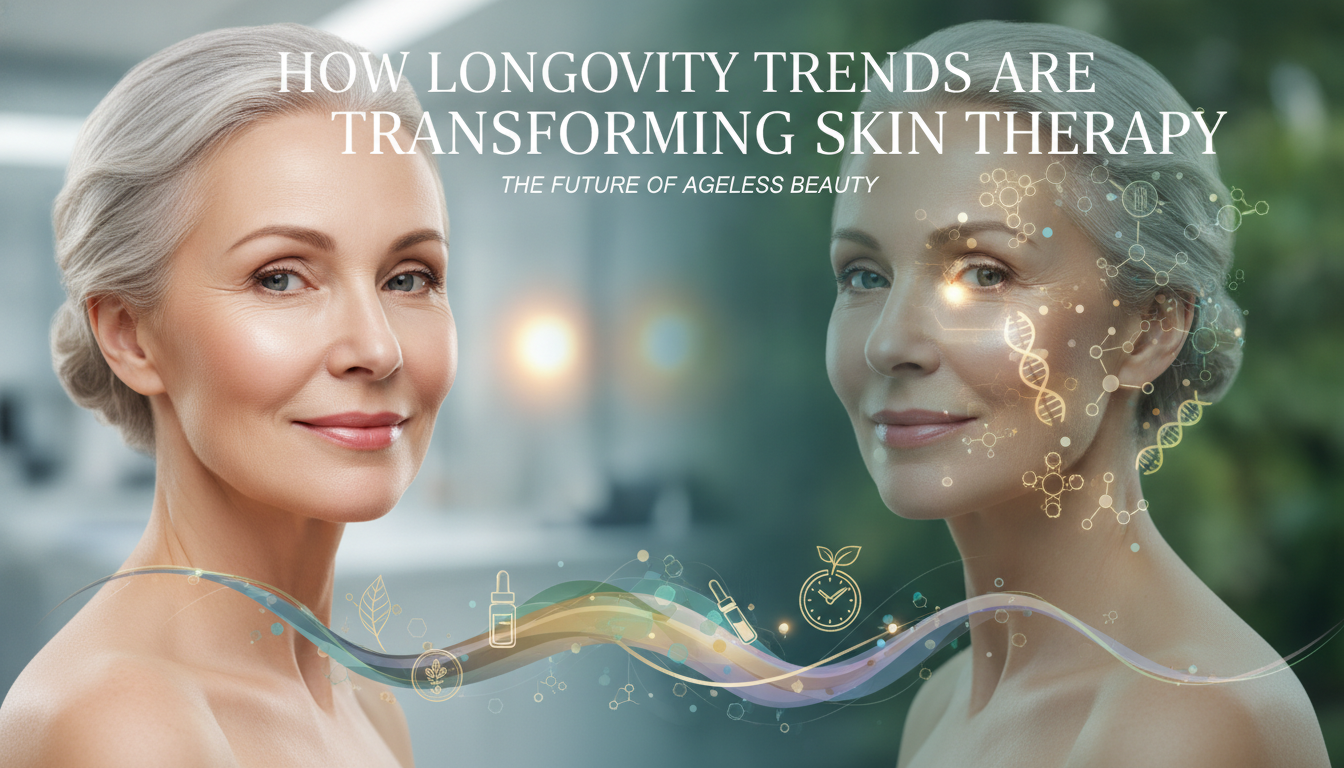
The Short Answer: Skin Therapy Is No Longer Just About Looking Good Today
Longevity trends are transforming skin therapy by shifting the focus from surface-level correction to long-term cellular health. Rather than simply treating a breakout or reducing the appearance of a scar, modern skin therapy now asks a deeper question: how do we slow the biological ageing of the skin itself? The answer has introduced a new generation of treatments, protocols, and ingredients designed to preserve skin function, restore barrier integrity, and extend the years during which skin stays genuinely healthy — not just temporarily polished.
What the Longevity Movement Actually Means for Skin
The longevity movement started in medicine and biohacking circles, centred on extending human healthspan — the number of years a person lives in good health, not just alive. When this thinking reached aesthetics and skin therapy, it changed the entire framework of how treatments are selected and sequenced.
Traditional skin therapy often worked reactively: a client arrived with a problem, and a therapist treated that problem. Longevity-informed skin therapy works proactively. The goal is to maintain the skin’s cellular machinery — collagen production, cellular turnover, DNA repair mechanisms, and the microbiome — so that visible ageing is delayed from the inside out rather than masked from the outside in.
This distinction matters enormously. A treatment that floods the skin with temporary moisture may leave you glowing after one session but does nothing for the fibroblasts that produce collagen. A longevity-led approach targets those fibroblasts directly.
Key Longevity Science Now Driving Skin Therapy
Cellular Senescence and Why It Matters
One of the most significant concepts from longevity science is cellular senescence — the state in which ageing cells stop dividing but refuse to die. These cells accumulate in the skin over time and release inflammatory signals that damage surrounding healthy tissue. Skin therapies informed by longevity research now work to minimise this inflammation and support the clearance of senescent cells through targeted active ingredients and controlled skin stress — such as specific forms of exfoliation and light therapy.
The Role of NAD+ and Mitochondrial Health
NAD+ (nicotinamide adenine dinucleotide) is a coenzyme essential to cellular energy and DNA repair. Its levels decline with age, and skin cells — particularly in climates with high UV exposure like Abuja — deplete it faster. Topical and professional formulations now include NAD+ precursors such as niacinamide (vitamin B3) at therapeutically relevant concentrations, specifically to support mitochondrial function in skin cells rather than simply brightening the complexion as a cosmetic side effect.
Telomere Protection and Oxidative Stress
Telomeres are the protective caps at the end of chromosomes. Each time a cell divides, they shorten. When they become too short, the cell can no longer divide healthily. UV radiation, pollution, smoking, and chronic stress all accelerate telomere shortening in skin cells. Longevity-driven skin therapy now incorporates antioxidant protocols — including professional vitamin C infusions, astaxanthin, and resveratrol-based treatments — not for the cosmetic glow alone, but to reduce the oxidative stress that damages telomeres at a cellular level.
How These Principles Translate Into Actual Treatments
Advanced Exfoliation With a Purpose
Traditional exfoliation removed dead cells for a smoother surface. Longevity-led exfoliation uses enzymes, low-concentration acids, and carefully calibrated physical modalities to trigger a hormetic response — a mild, controlled stress that stimulates the skin’s own repair systems. This is similar in principle to how resistance training stresses muscle tissue to make it stronger. The skin, treated correctly, responds by upregulating collagen synthesis and cellular renewal.
After an advanced exfoliation treatment, the skin barrier is temporarily more vulnerable. Aftercare should include a fragrance-free, ceramide-rich moisturiser, strict sun protection, and avoiding active ingredients such as retinol or strong acids for at least 48 to 72 hours. During Abuja’s harmattan season, when the air is particularly dry and dusty, this window of aftercare requires even more attention to hydration and barrier protection.
LED Light Therapy and Photobiomodulation
LED light therapy — particularly red and near-infrared wavelengths — works by stimulating the mitochondria within skin cells to produce more ATP (cellular energy). This directly supports the longevity goal of maintaining mitochondrial efficiency. Red light at 630–660 nanometres promotes collagen production and reduces inflammation. Near-infrared light penetrates deeper, supporting tissue repair below the skin surface.
This treatment is non-invasive, requires no downtime, and can be repeated regularly as part of a maintenance protocol. It is suitable for most skin types including darker skin tones, which is particularly relevant given the range of melanin-rich complexions at a practice like Luxor Salon and Spa in Abuja. After each session, hydration support and gentle SPF application are recommended. A series of sessions spaced consistently — rather than sporadic one-off appointments — produces the most meaningful cumulative benefit.
Barrier Restoration Protocols
The skin barrier — the outermost layer of the epidermis — is now understood as a critical determinant of skin longevity. A compromised barrier accelerates transepidermal water loss, allows environmental pollutants to penetrate, and triggers chronic low-grade inflammation. Barrier restoration treatments use combinations of ceramides, fatty acids, peptides, and probiotic-derived ingredients to rebuild the lipid matrix of the skin.
In Abuja, the transition between harmattan and the rainy season creates repeated cycles of dehydration and humidity that chronically stress the skin barrier. A longevity-informed therapist will time barrier restoration treatments to coincide with these seasonal shifts — strengthening the skin before harmattan arrives rather than simply reacting once damage is visible.
Peptide-Based Regenerative Treatments
Peptides are short chains of amino acids that act as signalling molecules in the skin. Different peptides signal different cellular responses: some instruct fibroblasts to produce more collagen, others inhibit the muscle contractions that form expression lines, and others specifically target the pathways associated with skin ageing at a genetic expression level. Professional peptide treatments deliver these signals at concentrations and molecular weights that penetrate to their target depth — something over-the-counter products rarely achieve.
These treatments are typically performed as a course. Single sessions offer some benefit, but the cumulative effect of consistent treatment — usually a series spaced over several weeks — is where the longevity benefit is genuinely realised. Aftercare is straightforward: avoid heavy sweating, chlorinated pools, and harsh actives for 24 hours post-treatment.
The Importance of Skin Longevity Before Major Events
Many clients in Abuja begin intensive skin therapy programmes in advance of significant occasions — weddings, corporate events, state functions, or the Christmas and New Year season. From a longevity perspective, this is actually the right instinct applied to the wrong timeline. Beginning a regenerative skin protocol six to twelve weeks before an event allows cellular processes — collagen remodelling, barrier rebuilding, reduced inflammatory load — sufficient time to produce visible, lasting change rather than a surface flush that fades within days.
Luxor Salon and Spa, operating 24/7 across its Maitama and Wuse 2 branches, is positioned to accommodate the demanding schedules of Abuja clients who need appointments outside conventional business hours. You can book online at any time to begin or continue a skin longevity programme.
Ingredients That Longevity Science Has Elevated in Skin Therapy
- Niacinamide (Vitamin B3): Supports NAD+ synthesis, strengthens the barrier, and reduces inflammation at the cellular level.
- Retinoids: Accelerate cellular turnover and have the most research-backed evidence for collagen stimulation of any topical ingredient. Use should be supervised, particularly on darker skin tones where irritation can trigger post-inflammatory hyperpigmentation.
- Vitamin C (L-ascorbic acid): Neutralises free radicals, supports collagen cross-linking, and protects against UV-induced oxidative damage.
- Peptides (signalling, carrier, and enzyme-inhibiting): Communicate directly with skin cells to maintain and restore function.
- Resveratrol and Astaxanthin: Potent antioxidants that protect telomeres and mitochondria from oxidative damage.
- Ceramides and Fatty Acids: Structural lipids that maintain barrier integrity and prevent chronic inflammation from environmental exposure.
What Longevity Skin Therapy Cannot Do
It is important to be clear: longevity-informed skin therapy supports, maintains, and extends healthy skin function. It is not a substitute for medical dermatology. Conditions such as active cystic acne, rosacea with significant vascular involvement, melasma, psoriasis, eczema, or any skin change that is new, irregular, or rapidly evolving should be assessed by a qualified dermatologist before any professional skin therapy begins. A responsible skin therapist will always refer where appropriate.
Building a Long-Term Skin Protocol
The most effective longevity skin therapy is not a single treatment but a structured, evolving protocol built around four elements: professional treatments at appropriate intervals, a home care routine that reinforces what happens in the treatment room, lifestyle factors (nutrition, sleep, sun protection), and periodic reassessment to adjust as the skin changes with age and seasons.
A skilled therapist will assess barrier function, sebum balance, hydration levels, pigmentation history, and skin sensitivity before recommending a protocol. This initial assessment is as important as any individual treatment within the programme.
Frequently Asked Questions
How is longevity skin therapy different from a standard facial?
A standard facial primarily addresses the surface — cleansing, hydration, and temporary brightening. Longevity skin therapy targets cellular processes: collagen production, barrier integrity, mitochondrial health, and inflammation reduction. The goal is sustained biological improvement in how the skin functions, not just how it looks on the day of treatment.
How often should longevity-focused skin treatments be repeated?
This depends on the specific treatment. LED therapy can be performed frequently as part of a weekly or fortnightly maintenance routine. Advanced exfoliation and peptide treatments are typically spaced every two to four weeks. Barrier restoration work is often timed seasonally — particularly around harmattan in Abuja. Your therapist will recommend a schedule based on your skin’s response and your goals.
Are these treatments suitable for all skin tones?
Most longevity-informed treatments are suitable for all skin tones when performed by an experienced therapist trained in working with melanin-rich skin. Special care is required with certain exfoliation methods and retinoid protocols to avoid triggering post-inflammatory hyperpigmentation. Always ensure your therapist has specific experience with darker skin tones.
Can I combine longevity skin treatments with my existing home skincare routine?
Yes, and your home routine should be integrated with your professional treatments for the best results. Your therapist will advise you on which active ingredients to avoid on the days surrounding treatment and which to use consistently to reinforce the professional work. Using strong actives immediately before or after certain treatments can compromise results or trigger sensitivity.
At what age should someone start longevity-informed skin therapy?
Prevention is significantly more effective than correction. Longevity-informed skin care is appropriate from the mid-twenties onwards, when collagen production naturally begins to slow. That said, skin therapy that supports barrier function and reduces oxidative stress is beneficial at any adult age. The specific treatments and intensity will vary depending on where the skin currently is and what it needs.
Conclusion
Longevity trends have fundamentally changed what skin therapy can achieve. By working at the level of cellular energy, barrier architecture, inflammation, and signalling molecules, modern skin therapy now offers something that surface treatments never could: a genuine investment in how your skin ages rather than simply how it appears on a given day. For clients in Abuja navigating UV exposure, seasonal extremes, and demanding social and professional calendars, a longevity-led approach to skin care is not an indulgence — it is a practical strategy for maintaining skin health over the long term.
Luxor Salon and Spa, available 24/7 at both Maitama and Wuse 2, provides professional skin therapy informed by these principles. Book online to begin or continue your skin longevity programme.
Maitama Branch: moc.apsdnanolasroxul@ofni / (+234) 701 888 0102
Wuse 2 Branch: moc.apsdnanolasroxul@2esuw / (+234) 701 888 0100
Related Posts
 Top Skin-Tightening Creams Available in Abuja
 Top Serums for Aging Skin: Enhance Dryness and Fine Lines
 Aesthetic Doctor Skin Consultation – Luxor Spa Abuja
 Celebrity Influence on Nigerian Hair Trends
 Fall 2026 Nail Trends: Nigerian Style Adaptations
 Skin Tag Removal Maitama – Luxor Spa Abuja
 Exosome Skin Rejuvenation – Luxor Spa Abuja
 Mesotherapy Skin Booster – Luxor Spa Abuja