

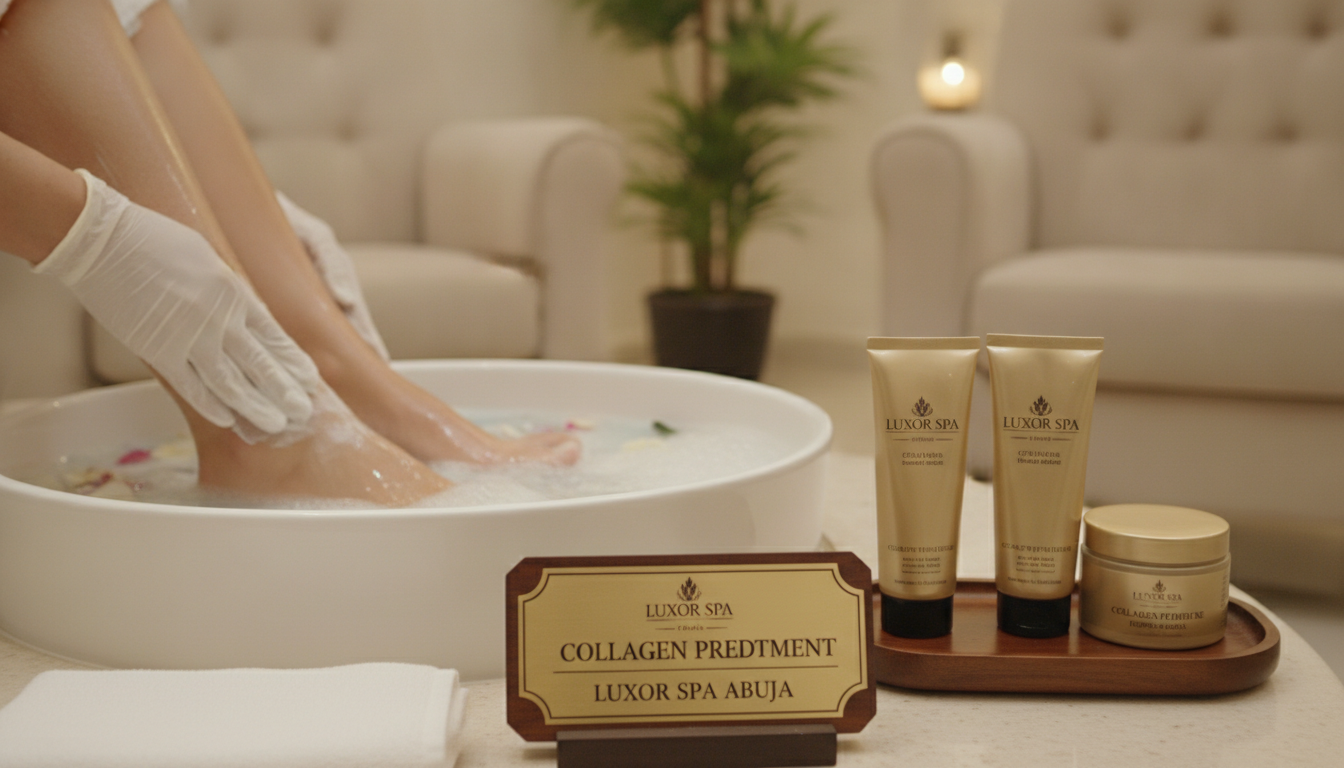
What Is a Collagen Pedicure Treatment?
A collagen pedicure treatment is a specialised foot care service that goes well beyond standard nail grooming. At Luxor Salon and Spa in Abuja, the treatment combines traditional pedicure steps — soaking, exfoliation, cuticle care, and nail shaping — with the targeted application of collagen-rich products that deeply nourish, firm, and restore the skin on your feet and lower legs. If your feet feel dry, cracked, rough, or simply neglected, a collagen pedicure is designed to address exactly those concerns in one thorough session.
Why Collagen Matters for Your Feet
Collagen is a structural protein that keeps skin plump, smooth, and resilient. The skin on the soles and heels is naturally thicker than elsewhere on the body, and it takes a great deal of daily stress — walking, standing, friction from footwear. Over time, the skin’s own collagen production slows, leading to dryness, fine lines, rough patches, and cracking, particularly around the heels.
When collagen-enriched products are applied during a pedicure, they help replenish moisture at a deeper level than ordinary lotions. The result is visibly softer, smoother skin that retains hydration longer. For feet that have been exposed to Abuja’s harsh harmattan winds and dry air, or that carry the grime and swelling that come with the rainy season, that extra boost of collagen can make a noticeable difference.
The Collagen Pedicure Experience at Luxor Spa Abuja
At Luxor Salon and Spa, the collagen pedicure is delivered in a relaxing, professional environment across both their Maitama and Wuse 2 branches. The spa operates 24 hours a day, seven days a week, so the treatment fits around your schedule whether you prefer a mid-morning appointment or a late-evening session after work.
Step One: Foot Soak
The session begins with a warm, aromatic foot soak. This softens hardened skin, cleanses the feet thoroughly, and prepares the tissues to absorb the collagen products that follow. The soak alone begins to relax tired muscles and ease tension that builds up through the day.
Step Two: Exfoliation and Callus Removal
Once the skin is softened, a trained therapist removes dead skin cells and calluses using a combination of a foot file or pumice and an exfoliating scrub. This step is particularly important for Abuja residents whose feet are frequently exposed to dust, open footwear, and uneven surfaces. Removing the rough outer layer allows the collagen treatment to penetrate effectively rather than sitting on top of dead skin.
Step Three: Cuticle Care and Nail Grooming
Cuticles are gently pushed back and tidied, nails are trimmed to the correct length and shape, and any rough nail edges are filed smooth. Proper nail care at this stage prevents ingrown toenails and keeps the overall look neat and healthy.
Step Four: Collagen Mask Application
This is the defining step of the treatment. A collagen-rich mask or wrap is applied generously to the feet and lower legs. The collagen formulation works to plump the skin, reduce the appearance of fine lines on the heels, restore elasticity, and lock in moisture. The mask is left on for a set period to allow maximum absorption, often while the client relaxes fully.
Step Five: Massage
After the mask is removed, a nourishing collagen-infused lotion or cream is massaged into the feet and calves. The massage stimulates circulation, helps the product penetrate further, and provides deep relaxation. For anyone who spends long hours on their feet — whether commuting, attending events, or working — this stage is especially restorative.
Step Six: Finishing and Polish
The treatment concludes with the option of nail polish application. Whether you prefer a classic nude, a bold colour for a special occasion, or a simple clear coat, the therapist completes your look before you leave feeling entirely refreshed.
Who Benefits Most from a Collagen Pedicure?
Almost anyone can benefit, but certain situations make the collagen pedicure particularly worthwhile:
- Cracked heels: Common during Abuja’s harmattan season when dry air strips moisture from exposed skin. The collagen mask works directly on this concern.
- Dry or flaking skin: If standard moisturisers are not keeping up with your skin’s needs, the concentrated collagen application offers more intensive repair.
- Pre-event preparation: Before a wedding, owambe, official function, or holiday, a collagen pedicure ensures your feet look and feel their best in open shoes or sandals.
- Feet that feel tired or sore: The massage and soak combination specifically targets fatigue and discomfort.
- Mature skin: As collagen production naturally decreases with age, topical collagen treatments help compensate for what the body produces less of on its own.
If you are experiencing persistent cracking that bleeds, signs of fungal infection, or other concerning skin conditions on your feet, please consult a dermatologist before booking any spa treatment.
Aftercare: Making Your Results Last
To extend the benefits of your collagen pedicure, a few simple habits go a long way:
- Moisturise daily: Apply a good-quality foot cream or collagen lotion every evening. This maintains the hydration levels restored during your treatment.
- Wear appropriate footwear: Avoid open-backed shoes and rough sandals immediately after the treatment. Give the skin time to absorb everything before exposing your feet to dust or friction.
- Stay hydrated: Drinking enough water supports skin elasticity from the inside. This is especially important during the dry season in Abuja when indoor air conditioning further dehydrates the body.
- Exfoliate gently at home: A light exfoliation once a week prevents dead skin from building back up too quickly between appointments.
- Protect during harmattan: Use a thicker, occlusive foot cream or even petroleum jelly on the heels overnight during the harmattan months to prevent cracking from worsening.
- Avoid soaking in very hot water: Hot water strips natural oils. Lukewarm water is better for maintaining your skin’s moisture barrier between treatments.
How Often Should You Repeat the Treatment?
For general maintenance, most clients benefit from a collagen pedicure once a month. This frequency keeps the skin consistently smooth, the nails well-groomed, and the collagen levels topped up before they noticeably deplete.
During the harmattan season — typically from November through February in Abuja — the extreme dryness can accelerate skin deterioration on the feet. During this period, booking every two to three weeks may be more appropriate, depending on how your skin responds.
If you are preparing for a specific event such as a wedding or formal function, scheduling a session one to three days beforehand gives your skin time to fully absorb the treatment while keeping your nails freshly polished.
Your therapist at Luxor Spa will assess your feet at each visit and advise on the ideal interval based on your skin’s current condition.
Booking Your Collagen Pedicure at Luxor Spa Abuja
Luxor Salon and Spa makes it straightforward to secure your appointment. Because the spa is open 24 hours every day, you are never locked out of a suitable time. You can book online at any time to choose your preferred branch, date, and time slot without needing to call during business hours.
Both the Maitama and Wuse 2 branches are well situated for clients across Abuja, making it easy to fit a collagen pedicure into your routine regardless of which part of the city you are coming from.
Frequently Asked Questions
Is a collagen pedicure suitable for sensitive skin?
Generally, yes. Collagen-based products are formulated to be gentle and nourishing rather than harsh. However, if you have known allergies to specific ingredients or a diagnosed skin condition affecting your feet, please inform your therapist before the session begins. They will assess whether any adjustments are needed.
How soon will I see results after a collagen pedicure?
Most clients notice an immediate difference in how soft and smooth their feet feel straight after the session. The skin appears more supple, and rough patches are visibly reduced. Full results, particularly in terms of improved elasticity and reduced cracking, become more apparent over the following few days as the collagen continues to work and the skin regenerates.
Can I get a collagen pedicure if I have very severe cracked heels?
A collagen pedicure can help significantly with dry, cracked heels that are a cosmetic concern. However, if your heels are deeply fissured, bleeding, painful, or showing signs of infection, please seek medical advice from a dermatologist or podiatrist before booking. Once your heels have been treated medically, the collagen pedicure can then be an excellent part of your ongoing maintenance routine.
Does the collagen pedicure include nail polish?
Yes, nail polish is part of the finishing stage of the treatment at Luxor Spa. You can choose your preferred colour or opt for a clear coat if you prefer a natural look.
How is a collagen pedicure different from a regular pedicure?
The core steps — soaking, exfoliation, nail grooming — are shared with a standard pedicure. The key difference is the collagen mask applied to the feet and lower legs. This delivers a concentrated dose of collagen-enriched ingredients that standard pedicure products do not include, resulting in deeper hydration, improved skin elasticity, and more lasting softness, particularly useful for dry or mature skin.
Conclusion
A collagen pedicure treatment at Luxor Spa Abuja is a thoughtful, results-driven way to care for your feet. It combines the grooming essentials of a traditional pedicure with the skin-renewing power of collagen, addressing dryness, roughness, and fatigue in a single relaxing session. Whether you are dealing with the effects of harmattan weather, preparing for an important occasion, or simply investing in regular self-care, the treatment delivers visible and tangible results. With the flexibility of 24/7 availability across two convenient Abuja locations, there is never a wrong time to give your feet the attention they deserve.
Maitama Branch: moc.apsdnanolasroxul@ofni / (+234) 701 888 0102
Wuse 2 Branch: moc.apsdnanolasroxul@2esuw / (+234) 701 888 0100
Related Posts
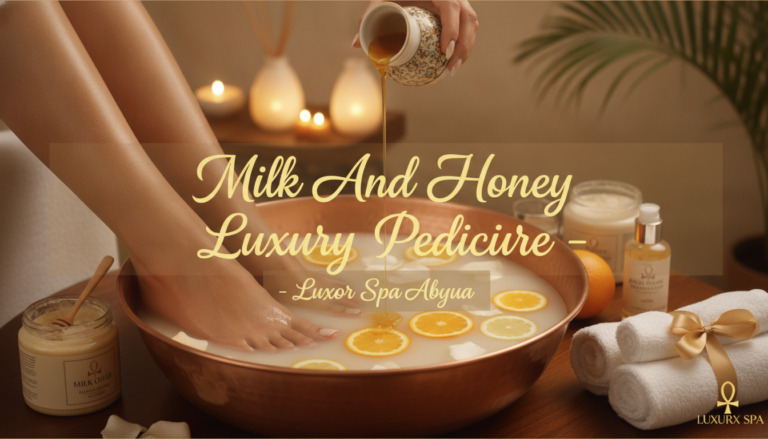 Milk And Honey Luxury Pedicure – Luxor Spa Abuja
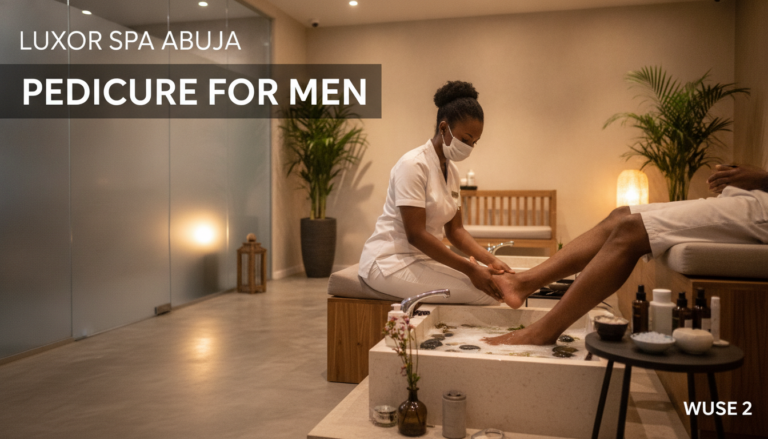 Pedicure For Men Wuse 2 – Luxor Spa Abuja
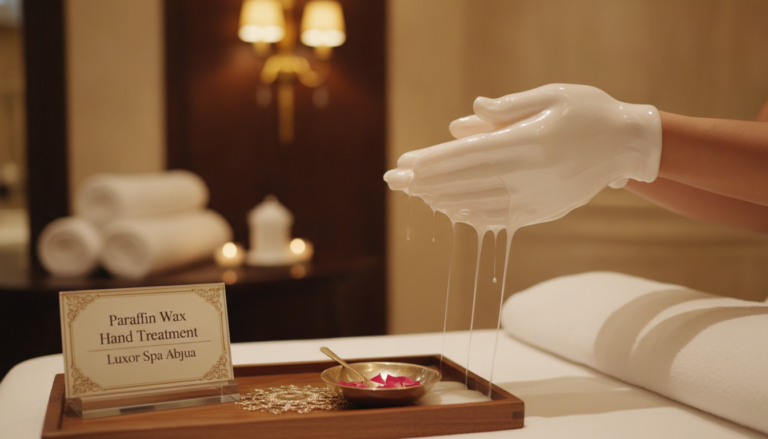 Paraffin Wax Hand Treatment – Luxor Spa Abuja
 Hard Gel Nail Extensions Wuse – Luxor Spa Abuja
 Gel-X Extensions Repair – Luxor Spa Abuja
 Rubber Base Infill French Tips – Luxor Spa Abuja
 Biab Refill Nails – Luxor Spa Abuja
 Wellness Reset Package – Luxor Spa Abuja