
Chemical Peel for Hyperpigmentation at Luxor Spa Abuja
Yes, a chemical peel can effectively treat hyperpigmentation. At Luxor Salon and Spa in Abuja, chemical peels are used to exfoliate the outer layers of the skin, breaking down excess melanin deposits that cause dark spots, uneven skin tone, post-acne marks, and sun-induced discolouration. When performed by trained professionals, a chemical peel is one of the most reliable non-invasive solutions for hyperpigmentation available in Abuja today.
What Is Hyperpigmentation?
Hyperpigmentation is a common skin condition in which certain areas of the skin become darker than the surrounding skin. It occurs when the skin produces too much melanin — the pigment responsible for skin colour. It is especially prevalent in darker skin tones, which is why it is a frequent concern for many clients in Nigeria.
Common causes include:
- Sun exposure, particularly during the intense dry season and harmattan months in Abuja
- Post-inflammatory hyperpigmentation (PIH) from acne or injuries
- Hormonal changes
- Use of harsh skincare products
- Friction from clothing or shaving
Hyperpigmentation is not dangerous, but it can affect confidence. For persistent or worsening cases, we recommend consulting a dermatologist before or alongside any spa treatment.
How a Chemical Peel Works on Hyperpigmentation
A chemical peel involves the application of a carefully selected chemical solution to the skin’s surface. This solution causes the top layers of the skin to exfoliate and eventually peel away, revealing fresher, more evenly pigmented skin underneath.
For hyperpigmentation specifically, chemical peels work by:
- Accelerating the skin’s natural cell turnover process
- Breaking down clusters of melanin trapped in the epidermis
- Stimulating collagen production, which supports healthier, more even skin renewal
- Reducing the visibility of dark spots, age spots, and post-acne marks over successive treatments
Types of Chemical Peels Used for Hyperpigmentation
Not all chemical peels are the same. The right peel depends on your skin type, the depth of pigmentation, and your skin’s sensitivity level. At Luxor Spa Abuja, our skin specialists assess your skin before recommending the most suitable option.
- Superficial peels — These use mild acids such as glycolic acid, lactic acid, or mandelic acid. They target the outermost layer of skin (epidermis) and are suitable for mild hyperpigmentation and sensitive skin. Recovery is minimal.
- Medium-depth peels — These penetrate deeper into the skin using acids such as trichloroacetic acid (TCA). They are more effective for moderate hyperpigmentation, including stubborn dark patches and sun damage.
- Kojic acid and azelaic acid peels — These are particularly popular for melanin-rich skin tones and are well suited for Nigerian clients because they target pigment production without causing excessive irritation.
The choice of peel is not a one-size-fits-all decision. Your skin specialist at Luxor will conduct a thorough consultation to identify the safest and most effective option for your complexion.
The Chemical Peel Treatment Process at Luxor Spa Abuja
Understanding what happens during your appointment helps you feel comfortable and prepared. Here is what to expect:
- Consultation and skin assessment — Your therapist will examine your skin, review your skincare history, and discuss your concerns before recommending the appropriate peel type and strength.
- Cleansing — The skin is thoroughly cleansed to remove oil, makeup, and impurities so the chemical solution can penetrate evenly.
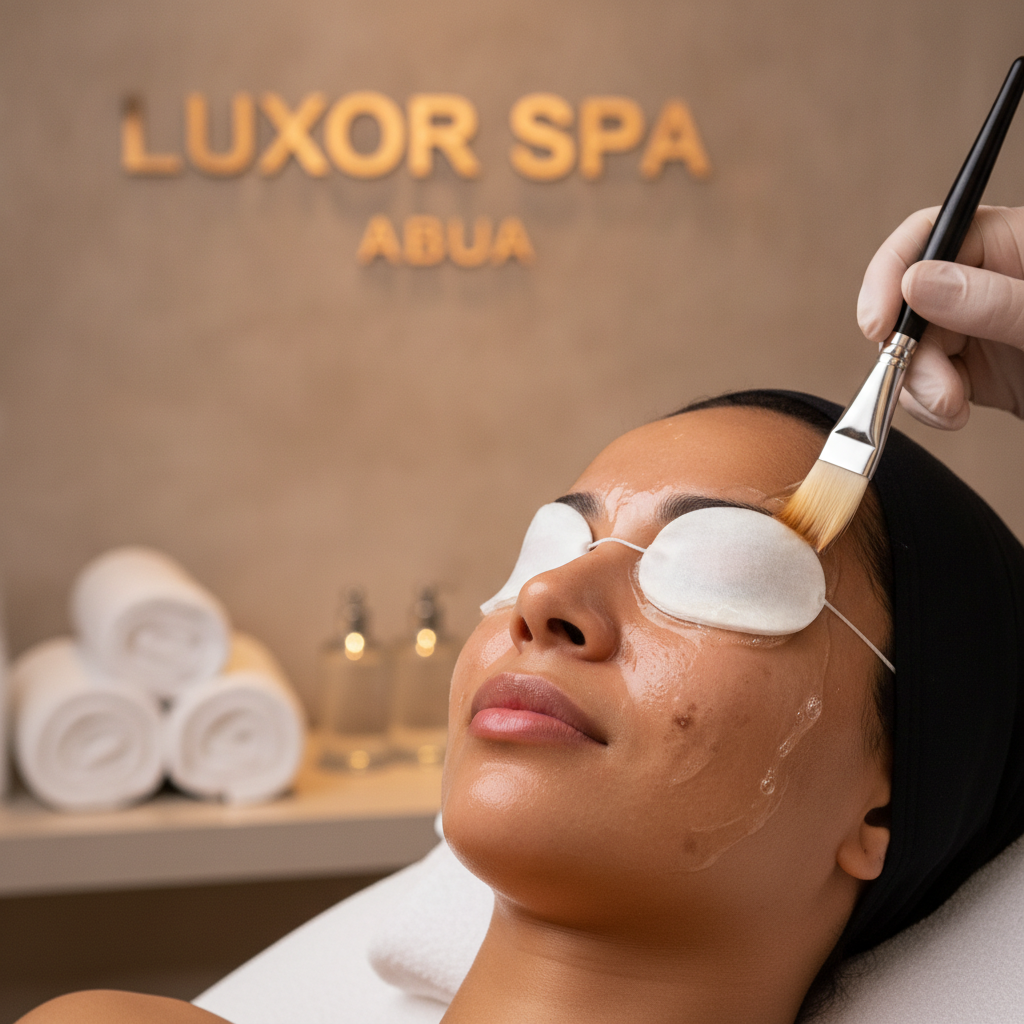
- Application of the peel — The chemical solution is applied to the treatment area. You may feel a mild tingling or warm sensation. This is normal and temporary.
- Neutralisation — After the appropriate contact time, the solution is neutralised and removed.
- Soothing and protection — A calming serum or moisturiser is applied, followed by sun protection to shield the freshly treated skin.
What to Expect After a Chemical Peel
The results and recovery time vary depending on the depth of the peel. After a superficial peel, your skin may appear slightly pink and feel tight for a day or two. After a medium-depth peel, peeling and flaking typically begin within two to three days and can last up to a week.
Visible improvements in skin tone and reduction in dark spots are usually noticeable after the peeling phase is complete. Many clients notice a brighter, more even complexion with continued improvement over subsequent sessions.
Chemical Peel Aftercare — What You Must Do
Aftercare is critical. Neglecting it can lead to irritation, prolonged redness, or even worsening of hyperpigmentation. Follow these guidelines carefully:
- Avoid sun exposure — The skin is highly photosensitive after a peel. This is especially important in Abuja, where UV intensity is high. Apply broad-spectrum SPF 30 or higher every day, even when indoors.
- Moisturise regularly — Keep the skin hydrated with a gentle, fragrance-free moisturiser to support healing.
- Do not pick or peel the skin — Allow dead skin to shed naturally. Peeling prematurely can cause scarring or new pigmentation.
- Avoid active ingredients temporarily — Pause retinoids, exfoliating acids, and other active skincare products for at least one week post-peel or as advised by your therapist.
- Stay hydrated — Drink plenty of water, particularly during harmattan when dry air can affect skin recovery.
- Avoid heavy exercise and excessive sweating — For at least 24 to 48 hours post-treatment.
How Often Should You Repeat a Chemical Peel for Hyperpigmentation?
Consistency is key when treating hyperpigmentation with chemical peels. A single session will offer visible improvement, but a course of treatments delivers the most significant and lasting results.
For superficial peels, a series of four to six sessions spaced two to four weeks apart is commonly recommended. For medium-depth peels, the interval between sessions is longer — typically six to eight weeks — to allow full skin recovery.
Your Luxor skin specialist will design a treatment plan tailored to the severity of your hyperpigmentation and your skin’s response after each session. Many Abuja clients plan their peel sessions ahead of major events — weddings, owambe parties, end-of-year celebrations — to ensure their skin is at its best when it matters most.
Best Time of Year to Get a Chemical Peel in Abuja
While chemical peels can be performed year-round, timing matters in Abuja’s climate. The cooler, less intense months between November and February can be convenient, though the dryness of harmattan requires extra moisturising post-treatment. During the rainy season, reduced UV intensity can make sun exposure more manageable after a peel — but sun protection remains non-negotiable regardless of the season or cloud cover.
Avoid scheduling a peel immediately before extended outdoor activities or travel to very sunny environments, as unprotected sun exposure after a peel can trigger new pigmentation.
Who Is a Good Candidate for Chemical Peel Hyperpigmentation Treatment?
Chemical peels for hyperpigmentation are suitable for a wide range of clients. You may be a good candidate if you have:
- Uneven skin tone or blotchy pigmentation
- Post-acne dark marks (post-inflammatory hyperpigmentation)
- Sun-induced dark spots or age spots
- Melasma (a hormonal form of hyperpigmentation — though melasma can be particularly complex; a dermatologist consultation is advisable)
- Dull or lacklustre complexion
Chemical peels require extra care on darker skin tones. This is not a reason to avoid them — it is a reason to ensure they are performed by experienced professionals familiar with melanin-rich skin. At Luxor Spa, our therapists are trained to work safely with all skin tones common in Nigeria.
Important: If your hyperpigmentation is severe, rapidly changing, or accompanied by other skin symptoms, please consult a dermatologist before proceeding with any chemical peel treatment.
Why Choose Luxor Salon and Spa for Your Chemical Peel in Abuja
Luxor Salon and Spa is a luxury spa in Abuja, Nigeria, with branches in Maitama and Wuse 2, open 24 hours a day, seven days a week. This means you can schedule your chemical peel consultation or appointment at a time that suits your lifestyle — whether that is early morning before work or late in the evening after a long day.
Our skin therapists conduct thorough consultations before every chemical peel session to ensure the right product is selected for your skin type, tone, and specific hyperpigmentation concern. We prioritise your safety, comfort, and results.
Ready to begin your treatment? You can book online at your convenience.
Frequently Asked Questions
Does a chemical peel permanently remove hyperpigmentation?
A chemical peel significantly reduces hyperpigmentation and can clear dark spots over a course of treatments. However, hyperpigmentation can return if the underlying cause — such as sun exposure or hormonal changes — is not managed. Consistent sun protection and a good skincare routine help maintain your results long-term.
Is a chemical peel safe for dark skin tones?
Yes, when performed by an experienced professional using the right type and strength of peel. Certain peels — such as mandelic acid, kojic acid, and low-concentration TCA peels — are particularly well suited for darker complexions. It is important to avoid overly aggressive peels on darker skin without proper assessment, as they can temporarily worsen pigmentation if misused.
Will my skin peel visibly after the treatment?
It depends on the type of peel. Superficial peels may cause subtle flaking that is barely noticeable. Medium-depth peels will typically produce more visible peeling over three to seven days. Your therapist will explain what to expect based on the specific treatment selected for you.
Can I wear makeup after a chemical peel?
It is advisable to avoid makeup for at least 24 hours after a superficial peel and longer after a medium-depth peel. Applying makeup too soon can irritate healing skin. When you do resume makeup use, opt for gentle, non-comedogenic products.
How many sessions will I need to see results on hyperpigmentation?
Some improvement is visible after the first session, but optimal results for hyperpigmentation typically require a course of four to six treatments, depending on the type and depth of pigmentation. Your Luxor skin specialist will advise on the ideal number and frequency of sessions during your consultation.
Conclusion
A chemical peel is a proven, effective treatment for hyperpigmentation when performed correctly and followed up with proper aftercare. At Luxor Salon and Spa in Abuja, our experienced skin therapists provide professional, personalised chemical peel treatments tailored to your skin’s needs — with the convenience of 24/7 availability across two locations. Whether you are dealing with post-acne marks, sun damage, or uneven skin tone, a consistent course of chemical peels can help you achieve a brighter, more even complexion.
For severe or complex hyperpigmentation, we recommend a dermatologist consultation alongside your spa treatments to ensure the best outcome for your skin.
Book online today or contact either of our Abuja branches below.
Maitama: moc.apsdnanolasroxul@ofni / (+234) 701 888 0102
Wuse 2: moc.apsdnanolasroxul@2esuw / (+234) 701 888 0100
Related Posts
 Laser Hair Removal Wuse 2 – Luxor Spa Abuja
 Halal Traditional Spa – Luxor Spa Abuja
 Home Service Mobile Spa – Luxor Spa Abuja
 Unisex Salon Wuse 2 – Luxor Spa Abuja
 Best Spa In Maitama – Luxor Spa Abuja
 Hirsutism Facial Wax Clinic – Luxor Spa Abuja
 Traditional Sudanese Halal Wellness Wax – Luxor Spa Abuja
 Lash Lift And Eyelash Extensions Wuse – Luxor Spa Abuja